
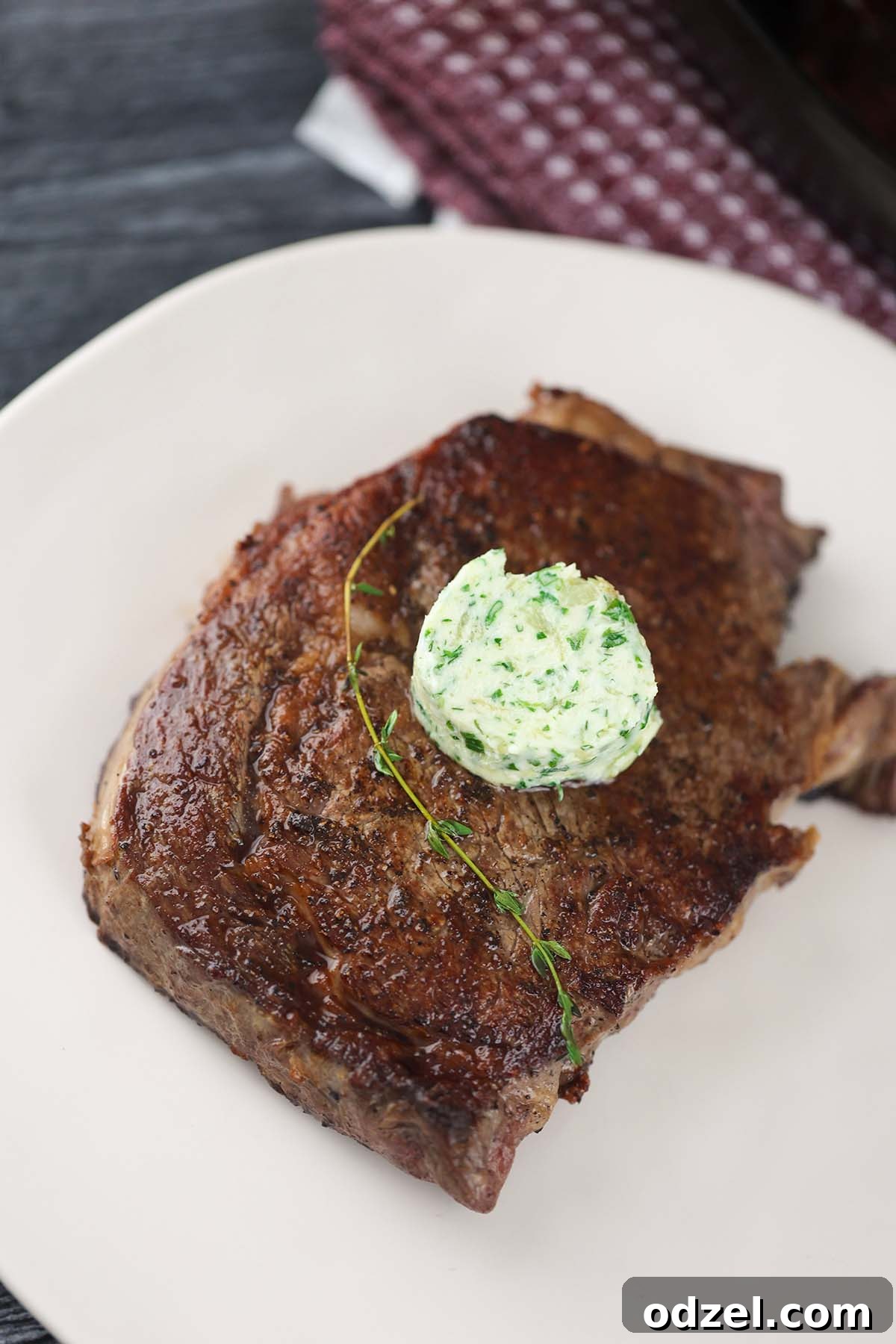
Mastering Pan-Seared Ribeye Steaks: Restaurant-Quality Results at Home
Imagine a perfectly cooked steak: a rich, deeply caramelized crust yielding to an incredibly tender, juicy interior that practically melts in your mouth. This isn’t just a dream reserved for high-end steakhouses; it’s an achievable reality right in your own kitchen, with the power of a simple cast-iron skillet and this foolproof guide to pan-seared ribeye steaks.
In this comprehensive article, we’ll demystify the art of pan-searing, revealing how to transform an ordinary weeknight into an extraordinary culinary experience. Forget the grill; our method delivers consistent, spectacular results every single time, all in under 20 minutes. To truly elevate your meal to steakhouse standards, consider topping your masterpiece with a dollop of luscious garlic herb compound butter, and serving alongside a classic like creamy mashed potatoes. Get ready to impress your taste buds and loved ones!
For those living in climates where year-round grilling is a distant dream, or simply for anyone seeking the consistent, intense heat that only a heavy skillet can provide, pan-searing is the ultimate technique. This method is hands-down the easiest way to cook truly exceptional steaks. All you need are a few high-quality ribeye steaks, coarse salt, freshly ground pepper, a high smoke point oil, and your trusty cast-iron skillet. Let’s dive into how to create your new favorite meal!
Why You’ll Fall in Love with These Pan-Seared Ribeye Steaks
- Effortless Steakhouse Quality: Achieve a stunning caramelized crust and an incredibly tender, juicy interior without the need for a grill or complex marinades. This recipe proves that restaurant-quality steak is easily attainable at home.
- Simplicity at Its Best: With just a handful of basic ingredients – ribeye, salt, pepper, and oil – you can create an intensely flavorful meal. No fancy steak seasoning blends required.
- Juicy Every Time: Ribeye steaks are renowned for their generous marbling, which is the intramuscular fat that renders during cooking. This natural fat content keeps the steak exceptionally moist and tender, ensuring it stays juicy as it cooks, unlike leaner cuts such as filet mignon. The key is not to overcook it!
- Speed and Convenience: From prep to plate, your succulent ribeye can be ready in under 20 minutes, making it a perfect option for busy weeknights or when unexpected steak cravings hit.
- Versatile Leftovers: Should you be lucky enough to have any leftover steak, it’s incredibly versatile! Slice it thin for gourmet steak fajitas, hearty burritos, or cheesy quesadillas for another delicious meal.
Essential Ingredients for Your Pan-Seared Ribeye Masterpiece
The secret to a truly outstanding pan-seared ribeye lies in the quality of your ingredients and how you prepare them. Here’s a closer look at what you’ll need:
- Ribeye Steaks:
- Boneless vs. Bone-in: While bone-in ribeyes offer a dramatic presentation and can impart a nuanced flavor from the bone, I often prefer boneless ribeye steaks. They tend to cook more uniformly without the bone affecting heat distribution. Choose whichever you prefer, but ensure they are at least 1 to 1.5 inches thick for the best searing experience.
- The Importance of Marbling: Seek out ribeyes with abundant marbling – those delicate white streaks of fat distributed throughout the red meat. This fat is essential for flavor and tenderness, rendering down during cooking to keep the steak moist and succulent. More marbling equals more flavor and juiciness!
- Room Temperature is Non-Negotiable: Before cooking, always allow your steaks to sit at room temperature for at least 30-60 minutes. A cold steak hitting a hot pan will cook unevenly, resulting in a burned exterior and a raw interior. Bringing them to room temperature ensures a more consistent and quicker cook from edge to center.
- Oil:
- High Smoke Point: The high heat required for searing demands an oil with a high smoke point. Canola oil or vegetable oil are excellent choices. Other suitable options include grapeseed oil, avocado oil, or refined sunflower oil. Avoid extra virgin olive oil, which has a lower smoke point and can burn, imparting bitter flavors.
- Quantity: Approximately 1-2 tablespoons per steak is usually sufficient to lightly coat the bottom of your skillet and facilitate that beautiful crust.
- Salt:
- Kosher or Sea Salt: For thick-cut steaks, coarse salts like Kosher salt or sea salt are superior. Their larger crystals adhere better to the meat’s surface, helping to draw out moisture and creating a fantastic, crispy crust. Fine table salt can over-season the exterior without the same textural benefit.
- Season Generously: Don’t be timid with the salt! A thick ribeye can handle a generous amount of seasoning, which penetrates the meat and enhances its natural flavor.
- Pepper:
- Freshly Ground Black Pepper: Always opt for freshly ground black pepper. Pre-ground pepper can be stale and lacks the pungent aroma and sharp flavor of freshly cracked peppercorns, which contribute significantly to the steak’s savory crust.
- Butter (Optional, but Highly Recommended):
- Flavor and Crust: Adding butter to the pan towards the end of cooking, especially for basting, injects incredible richness and a nutty aroma into the steak. It also helps in forming an even more delectable crust.
- Garlic Herb Compound Butter: For an ultimate flavor bomb, prepare our garlic herb compound butter in advance. A slice melting over your hot, rested steak will infuse every bite with aromatic goodness.
Essential Equipment for Pan-Searing Success
While the technique is straightforward, having the right tools makes all the difference in achieving that perfect pan-seared ribeye:
- Cast-Iron Skillet: This is unequivocally the best pan for searing steak. Its superior heat retention and even heat distribution create an incredibly consistent, high-temperature cooking surface, crucial for developing that coveted deep brown, crispy crust. A heavy-bottomed stainless steel pan can be an alternative, but cast iron truly excels.
- Tongs: Sturdy tongs are indispensable for safely handling and flipping the hot steak, as well as for searing the edges.
- Instant-Read Meat Thermometer: Your most vital tool for precision cooking. An instant-read thermometer takes all the guesswork out of determining doneness, ensuring your steak is cooked exactly to your preference every single time.
- Paper Towels: Absolutely necessary for thoroughly drying the surface of the steak before seasoning, which is key for a good sear.
- Aluminum Foil: Used to loosely tent the cooked steak during its crucial resting period.
Step-by-Step Instructions: How to Pan-Sear a Ribeye Steak
Follow these steps carefully to achieve a stunningly delicious, perfectly cooked ribeye:
- Prepare the Steaks: Begin by thoroughly patting both sides of your ribeye steaks dry with paper towels. Removing all surface moisture is the most critical step for achieving a proper, crispy crust (the Maillard reaction). Once dry, season generously and evenly on all sides with Kosher or sea salt and freshly ground black pepper. Allow the seasoned steaks to sit at room temperature for at least 30-60 minutes before cooking. This ensures even cooking.
- Preheat the Skillet: Place your cast-iron skillet over high heat. Add about 2 tablespoons of high smoke point oil (such as canola or vegetable oil) to the skillet. Heat the skillet for approximately 5 minutes, or until the oil just begins to smoke lightly. This intense heat is vital for an immediate, aggressive sear.
- Sear the First Side: Carefully place the room-temperature, seasoned ribeye steak(s) into the hot, smoking skillet. Do NOT move the steak for the initial 5 minutes. This undisturbed cooking time is essential for developing a deep, golden-brown, flavorful crust. Resist the urge to peek or nudge it!
- Flip and Baste: After 5 minutes, use sturdy tongs to carefully flip the steak to the second side. Immediately add 1-2 tablespoons of unsalted butter to the pan. If desired, you can also add aromatics like crushed garlic cloves or fresh sprigs of rosemary or thyme to the melting butter. Tilt the skillet slightly and use a spoon to continuously baste the melting butter over the steak as it cooks. Continue cooking for another 4 minutes for a perfect medium-rare doneness.
- Sear the Edges (Optional, for an Even Crust): For a truly professional finish and to ensure any fatty edges render properly, use your tongs to stand the steak on its sides, searing each edge for about 20-30 seconds. This step helps create an all-around crust and an even cook.
- Check for Doneness: The most reliable way to check doneness is with an instant-read meat thermometer. Insert the thermometer into the thickest part of the steak, avoiding any bones. Refer to our “Steak Doneness Temperature” guide below to achieve your desired internal temperature.
- Rest the Steak: Once your steak reaches your desired doneness (or is a few degrees below, accounting for carryover cooking), immediately transfer it to a clean plate or cutting board. Tent it loosely with aluminum foil. This resting period, ideally 5-10 minutes, is crucial. It allows the muscle fibers to relax and the juices, which have migrated to the center during cooking, to redistribute throughout the entire steak. Skipping this step will result in a dry steak, as all the precious juices will run out onto your board when sliced.
- Serve and Enjoy: After resting, remove the foil. If you’ve prepared garlic herb compound butter, place a generous slice on top of the hot, rested steak. Slice the steak against the grain into desired portions, serve immediately, and savor your perfectly pan-seared ribeye.
Achieving Your Desired Steak Doneness: A Temperature Guide
Eliminate guesswork and ensure your steak is cooked to absolute perfection every time by using an instant-read meat thermometer. Remember, the USDA recommends cooking steaks to at least 145°F (63°C) for food safety. Here’s a quick reference guide:
- Rare: 125-130°F (52-54°C) – Cool red center.
- Medium-Rare: 130-135°F (54-57°C) – Warm red center. This is often considered the ideal doneness for ribeye, maximizing both juiciness and flavor. (My personal preference!)
- Medium: 135-140°F (57-60°C) – Warm pink center.
- Medium-Well: 140-145°F (60-63°C) – Slightly pink center.
- Well Done: 150°F (66°C) and above – Cooked through with no pink, grey throughout.
Pro Tip: Carryover Cooking! The internal temperature of your steak will continue to rise by 5-10 degrees Fahrenheit (3-6°C) during the resting period after you remove it from the heat. Therefore, always remove your steak from the skillet a few degrees below your target internal temperature to account for this carryover cooking.
Expert Tips for the Ultimate Pan-Seared Ribeye Steak
Mastering the art of pan-searing is all about attention to detail. Incorporate these expert tips to ensure your ribeye is nothing short of perfection:
- Invest in Cast Iron: If you don’t already own one, a good quality cast-iron skillet is a game-changer for searing. Its ability to retain and distribute heat evenly is unmatched, resulting in that desirable, consistent crust.
- Don’t Overcrowd the Pan: This is crucial! Cook one steak at a time, or ensure your skillet is large enough to leave plenty of space around each steak if cooking two. Overcrowding lowers the pan’s temperature significantly, causing the meat to steam rather than sear, which prevents a proper crust from forming. When cooking for a crowd, I often use two separate skillets simultaneously.
- Prioritize Marbling: When selecting your ribeye, look for abundant marbling – the small flecks and streaks of fat interspersed throughout the muscle. This intramuscular fat is the key to the ribeye’s incredible flavor and ensures a supremely juicy and tender outcome.
- Achieve High Heat: Your skillet must be screaming hot before the steak goes in. This initial blast of high heat is what initiates the Maillard reaction, rapidly caramelizing the surface of the steak and forming that delicious crust.
- Always Rest Your Steak: This step cannot be emphasized enough. Resting the steak, tented loosely with foil, allows the muscle fibers to relax and reabsorb the juices that have been pushed to the center during cooking. Cutting into a steak too soon will cause all those precious juices to run out, leaving you with a drier, less flavorful result.
- Consider Reverse Searing for Thicker Cuts: For exceptionally thick ribeye steaks (1.5 inches or more), the reverse sear method can be fantastic. Cook the steak slowly in a low oven until it’s about 10-15 degrees Fahrenheit below your target internal temperature, then finish with a quick, high-heat sear in a cast-iron skillet for that perfect crust.
- Leftover Storage and Reheating: Store any leftover pan-seared ribeye in an airtight container in the refrigerator for up to 3 days. To reheat, gently warm in a low oven (around 250°F/120°C) until just warm to prevent overcooking, or slice cold for salads and sandwiches.
Perfect Pairings and Serving Suggestions
A magnificent pan-seared ribeye deserves equally delicious accompaniments to complete your steakhouse-at-home experience. Here are some ideas:
- Creamy Mashed Potatoes: A timeless classic that perfectly complements the rich flavor of the steak.
- Roasted Asparagus or Green Beans: Simple, elegant, and healthy vegetable sides. Toss them with olive oil, salt, and pepper, then roast until tender-crisp.
- Garlic Bread or Crusty Baguette: Ideal for soaking up any leftover steak juices and melted compound butter.
- Fresh Garden Salad: A light, crisp green salad with a vibrant vinaigrette dressing offers a refreshing contrast to the richness of the steak.
- Sautéed Mushrooms and Onions: A savory topping that enhances the steak’s umami flavors beautifully.
More Delicious Steak and Meat Recipes You Might Enjoy
If you’ve mastered and loved this pan-seared ribeye recipe, be sure to explore more of our fantastic meat recipes that are sure to become new favorites:
- Air Fryer Steak Tips
- Philly Cheesesteak Sandwiches
- Garlic Butter Steak Tips
- Air Fryer Filet Mignon
Pan-Seared Ribeye Steak Recipe
Pan-Seared Ribeye Steak
By Julie Maestre
These pan-seared ribeye steaks are guaranteed to become a new favorite! Achieve a perfectly caramelized crust on the outside and an incredibly juicy interior, cooked quickly in a cast-iron skillet.
- Prep Time: 5 minutes
- Cook Time: 9 minutes
- Total Time: 14 minutes
- Servings: 2
Ingredients
- 2 (1-inch thick) boneless ribeye steaks
- 2-4 tablespoons high smoke point oil (such as canola, vegetable, or grapeseed oil)
- Kosher or sea salt, to taste (generous amount)
- Freshly ground black pepper, to taste (generous amount)
- 2 tablespoons unsalted butter (optional, for basting)
- Garlic Herb Compound Butter (optional, for serving)
Instructions
- Pat steaks thoroughly dry on both sides with paper towels. Season generously with salt and freshly ground black pepper on all surfaces. Let steaks sit at room temperature for 30-60 minutes before cooking.
- Heat a cast-iron skillet over high heat for about 5 minutes. Add the oil to the hot skillet and continue heating until it just begins to smoke lightly.
- Carefully place the seasoned ribeye steak(s) into the smoking hot skillet. Do not move or disturb the steak for 5 minutes to allow a deep crust to form.
- Flip the steak. Add butter (and optional aromatics like garlic/thyme) to the pan. Tilt the pan and baste the melting butter over the steak for the remaining cook time. Cook for another 4 minutes for medium-rare doneness. For an even sear, use tongs to briefly sear the edges for 20-30 seconds each.
- Remove steak from the skillet and transfer to a plate or cutting board. Tent loosely with aluminum foil and let rest for 5-10 minutes. The internal temperature will continue to rise during this time, and juices will redistribute.
- Top with garlic herb compound butter, if desired. Slice against the grain and serve immediately. Enjoy your perfectly pan-seared ribeye!
Notes on Steak Doneness Temperatures
- Medium-Rare: 130-135°F (54-57°C)
- Medium: 135-140°F (57-60°C)
- Medium-Well: 140-145°F (60-63°C)
- Well Done: 150°F (66°C) and above
Nutrition Information (Approximation per Serving)
Nutrition information is automatically calculated and should only be used as an approximation. Actual values may vary based on specific ingredients, preparation methods, and portion sizes.
- Calories: 250 kcal
- Protein: 1g
- Fat: 28g
- Saturated Fat: 2g
- Polyunsaturated Fat: 8g
- Monounsaturated Fat: 18g
- Trans Fat: 1g
- Cholesterol: 1mg
- Sodium: 1mg
- Potassium: 3mg
- Vitamin A: 1 IU
- Calcium: 1mg
- Iron: 1mg
Recipe Details
- Author: Julie Maestre
- Course: Entree
- Cuisine: American
- Keywords: pan-seared ribeye, how to cook ribeye, cast iron steak, steak recipe, quick steak, juicy ribeye
Tried this incredible pan-seared ribeye recipe? We’d absolutely love to hear about your experience! Please consider leaving a star rating or a comment in the section below. Your feedback is invaluable and helps both us and other home cooks discover delicious new meals. And for more culinary inspiration, don’t forget to follow us on Facebook, Instagram, or Pinterest!