
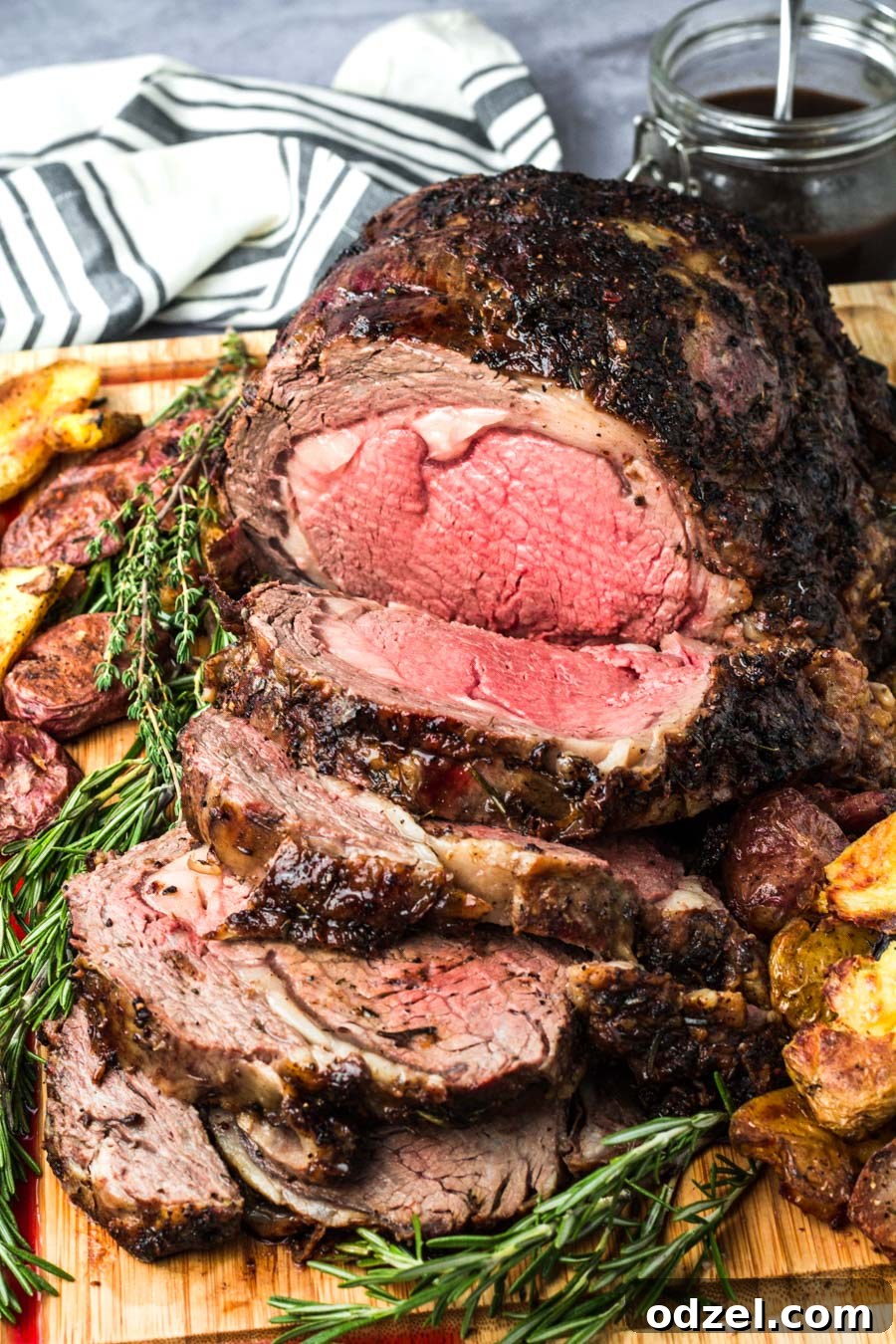
Elevate your holiday meal with this exquisite medium-rare prime rib recipe, perfectly complemented by a rich red wine au jus and a creamy, tangy horseradish sauce. This spectacular main course is guaranteed to impress your family and guests.
While often associated with grand celebrations, preparing a show-stopping dinner doesn’t have to be overly complicated. This comprehensive guide will walk you through creating a succulent prime rib that’s tender, flavorful, and truly unforgettable. It pairs beautifully with classic side dishes like creamy mashed potatoes, cheesy scalloped potatoes, or beautifully roasted potatoes, allowing you the flexibility to choose your favorites for a truly personalized feast.
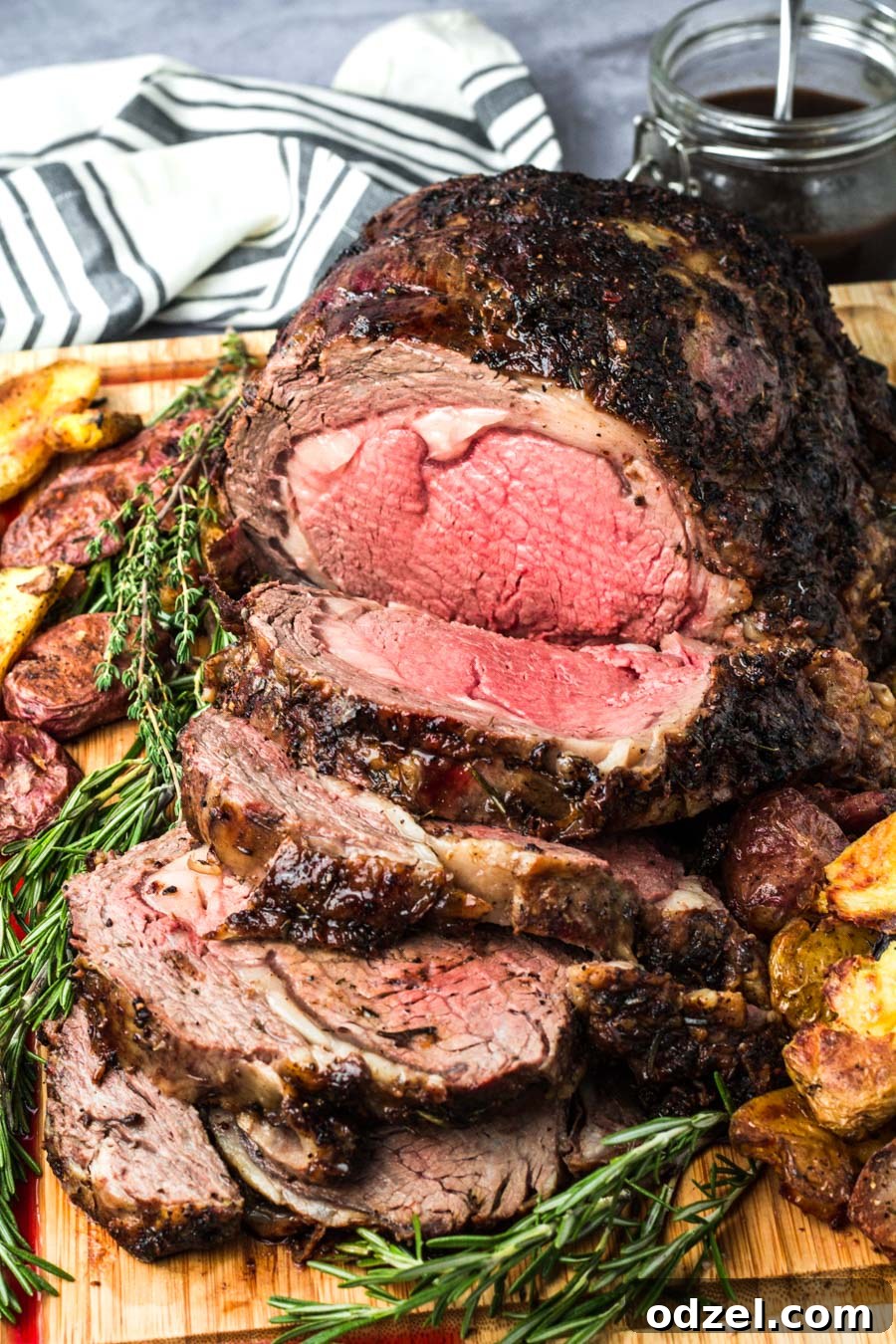
Table of Contents
- The Ultimate Holiday Centerpiece: Why Choose Prime Rib?
- Mastering Medium-Rare Prime Rib: The Art of Perfection
- Step-by-Step Guide: How to Cook Prime Rib
- Essential Tips for Prime Rib Success
- Perfect Pairings: Serving Suggestions for Your Prime Rib
- How Much Prime Rib to Serve Per Person?
- Cooking a 4 lb Prime Roast: Your Timing Guide
- More Festive Recipes to Explore
- Classic Prime Rib with Au Jus Recipe Card
The Ultimate Holiday Centerpiece: Why Choose Prime Rib?
For many, the holiday season is synonymous with gathering around a beautifully set table, and what better way to anchor that table than with a majestic prime rib? This isn’t just a meal; it’s a culinary experience, a tradition, and a celebration all rolled into one. Prime rib, also known as a standing rib roast, is renowned for its exceptional tenderness, rich marbling, and robust beefy flavor. It’s a premium cut that truly shines when cooked to a perfect medium-rare, showcasing its juicy, rosy interior. While it might seem intimidating, with the right techniques, achieving perfection is entirely within reach, transforming your kitchen into a gourmet haven.
Opting for a prime rib signals a special occasion, an invitation to indulge in a dish that’s both elegant and deeply satisfying. The distinct flavor profile, enhanced by aromatic herbs and a flavorful crust, stands out among other roasts. The generous marbling, or intramuscular fat, melts during cooking, basting the meat from within and contributing to its unparalleled juiciness and rich taste. Paired with a luscious red wine au jus, which captures all the savory drippings, and a zesty horseradish cream, every bite is a symphony of flavors that will leave a lasting impression on your guests. Whether it’s for Christmas, New Year’s, or any significant family gathering, a perfectly cooked prime rib makes an undeniable statement of generosity and culinary prowess.
Mastering Medium-Rare Prime Rib: The Art of Perfection
The secret to an incredibly juicy and tender prime rib lies in achieving that coveted medium-rare doneness. This typically means an internal temperature of 125-130°F (52-54°C) before resting. The cooking method we’ll employ, often referred to as the reverse sear or high-heat then low-heat method, is designed to create a beautiful, crispy crust while ensuring a uniformly cooked, tender interior. This technique begins with a brief blast of high heat to sear the exterior, locking in juices and developing that irresistible browned surface through the Maillard reaction. Following this initial sear, the roast is cooked slowly at a lower temperature, allowing for precise control over the internal doneness, minimizing moisture loss and ensuring consistent results.
Achieving the perfect medium-rare isn’t just about timing; it’s about temperature. A reliable meat thermometer is your best friend here, as it takes the guesswork out of roasting. Insert it into the thickest part of the roast, being careful to avoid hitting any bones, which can give an inaccurate reading. Remember that prime rib, like all large cuts of meat, continues to cook after it’s removed from the oven—a phenomenon known as “carry-over cooking.” This is why it’s crucial to remove the roast slightly before it reaches your desired final temperature. The resting period, often overlooked, is just as vital as the cooking itself, allowing the muscle fibers to relax and the juices to redistribute throughout the meat, ensuring every slice is incredibly moist and flavorful from edge to edge.
Step-by-Step Guide: How to Cook Prime Rib
Follow these detailed steps to prepare a magnificent prime rib that will be the highlight of your holiday table. Precision and patience are key to this celebrated roast.
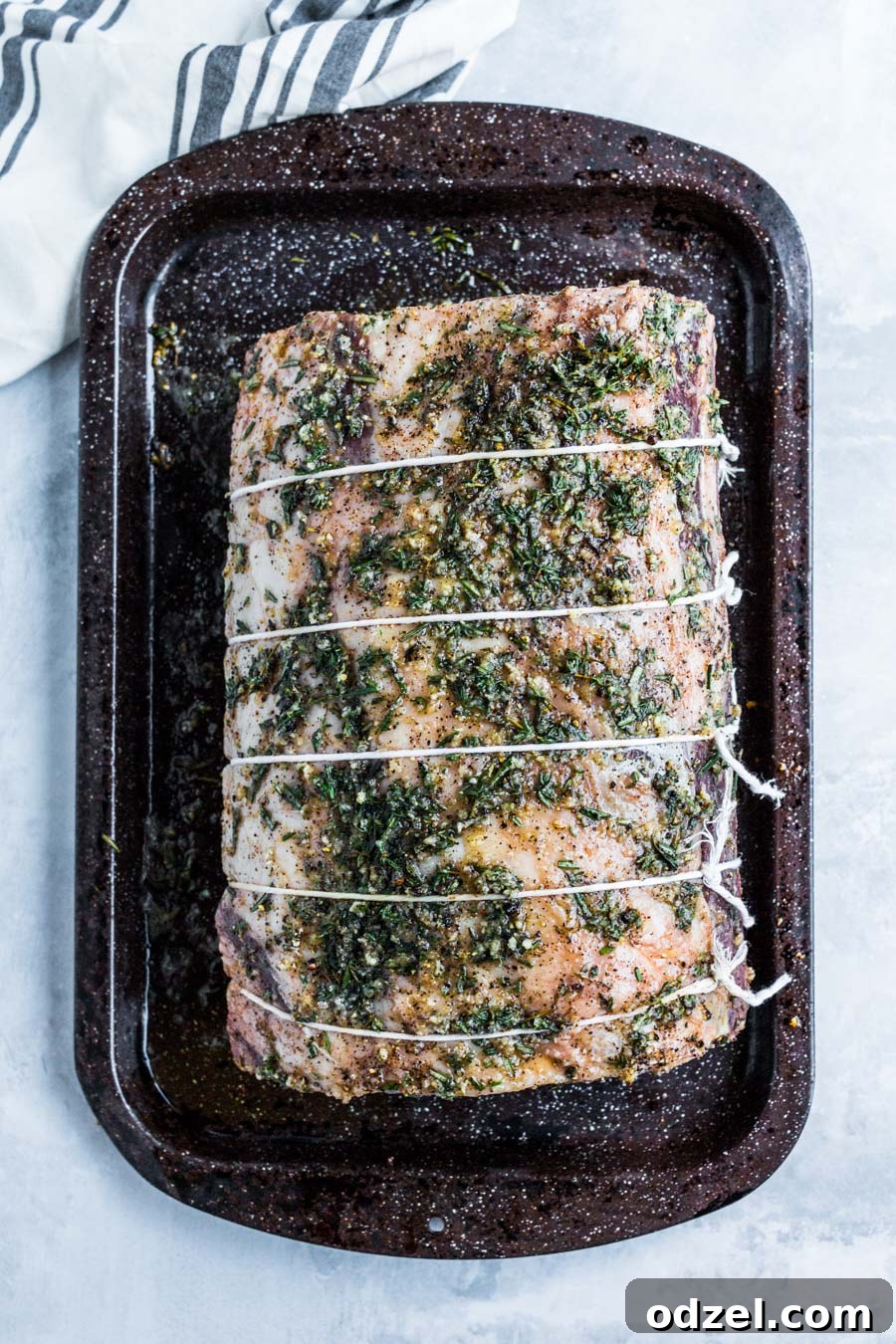
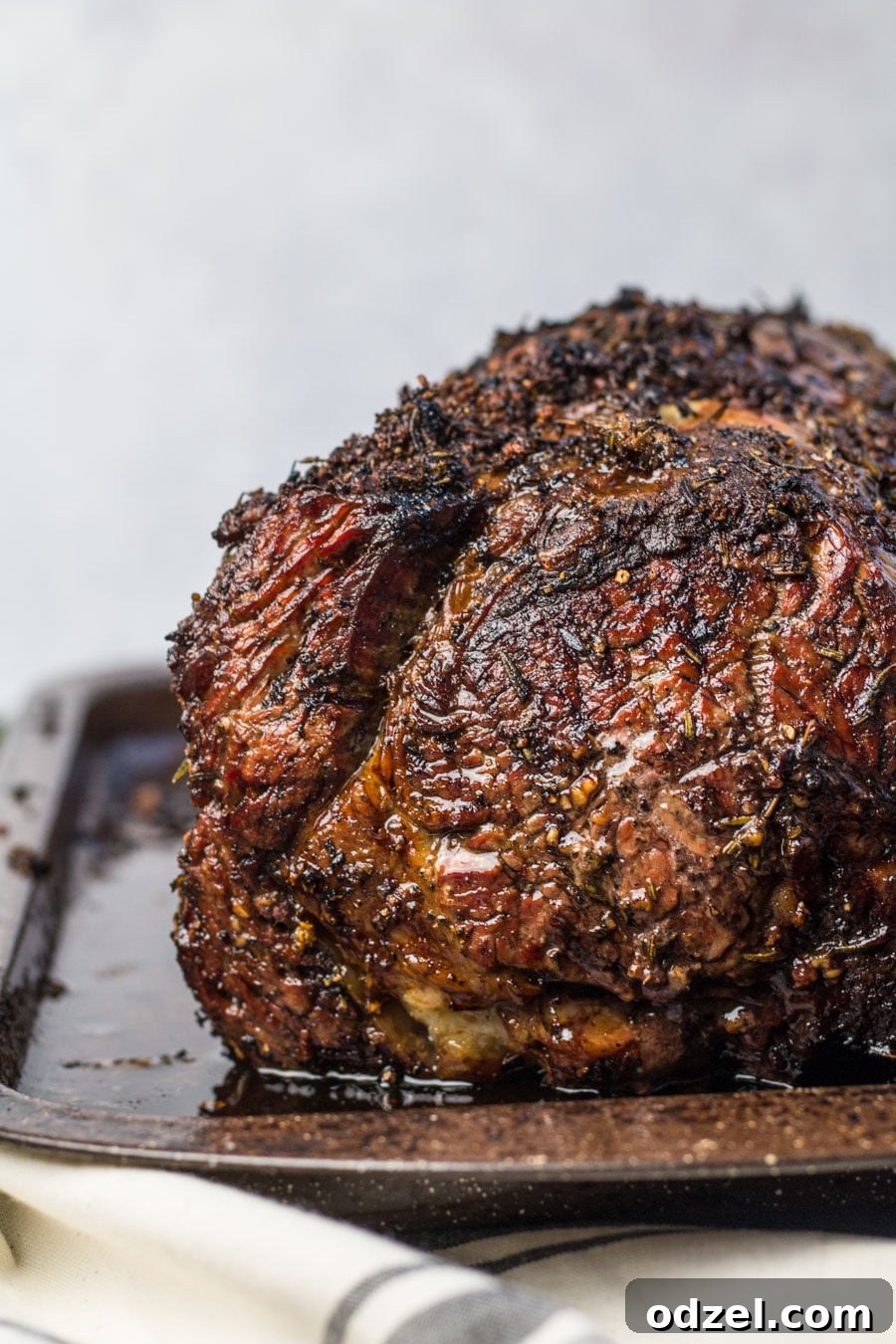
- Prepare the Roast (Temperature and Tying): Begin by removing your prime rib from the refrigerator at least 30 minutes to an hour before cooking. This crucial step allows the meat to come closer to room temperature, promoting more even cooking and preventing the exterior from overcooking while the interior struggles to catch up. While the roast rests, preheat your oven to a blazing 500°F (260°C). If your prime rib is bone-in, tying each rib with kitchen twine helps maintain its shape during cooking and ensures even roasting. For bone-in roasts, wrapping the ends of the bones with aluminum foil prevents them from charring excessively and keeps them looking appetizing. Most importantly, thoroughly pat the entire roast dry with paper towels. A dry surface is essential for the butter rub to adhere properly and to achieve a fantastic, crispy, deeply browned sear.
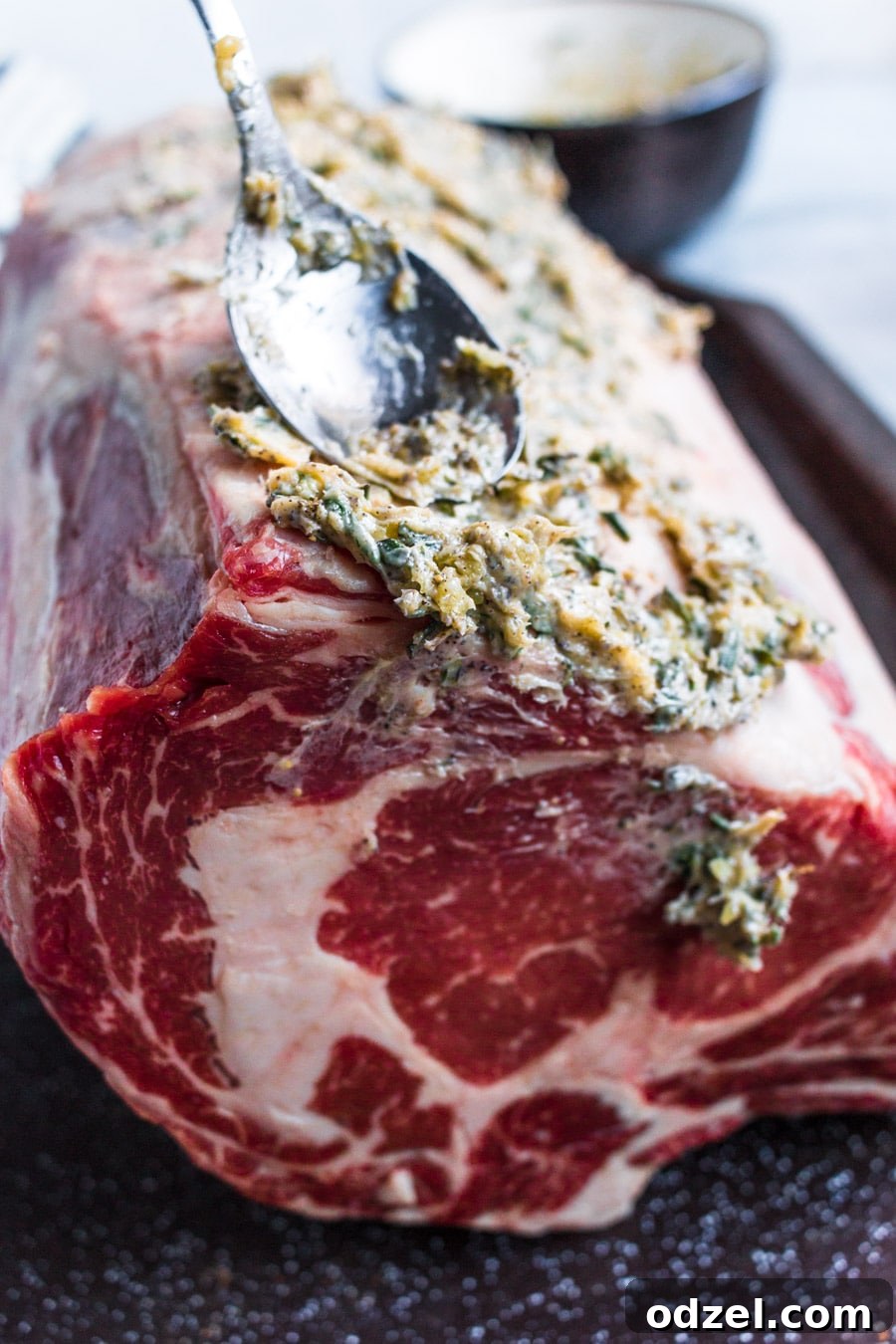
- Craft the Flavorful Herb Butter Rub: In a small bowl, combine 1/2 cup of softened unsalted butter with 1 tablespoon of minced fresh thyme, 1 tablespoon of minced fresh rosemary, and a generous seasoning of salt and freshly ground black pepper. These classic herbs infuse the roast with aromatic flavors that complement the rich beef beautifully. Ensure the butter is truly softened for easy spreading. Once mixed into a cohesive rub, apply this herb butter generously all over the prime rib, ensuring every surface, including the ends, is coated for maximum flavor penetration and the development of an incredible, savory crust.
- The Perfect Roast (High-Heat Sear, then Low-Heat Finish): Place the seasoned prime rib in a sturdy, deep roasting dish. Begin by cooking the roast at the high temperature of 500°F (260°C) for exactly 12 minutes. This initial high-heat blast creates a gorgeous, caramelized crust, sealing in the juices and adding depth of flavor. After 12 minutes, reduce the oven temperature to 325°F (160°C) without opening the oven door to preserve heat. Continue cooking for approximately 13-14 minutes per pound for a medium-rare finish. Use a reliable meat thermometer inserted into the thickest part of the roast, avoiding the bone, aiming for an internal temperature of 125-130°F (52-54°C) for medium-rare.
- Crucial Resting Period for Juiciness: Once the prime rib reaches the desired internal temperature, immediately remove it from the oven. Transfer the roast from the hot baking dish to a clean cutting board or platter and tent it loosely with aluminum foil. Let it rest for a minimum of 20-30 minutes. This resting period is critical; it allows the muscle fibers to relax and the superheated juices, which have been driven to the center during cooking, to redistribute evenly throughout the roast. This results in a more tender, uniformly moist, and incredibly juicy outcome. Skipping this step will cause the juices to run out when sliced, leading to a disappointingly dry roast.
- Whipping Up the Rich Au Jus Gravy: While the prime rib rests, prepare the savory au jus. Place a skillet over high heat and add about 3 tablespoons of the pan drippings from the roasting dish. Stir in 1 cup of beef stock, 1 tablespoon of Worcestershire sauce, and 1 tablespoon of red wine (if using for a deeper, more complex flavor profile). Bring the mixture to a rapid simmer and let it cook for about 15 minutes, allowing the flavors to meld and the sauce to slightly reduce and thicken. Season with salt and pepper to taste, then strain the au jus through a fine-mesh sieve for a silky-smooth consistency, removing any solids.
- Prepare the Creamy Horseradish Sauce: In a separate medium-sized bowl, combine all the creamy horseradish sauce ingredients: ½ cup of sour cream, ½ cup of mayonnaise, 2 tablespoons of prepared horseradish (adjust to your preferred heat level), 1 teaspoon of white vinegar, and 2 tablespoons of freshly chopped chives. Stir until well combined and season with a pinch of salt. This sharp, tangy, and creamy sauce provides a delightful contrast to the richness of the prime rib.
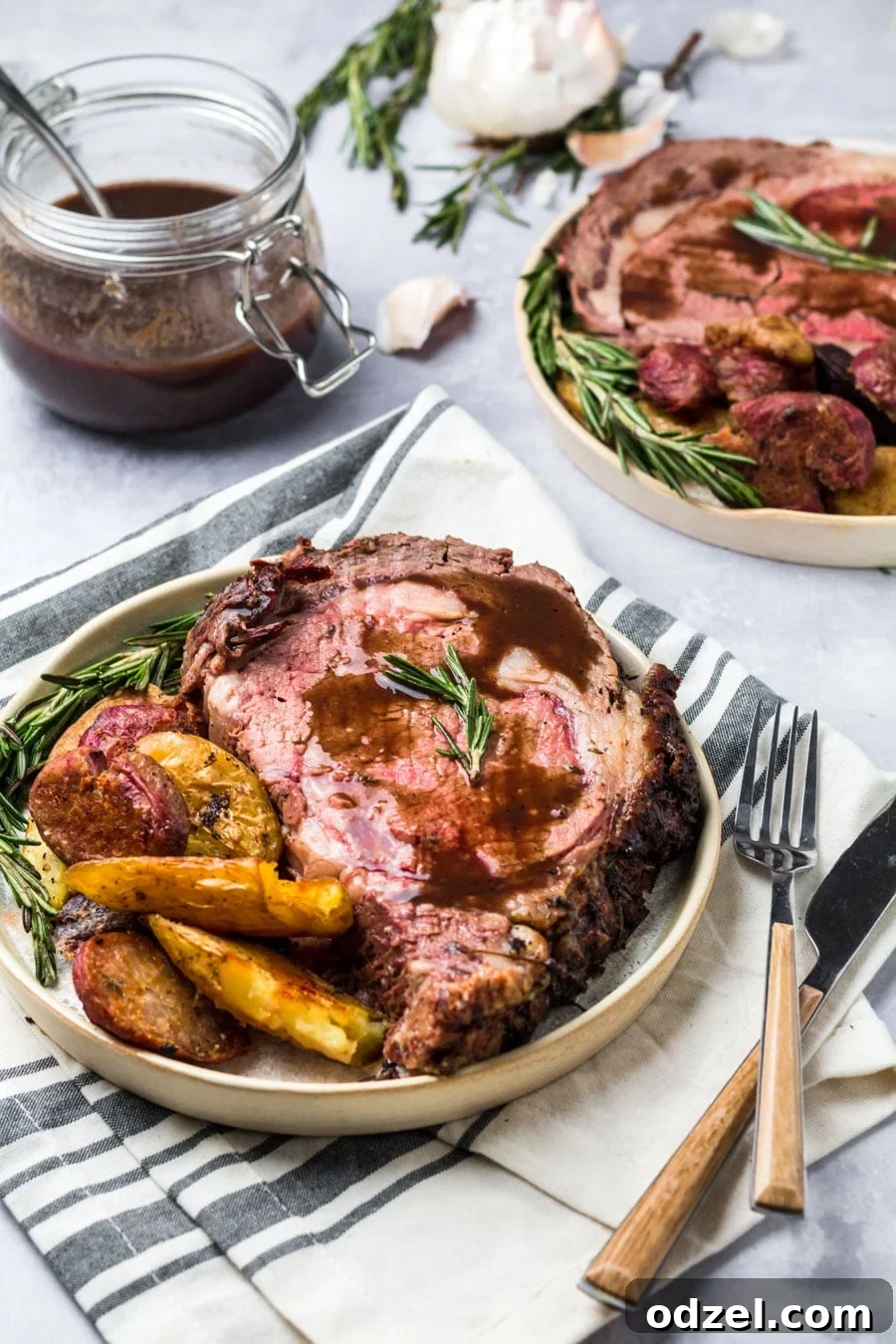
- Grand Presentation and Serving: Once rested, carve the prime rib into thick, impressive slices. For bone-in roasts, first remove the bones by slicing along the curvature. Arrange the slices elegantly on a warm serving platter. Drizzle the warm, rich au jus generously over the prime rib slices and serve with a dollop of the creamy horseradish sauce on the side. Present alongside your chosen side dishes and prepare for applause – your perfect prime rib is ready to be enjoyed!
Essential Tips for Prime Rib Success
To ensure your prime rib turns out perfectly every time, keep these expert tips in mind:
- Enhance or Skip the Au Jus: The red wine au jus significantly elevates the flavor profile of the prime rib, adding a layer of sophisticated richness and moisture. However, if you prefer a simpler approach or are short on time, serving the prime rib without gravy is absolutely fine. Just be sure to season the roast generously with salt and pepper before cooking, as this will be the primary seasoning for the meat itself. For an even more profound au jus flavor, consider adding a splash of brandy or a bay leaf to your stock as it simmers.
- Alternative Cuts for Roasting: If a full prime rib is difficult to find or outside your budget, a top loin roast (also known as a strip roast or New York strip roast) can make an excellent substitute. While not identical in texture or fat content, it offers a tender, flavorful alternative that can be prepared using a similar roasting method, still providing a fantastic main course for your festive meal. Adjust cooking times based on its weight and shape.
- Expert Prime Rib Selection: When purchasing your prime rib, don’t hesitate to consult your butcher – they are a valuable resource. You can ask them to cut the rib bones off the roast but then tie them back on with cooking twine. This allows the bones to impart maximum flavor and moisture during cooking while making carving significantly easier once the roast is done. A boneless roast is generally simpler to carve but may lose some of the deep, bone-in flavor. Ask for USDA Prime or Choice grade for the best results.
- Achieving Different Doneness Levels: While medium-rare (125-130°F internal temp) is often considered ideal for prime rib due to its tenderness and juiciness, you can adjust the final internal temperature for other doneness levels. For a medium roast, aim for 130-135°F (54-57°C) before resting; for medium-well, target 135-140°F (57-60°C). Always remember to factor in the carry-over cooking during the resting period, removing the roast about 5-10°F below your target.
- The Art of Carving: Once rested, carving a prime rib is straightforward. If you have a bone-in roast, first separate the bones from the meat by cutting along the curvature of the bones with a sharp carving knife. Then, place the roast flat on its cut side and slice against the grain into desired thickness, typically 1/2 to 3/4 inch thick. Slicing against the grain is crucial as it shortens the muscle fibers, ensuring maximum tenderness in every bite.
- Storing and Reheating Leftovers: Leftover prime rib can be a true delight! Store any remaining slices or the roast itself in an airtight container in the refrigerator for up to 3-4 days. To reheat without overcooking and drying out the meat, slice the cold roast and gently warm the slices in a skillet with a splash of beef broth or au jus over low heat, or in an oven preheated to 250°F (120°C) until just warmed through. Avoid high heat, which can quickly turn tender prime rib tough and dry.
Perfect Pairings: Serving Suggestions for Your Prime Rib
A magnificent prime rib deserves an equally impressive array of side dishes. The beauty of this main course is its versatility; it complements a wide range of flavors and textures, making it easy to create a balanced and satisfying meal. Here are some classic and delightful suggestions to serve alongside your medium-rare prime rib:
- Creamy Mashed Potatoes: A timeless classic, their rich and buttery texture provides a comforting, smooth counterpoint to the savory meat and tangy horseradish.
- Cheesy Scalloped Potatoes: Layers of tender, thinly sliced potatoes baked in a luscious creamy, cheesy sauce offer a decadent and satisfying side that feels truly special.
- Cheesy Corn: Sweet corn mingled with cheese and a hint of spice creates a vibrant and flavorful addition that appeals to everyone, adding a pop of color and sweetness.
- Instant Pot Mashed Sweet Potatoes: A slightly healthier yet equally delicious option, offering a touch of natural sweetness and vibrant color, with the convenience of an Instant Pot.
- Roasted Garlic Potatoes: Crispy on the outside, fluffy on the inside, with the aromatic punch of roasted garlic – simple, rustic, and incredibly delicious.
- Cheddar Garlic Mashed Potatoes: An elevated take on traditional mashed potatoes, combining sharp cheddar cheese and pungent garlic for an extra layer of savory flavor.
- Roasted Root Vegetables: Colorful vegetables like carrots, parsnips, butternut squash, and Brussels sprouts roasted with a hint of thyme, rosemary, or maple syrup add earthy sweetness, beautiful presentation, and textural contrast.
- Fresh Green Salad: A light, crisp mixed green salad with a bright vinaigrette dressing can cut through the richness of the meal, offering a refreshing and palate-cleansing contrast.
- Steamed Asparagus or Green Beans: Simply steamed or lightly sautéed with butter and garlic, these vibrant green vegetables add a touch of freshness and a healthy component to your plate.
Prime Rib Portion Guide: Planning Your Feast
When planning a holiday dinner or any special gathering, estimating the right amount of prime rib per person is key to ensuring everyone is well-fed without excessive leftovers (unless, of course, you specifically want them!). A good general guideline is to estimate approximately 1/2 to 3/4 lb (about 225-340g) of prime rib per guest. This estimate can vary based on a few factors:
- If Prime Rib is the Only Meat: If your prime rib is the undisputed star of the show and the sole protein offered, it’s safer to err on the side of generosity, aiming for closer to 3/4 lb (about 340g) per person. This accounts for hearty appetites and ensures no one leaves hungry. Remember, a bone-in roast will yield less edible meat per pound than a boneless one, so adjust your purchase weight accordingly.
- If Serving Other Meats: If you’re offering other main dishes like roasted turkey, glazed ham, or another protein as part of a larger spread, you can comfortably reduce the prime rib portion to about 1/2 lb (about 225g) per person. Guests will likely sample a bit of everything, spreading their intake across multiple delicious options.
- Appetites and Side Dishes: Consider the typical appetites of your guests. If you know you have many big eaters in attendance, or if side dishes are minimal, you might increase the estimate. Conversely, if you have an abundance of rich, filling side dishes, slightly smaller portions of prime rib might suffice. It’s always better to have a little extra than not enough!
Cooking a 4 lb Prime Roast: Your Timing Guide
The total cooking time for a prime rib depends on its weight, thickness, bone-in or boneless status, and your desired level of doneness. For a 4 lb prime rib, using the high-heat then low-heat method described in this recipe, here’s a detailed timing guide for achieving a perfect medium-rare:
- Initial High-Heat Sear: You’ll start with 12 minutes at 500°F (260°C). This phase is crucial for developing a beautiful, flavorful crust on the exterior of the roast.
- Low-Heat Roast: After the initial sear, reduce the oven temperature to 325°F (160°C). For a 4 lb roast, you’ll then continue to cook it for approximately 13-14 minutes per pound. This means an additional roasting time of roughly 52-56 minutes (4 lbs * 13-14 mins/lb).
- Total Active Cooking Time: This brings your total active cooking time to approximately 64-68 minutes (12 minutes at high heat + 52-56 minutes at low heat). This is just the cooking duration in the oven.
- Internal Temperature Check: Always use a reliable meat thermometer! For medium-rare, aim to remove the roast from the oven when its internal temperature reaches 125-130°F (52-54°C) in the thickest part of the meat, away from any bones. For medium, remove at 130-135°F, and for medium-well, 135-140°F.
- Crucial Resting Time: Remember, the roast will continue to cook as it rests. This “carry-over cooking” can raise the internal temperature by another 5-10°F. Therefore, removing it at 125-130°F should result in a perfect medium-rare after resting for 20-30 minutes. It’s highly recommended to immediately remove the roast from the hot baking dish after taking it out of the oven to place it on a carving board, preventing it from overcooking further from residual heat.
By closely monitoring the internal temperature with a quality meat thermometer, rather than relying solely on a timer, you’ll ensure a perfectly cooked prime rib every single time, regardless of minor variations in oven calibration or roast shape. This method provides consistent, mouth-watering results for your festive prime rib.
I hope this comprehensive guide helps you create a truly magnificent holiday classic dinner that you and your loved ones will cherish. While often reserved for special occasions, this prime rib recipe is so delightful, you might find yourself enjoying it year-round!
More Festive Recipes to Explore
Looking for more inspiration to round out your holiday spread or simply expand your repertoire of impressive main courses? Discover other delectable recipes to make your festive table shine:
- Baked Ham with Brown Sugar Glaze
- Juicy Roast Turkey
- Maple Roasted Turkey Breast
- Honey Baked Turkey Wings
You can find even more delicious recipes and insightful cooking tutorial videos on our Youtube channel and Facebook page. Happy cooking and feasting!
Classic Prime Rib with Au Jus and Creamy Horseradish
Rate Recipe
Print Recipe
Looking to keep this recipe handy for future feasts? Consider bookmarking this page or exploring our newsletter for more culinary delights!
Equipment
-
Meat Thermometer
-
Deep Baking Dish
Ingredients
- 4 lb prime rib, I used boneless
- 1/2 cup butter, softened
- 1 tbsp fresh thyme, minced
- 1 tbsp fresh rosemary , minced
- lots of salt and pepper , to taste
Au Jus
- 3 tablespoons drippings
- 1 cup beef stock
- 1 tablespoon Worcestershire sauce
- 1 tablespoon red wine , optional
- salt and pepper to taste
Creamy Horseradish Sauce
- ½ cup sour cream
- ½ cup mayo
- 2 tablespoons horseradish
- 1 teaspoon vinegar
- 2 tablespoons fresh chives
- salt to taste
Instructions
-
Let the rib roast rest on the counter for 30 minutes while preheating the oven to 500 degrees F. Tie each rib with twine and wrap the ends of the bones with foil. Make sure to pat dry the meat with a paper towel so the butter sticks nicely.
-
Combine the softened butter, thyme, rosemary, salt, and pepper. Thoroughly coat the rib roast with the mixture.
-
Place it in a proper deep dish, and cook for 12 minutes. Reduce heat to 325 degrees and cook for 13 minutes per pound. Roast should reach an internal temperature of 125-130 degrees for medium rare.
-
Remove the meat from the oven and wrap it in foil. Let it rest for 20 minutes.
-
Place a skillet over high heat with the pan juices, red wine, Worcestershire sauce, and beef stock. Bring to a fast simmer and cook for 15 minutes. Season with salt and then strain it.
-
Combine all of the horseradish sauce ingredients and season with salt.
-
Pour the au jus over the prime rib slices with a dollop of the horseradish sauce and enjoy.
Notes
Nutrition
Nutrition information is automatically calculated, so should only be used as an approximation.