
Get ready to transform your snack game with these incredibly addicting **crispy tostones**! This super easy recipe brings the vibrant flavors of the Caribbean right into your kitchen, involving nothing more than perfectly slicing and double-frying green plantains until they achieve that irresistible golden crunch. Whether you dip them in a rich garlic butter sauce or enjoy them simply seasoned, one bite and you’ll be completely hooked!
More than just a delicious snack, tostones hold a special place in the hearts of many, myself included. They aren’t a fancy, elaborate dish, but rather a simple, comforting staple that evokes a sense of home and cherished memories. For countless individuals across Latin America and the Caribbean, tostones are a taste of childhood, a culinary hug wrapped up in a humble, yet utterly delightful, bite. They represent a tradition passed down through generations, making them not just food, but a piece of cultural heritage.
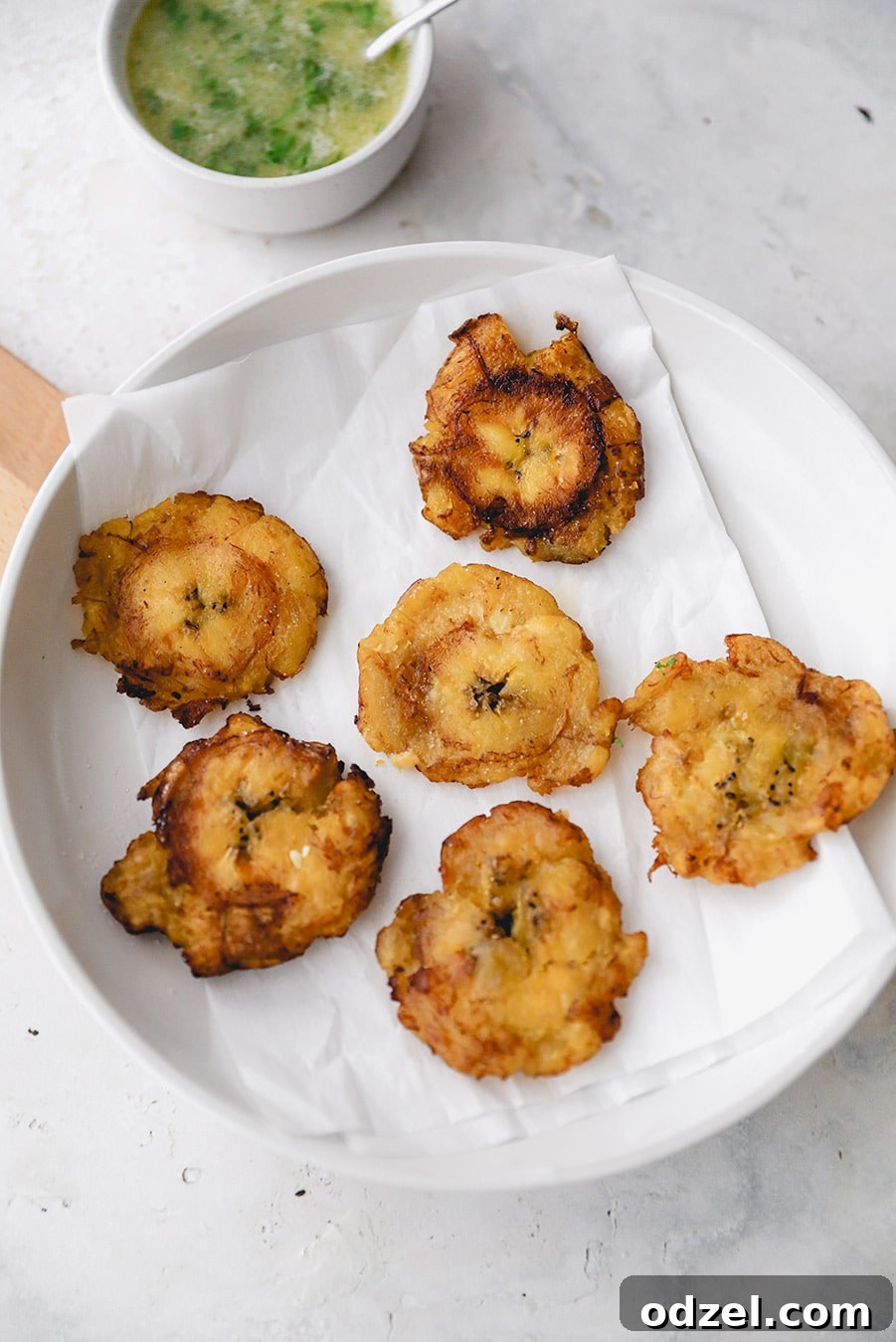
Understanding the Magic of Green Plantains
Before diving into the recipe, it’s crucial to understand the star ingredient: the green plantain. Unlike ripe yellow or black plantains, green plantains are starchy, firm, and savory, with a texture similar to a potato rather than a sweet banana. This unique composition is precisely what makes them ideal for tostones. When double-fried, they develop a wonderfully firm yet tender interior and an incredibly crispy exterior, providing a satisfying bite that sweet plantains simply can’t replicate.
The process of making tostones is surprisingly straightforward, relying on a technique of frying, smashing, and frying again. This double-frying method is key to achieving their signature crispiness and distinct texture, setting them apart from other plantain preparations. Let’s break down the simple steps to create these Caribbean delights.
How To Make Perfect Crispy Tostones
- Prepare the Plantains – Start by selecting firm, bright green plantains. Using a sharp paring knife, carefully cut off both ends of each plantain. Then, score a shallow line lengthwise down the inside curve of the plantain, cutting just through the skin without piercing the flesh deeply. Repeat on the other side. Gently pry open the skin with your fingers or the knife tip and peel it away. This can be a bit challenging with very green plantains, but scoring helps immensely. Once peeled, slice the plantains into uniform 1-inch thick rounds. Consistency in size ensures even cooking.
- First Fry – Heat your preferred frying oil (such as vegetable, canola, or corn oil) in a large skillet or deep pot over medium heat. You want the oil hot enough to gently sizzle, but not smoke. A good test is to drop a small piece of plantain in; it should gently bubble around it. Carefully place the sliced plantains into the hot oil in batches, making sure not to overcrowd the pan. Fry them for about 4-5 minutes on each side, or until they turn a light golden-brown color and start to soften. They should not be fully cooked or crispy yet. Remove the partially fried plantains from the oil and place them on a paper towel-lined plate to drain any excess oil.
- Smash and Infuse – This is where the magic happens! While the plantains are still warm, take each piece and gently flatten it. A traditional tostonera (plantain press) is ideal, but you can easily achieve the same result using the bottom of a greased glass, a heavy skillet, or even a cutting board. Press down firmly but gently, aiming for a flattened disc about ¼ to ½ inch thick. Don’t press too hard, or they might break apart.
Next, prepare a flavorful garlic water bath. In a shallow bowl, combine ½ cup warm water, 1 tablespoon of salt, and 2 minced garlic cloves. Briefly dip each smashed plantain into this aromatic mixture. This step is crucial for adding internal seasoning and moisture, which helps create a steam effect during the second fry, resulting in a lighter, crisper texture. After dipping, thoroughly dry each plantain piece with paper towels. Removing excess water prevents oil splattering and ensures maximum crispiness.
- Second Fry for Crispiness – Increase the heat of your oil slightly if needed. Return the dried, smashed plantains to the hot oil in batches. Fry for another 3-4 minutes on each side, or until they turn a rich golden-brown and become wonderfully crispy. You’ll hear them crisping up in the oil! Once perfectly golden and crunchy, remove them from the skillet and place them on fresh paper towels to drain any remaining oil.
- Season and Serve – Immediately after removing them from the oil, sprinkle liberally with kosher salt to taste. The salt adheres best while they are hot. Serve hot with your favorite dips or as a side to a delicious meal!
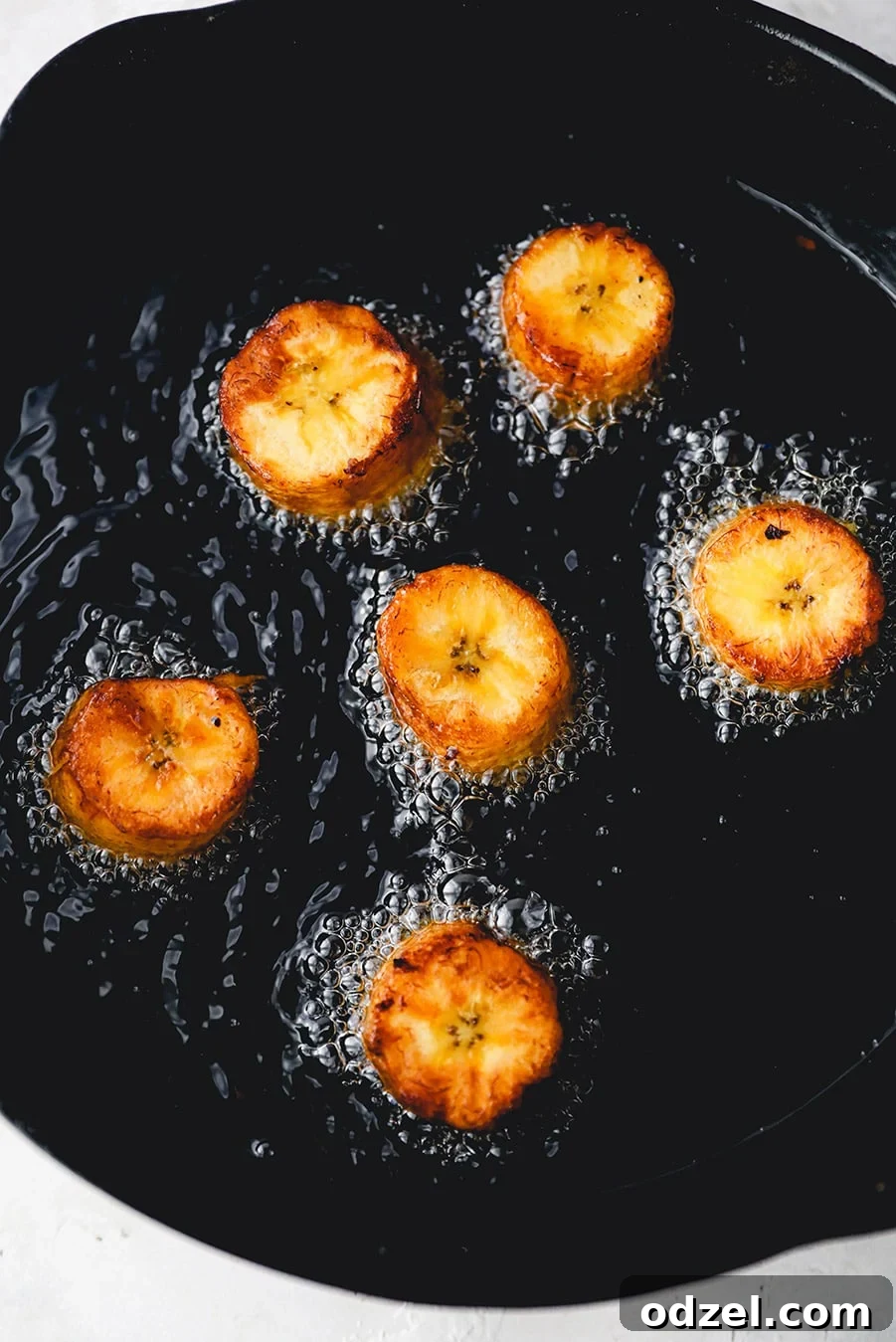
Top Tips For The Perfect Tostones
- Choose the Right Plantains: Always opt for firm, bright green plantains for tostones. Yellowing or black spots indicate ripeness, which will result in maduros (sweet plantains) rather than savory tostones.
- Proper Peeling Technique: Green plantains are notoriously difficult to peel. Instead of trying to peel them like a banana, use a sharp paring knife to slice off both ends. Then, make 2-3 shallow slits lengthwise along the ridges of the plantain, just cutting through the skin. Use your thumb or the knife tip to lift and peel back the skin.
- Oil Temperature is Key: For the first fry, the oil should be medium-hot (around 325-350°F / 160-175°C). The goal is to cook the plantain through and soften it, not to brown it too quickly. For the second fry, increase the temperature slightly (to about 375°F / 190°C) to achieve that ultimate crispiness without absorbing too much oil.
- The Art of Smashing: While a tostonera (plantain press) is traditional and efficient, a clean, greased flat-bottomed glass, a heavy skillet, or even two cutting boards can work perfectly. Ensure the smashing surface is slightly oiled to prevent sticking. Aim for a thickness of about ¼ to ½ inch – thin enough to get crispy, but thick enough to hold its shape.
- Don’t Skip the Garlic Water Dip: This step is non-negotiable for authentic, flavorful tostones. The salted garlic water not only infuses them with a delicious savory flavor but also adds a touch of moisture that helps them steam slightly during the second fry, contributing to a wonderfully light and crisp texture. Remember to dry them thoroughly after dipping!
- Season Immediately: Salt your tostones the moment they come out of the oil. The residual heat helps the salt adhere and truly brings out their savory flavor. Consider flaky sea salt for an extra gourmet touch.
- Versatile Dipping Options: Tostones are incredibly versatile and pair beautifully with a variety of dips. Their neutral, savory flavor profile, akin to a potato chip, makes them a perfect vehicle for bold flavors. Classic choices include Spinach Artichoke Dip, French Onion Dip, or a hearty Hot Crab Dip. Beyond that, think about classic mojo sauce, a simple garlic aioli, guacamole, or even a spicy pico de gallo.
- Beyond the Snack: Tostones are not just a standalone snack; they make an excellent accompaniment to main dishes. Serve them with hearty stews, grilled meats, or vibrant salads. They’re fantastic with Arroz con Pollo and a refreshing Tomato Avocado Salad for a complete and authentic Caribbean-inspired meal. They can also add a delightful crunch to salads, acting as a gluten-free and flavorful alternative to croutons.
What is the Difference Between Tostones and Maduros?
While both tostones and maduros are beloved plantain dishes, they represent two distinct culinary experiences, all stemming from the ripeness of the plantain used. Understanding this difference is key to appreciating their unique flavors and textures.
Tostones are exclusively made from **green, unripe plantains**. These plantains are starchy, firm, and have a savory, almost potato-like flavor. They are not sweet at all. The preparation involves a characteristic double-frying process: first, they are lightly fried to soften, then smashed flat, and finally fried again until they are golden-brown and exceptionally crispy. This method yields a savory, crunchy snack or side dish, often compared to thick-cut potato chips.
Maduros, on the other hand, are prepared using **ripe, yellow, or even black plantains**. As plantains ripen, their starch converts to sugar, making them soft and wonderfully sweet. While still less intensely sweet than a banana, ripe plantains offer a delightful caramel-like flavor when cooked. Maduros are typically fried only once, until they are beautifully caramelized and tender. They are not smashed like tostones, maintaining a softer, often slightly chewy texture that contrasts sharply with the crispiness of tostones. Maduros are often served as a sweet side dish, balancing savory meals, or even as a dessert component.
In essence, the core distinction lies in the plantain’s ripeness and the frying technique. Tostones are savory, firm, and double-fried for maximum crunch, while maduros are sweet, soft, and single-fried for a tender, caramelized finish. Both are delicious in their own right, but they offer entirely different flavor profiles and textures, showcasing the incredible versatility of the plantain.
Storage and Reheating Tips for Tostones
For best results, tostones are always at their peak when served fresh and hot. However, if you find yourself with leftovers or wish to prepare some ahead of time, proper storage and reheating can help maintain their quality.
- Pantry: Freshly made tostones can be stored in an airtight container at room temperature for up to 3 days. While they will lose some of their crispiness, a quick reheat can revive them.
- Fridge: For longer storage, place cooled tostones in a sealed airtight container in the refrigerator for up to 5 days. Be aware that refrigeration will make them softer and chewier.
- Freezer: Tostones freeze surprisingly well, especially after the first fry. For make-ahead convenience, fry the plantains once, smash them, and then allow them to cool completely. Arrange them in a single layer on a baking sheet and freeze until solid. Once frozen, transfer them to an airtight freezer bag or container. They can be stored for up to 2 months. When ready to serve, simply fry them directly from frozen for their second fry, adding a minute or two to the cooking time until golden and crispy.
- Reheating Leftovers: To restore crispiness to refrigerated or pantry-stored tostones, avoid the microwave, which will only make them soggy. Instead, reheat them in a hot oven (375°F / 190°C) for 5-10 minutes, or in an air fryer for 3-5 minutes, until heated through and crispy. You can also quickly refry them in a little hot oil in a skillet for a minute or two per side.
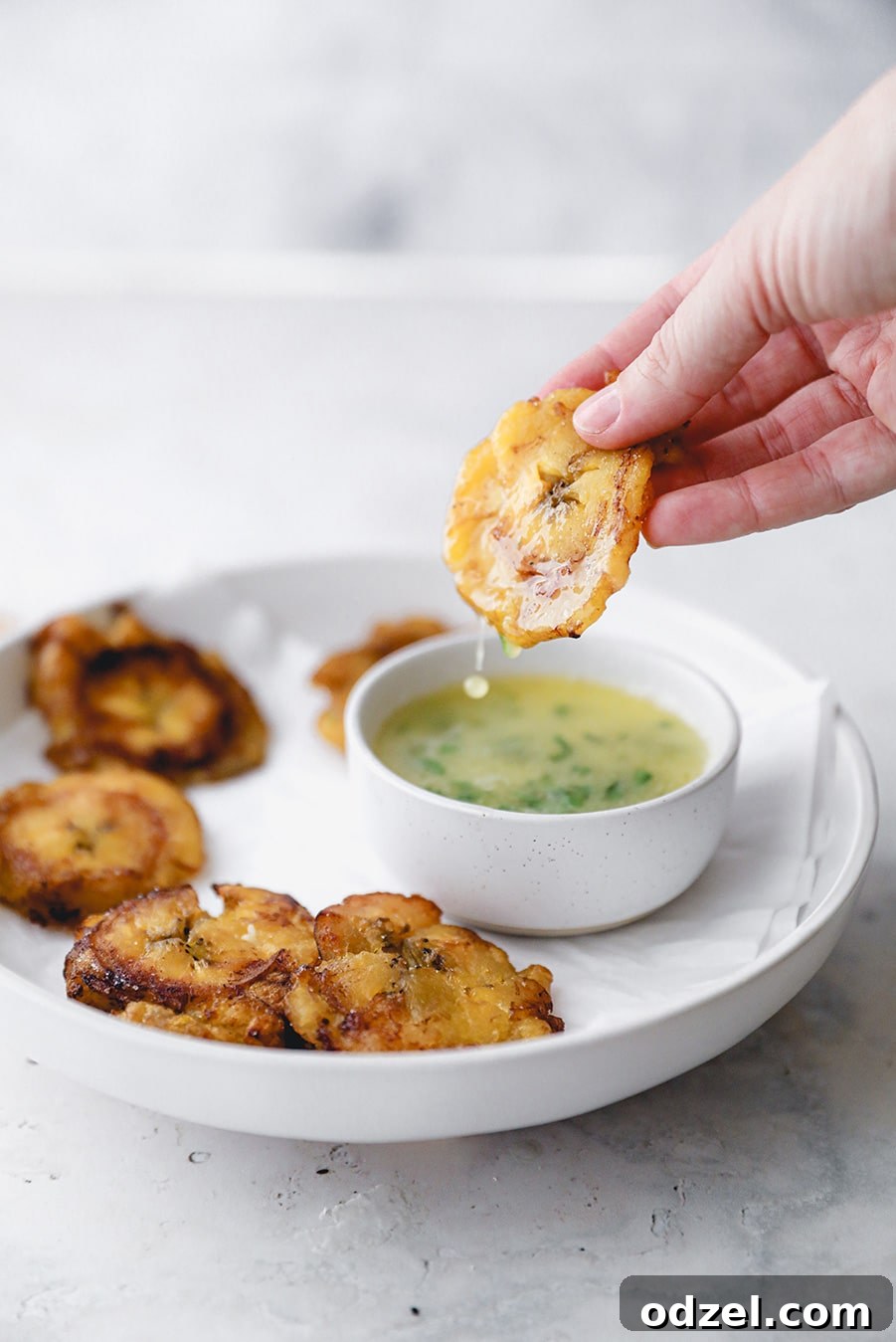
These crispy tostones are more than just a recipe; they are an invitation to experience a cherished piece of Caribbean and Latin American culinary tradition. Whether you’re making them for a quick snack, a party appetizer, or a delicious side dish, their simple ingredients and straightforward process yield truly remarkable results. The savory flavor, satisfying crunch, and versatility with dips make them an instant crowd-pleaser. So, gather your green plantains, embrace the double-fry method, and prepare to fall in love with these irresistible golden discs.
For more delicious recipes and cooking tutorial videos, be sure to check out Youtube and Facebook.
Crispy Tostones
Rating: 5/5 stars from 2 votes
By Julie Maestre
Go Caribbean style with your next snack and make these addicting crispy tostones. A super easy recipe that involves simply slicing and frying green plantains while they’re not quite ripe. Dip in garlic butter sauce or eat plain, either way, you’ll be hooked!
Prep Time: 15 mins | Cook Time: 10 mins | Total Time: 25 mins
Servings: 16 tostones
Course: Appetizer, Side Dish | Cuisine: Caribbean, Cuban, Puerto Rican
Keyword: How to make tostones, Tostones, Tostones with garlic sauce
Ingredients
For the Tostones:
- 3 green plantains, peeled and sliced into 1-inch slices
- 1/2 cup warm water
- 1 tbsp salt
- 2 garlic cloves, minced
- Oil, for frying
- Kosher salt for topping, to taste
For the Garlic Butter Sauce:
- 4 tbsp salted butter
- 4 garlic cloves, minced
- 1/2 tsp granulated garlic
- 1 tsp fresh parsley, chopped
Instructions
- Slice the stems off the plantains and discard. Using a knife, make 2-3 shallow slits lengthwise down the skin of the plantains. Peel the skin off and discard it. Slice the plantain into uniform 1-inch thick rounds.
- Heat some oil in a skillet over medium heat (around 325-350°F / 160-175°C). The oil should not be too hot or smoking. Fry the plantain slices in batches for 4-5 minutes on each side, or until they are light golden-brown and slightly softened. Remove them from the oil and place on a paper towel-lined plate.
- While still warm, grease the bottom of a small skillet or glass and smash each plantain piece into a flattened disc, about 1/4 to 1/2 inch thick.
- In a large bowl, mix the warm water, 1 tbsp salt, and 2 minced garlic cloves. Dip each smashed plantain into this salted garlic water. After dipping, thoroughly dry each plantain piece with a paper towel. Ensure they are very dry before the second fry.
- Once dried, return the smashed plantains to the skillet with the hot oil (increase heat slightly if necessary, to about 375°F / 190°C). Fry for another 3-4 minutes on each side, or until they are deep golden-brown and wonderfully crispy.
- Remove the crispy tostones from the oil, place them on fresh paper towels to drain, and immediately season with kosher salt to taste.
- To make the garlic butter sauce: In a small skillet, combine the salted butter, 4 minced garlic cloves, and granulated garlic. Cook over low heat until the butter melts completely and is warmed through. Using a spoon, skim off any foam that rises to the top. Stir in the fresh chopped parsley just before serving.
Nutrition
Calories: 68kcal | Carbohydrates: 11g | Protein: 1g | Fat: 3g | Saturated Fat: 2g | Cholesterol: 8mg | Sodium: 899mg | Potassium: 170mg | Fiber: 1g | Sugar: 5g | Vitamin A: 467IU | Vitamin C: 7mg | Calcium: 4mg | Iron: 1mg
Nutrition information is automatically calculated, so should only be used as an approximation.