
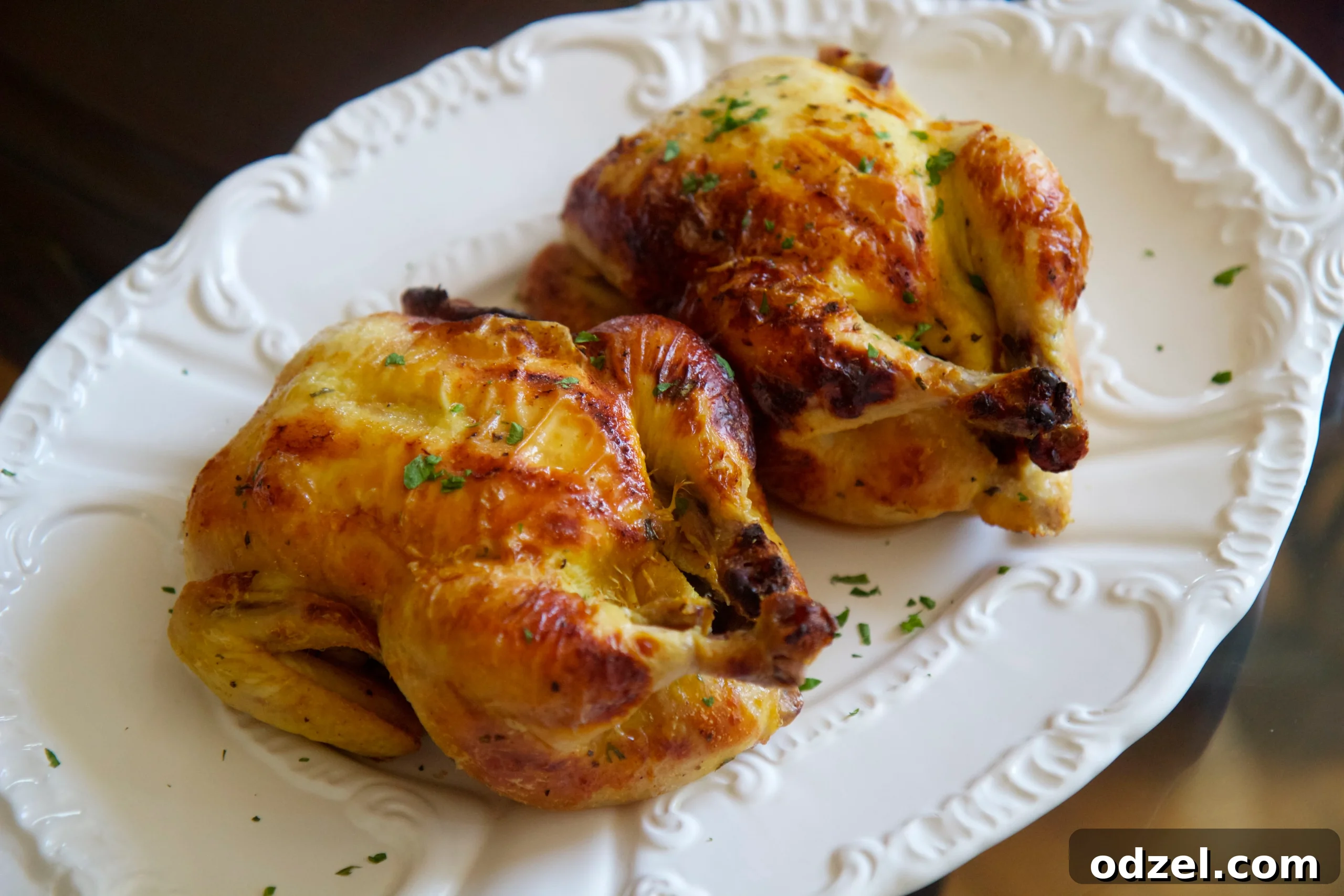
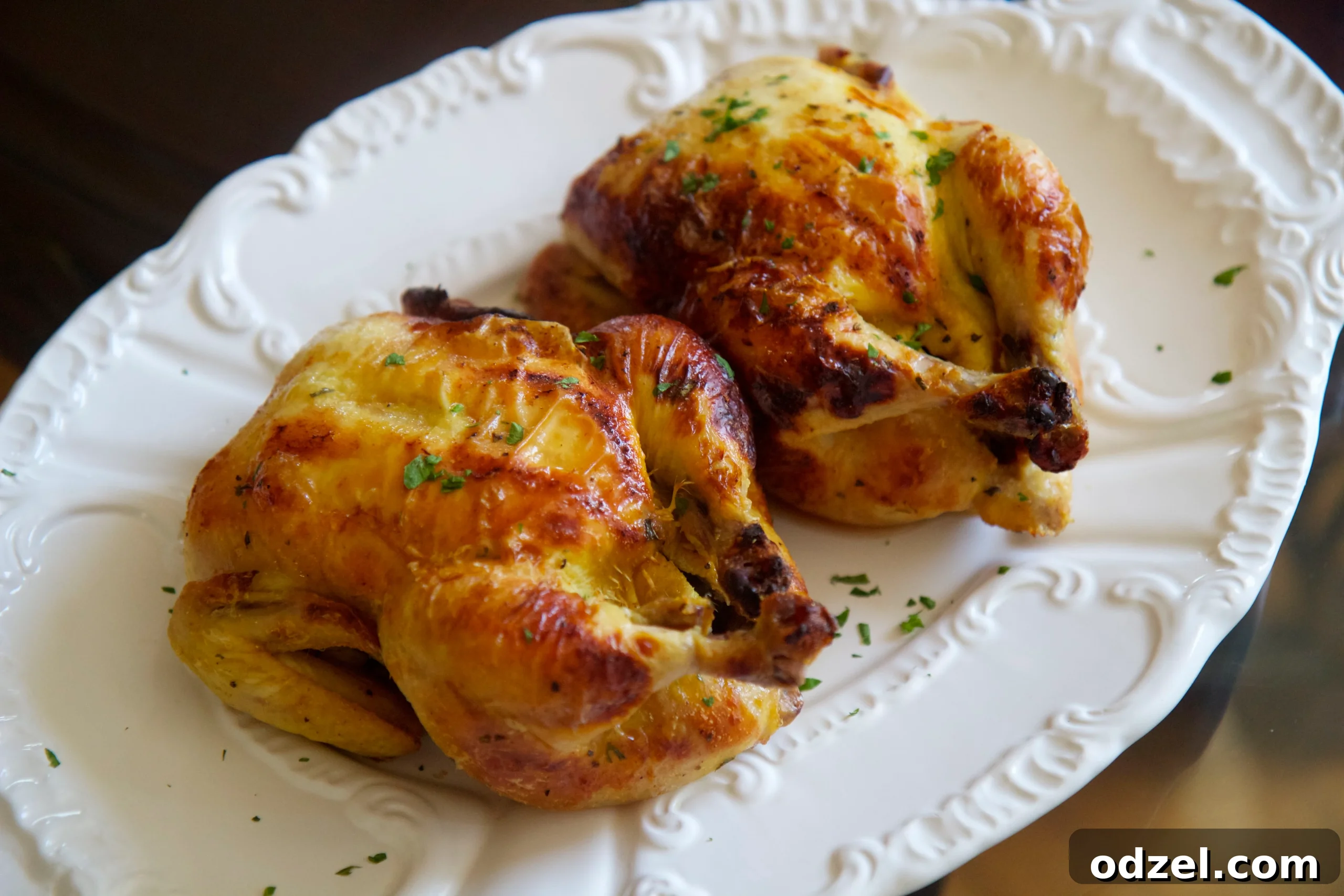
Mastering Buttermilk Brined Cornish Hens: A Flavorful and Elegant Roast
There’s something uniquely satisfying about serving individual roasted birds, especially during the holidays or for a special family gathering. Cornish game hens, with their delicate size and elegant presentation, are truly a showstopper. While they might look impressive and perhaps a little intimidating to newcomers, I assure you, roasting these beauties is one of the simplest and most rewarding cooking methods you can master. And when you introduce the magic of a buttermilk brine? Prepare for an explosion of flavor and unparalleled tenderness that will leave everyone asking for your secret.
I absolutely adore preparing Cornish hens for festive occasions. Their versatility allows for endless culinary creativity, letting you experiment with various seasonings and sauces to suit any palate. I recall one holiday season where I prepared two distinct batches for my very large family – ten spicy guava glazed hens for those who craved a zesty kick, and another ten perfectly brined in a fragrant, seasoned buttermilk for a classic, comforting taste. While they appear quite substantial in photographs, Cornish hens are typically petite, making them the ideal portion size for a sophisticated individual serving.
Why Buttermilk Brining is a Game Changer
If you’ve ever wrestled with dry, lackluster roasted chicken, buttermilk brining is about to become your new best friend. This technique isn’t just about adding flavor; it’s a scientific marvel for poultry. The lactic acid in buttermilk gently breaks down the tough muscle fibers in the chicken, resulting in meat that is incredibly tender and moist. Unlike a traditional saltwater brine, buttermilk also imparts a subtle tanginess and a rich creaminess, enhancing the overall depth of flavor without overpowering the delicate taste of the hen itself.
Beyond the tenderizing effect, brining ensures that the meat retains moisture throughout the roasting process. This means a consistently juicy interior, even if you accidentally overcook it by a few minutes. Coupled with a careful selection of herbs and spices, the buttermilk acts as a flavorful delivery system, infusing every fiber of the hen with aromatic goodness. This simple step elevates a good roasted hen to an extraordinary one, promising a memorable culinary experience.
Roasting Perfection: Simplicity in the Oven
Many home cooks feel daunted by the prospect of roasting chicken, but I’m here to tell you there’s no need to be. Roasting is, hands down, one of the most straightforward cooking methods. Once your Cornish hens are prepped and nestled in the oven, your work is largely done for a significant period. Imagine the possibilities! In just an hour or so, you could tackle a multitude of other tasks around the house, spend quality time with loved ones, or simply relax with a good book, all while your kitchen fills with the irresistible aroma of a gourmet meal in progress.
The key to perfect roasting lies in understanding a few basic principles: proper temperature, allowing the hens to reach room temperature before cooking, and ensuring they cook through evenly. Our recipe simplifies this process, guiding you to a beautifully browned, crispy-skinned, and succulent hen with minimal fuss. It’s a set-it-and-forget-it approach that yields consistently delicious results, making it perfect for busy holiday preparations or even a satisfying weeknight meal when you want something a little extra special.
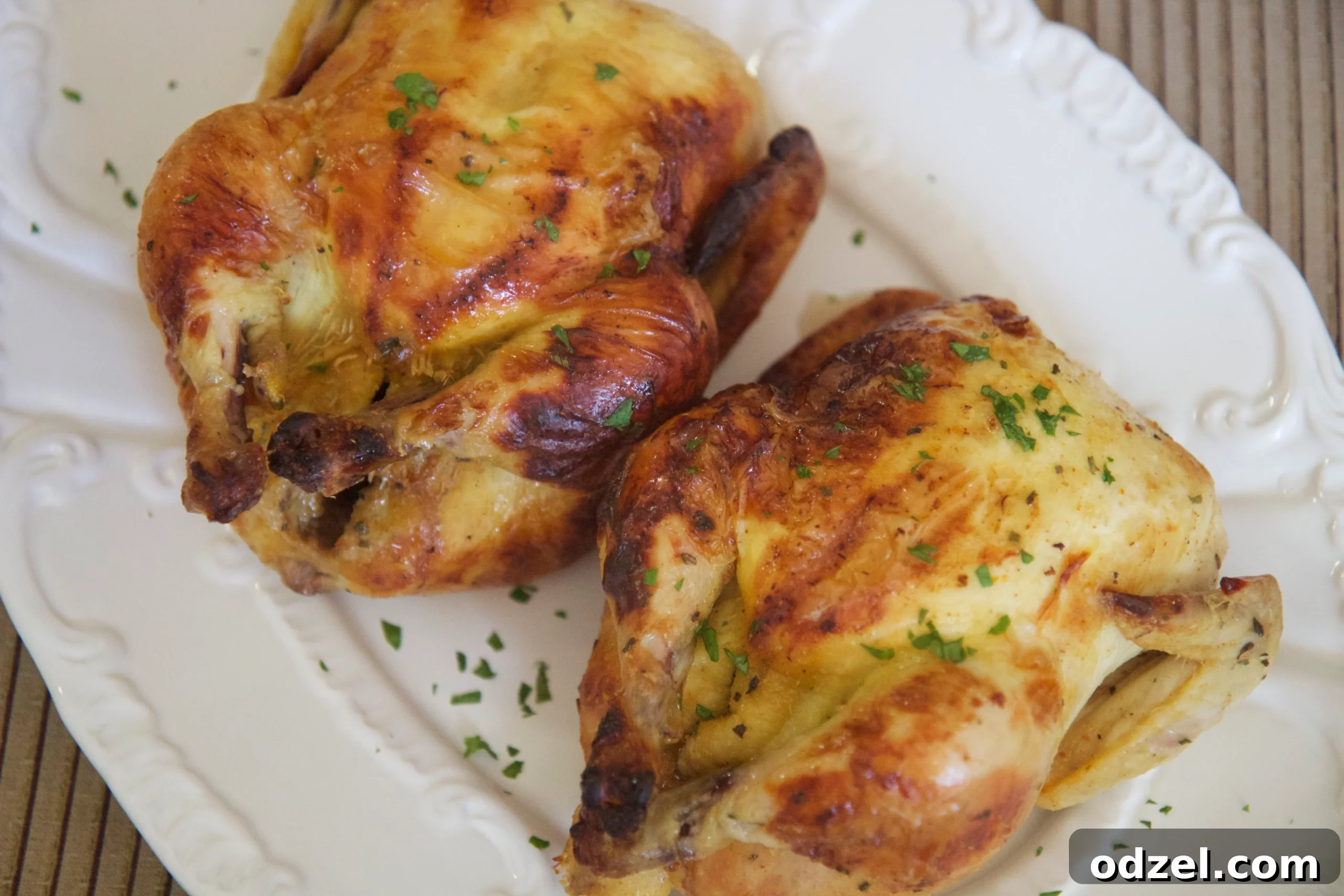
The Perfect Accompaniments
What complements a perfectly roasted Cornish hen? The possibilities are delightful and diverse. My personal favorites include fluffy mashed potatoes, which eagerly soak up any delicious pan drippings, and a medley of seasonal roasted vegetables. Think vibrant asparagus, sweet carrots, or earthy Brussels sprouts, all caramelized to perfection alongside the hens. Sometimes, when I’m feeling a bit more casual, a generous serving of crispy french fries makes for a comforting pairing. For a more sophisticated touch, consider wild rice pilaf, a fresh garden salad with a light vinaigrette, or a rich mushroom gravy to drizzle over the top. The beauty of these hens is their ability to adapt to both formal and casual dining settings, making them an excellent choice for any occasion.
Choosing the right side dishes can elevate your meal from great to truly unforgettable. For a holiday feast, incorporate classic favorites like green bean casserole or a savory stuffing. If you’re aiming for a lighter, more refreshing experience, a citrus-infused quinoa salad or steamed greens would be excellent. Don’t be afraid to get creative with your accompaniments, tailoring them to the season, your mood, or your guests’ preferences.
Buttermilk Cornish Hen
By Julie Maestre
This Buttermilk Cornish Hen recipe is perfect for Holiday family dinners! Don’t be intimidated by the idea of roasting a chicken – with this easy recipe, you’ll have a Holiday dinner ready to impress the whole family.
- Prep Time: 5 mins
- Cook Time: 1 hr 25 mins
- Refrigerate (Brine): 2 hrs
- Total Time: 1 hr 30 mins (active cooking + resting)
- Servings: 4 servings
Jump to Instructions |
Pin Recipe
Ingredients
- 2 Cornish Hens, 1 1/2 to 2 lbs each
- 1 1/2 cup Buttermilk
- 2 Garlic Cloves, minced
- 1 tsp Garlic Powder
- 1 tsp Onion Powder
- 1 tsp Paprika
- 1/4 Tsp Chili Powder
- 1 tsp Dried Parsley
- 1 tsp Dried Oregano
- 1/4 Tsp Thyme
- 1/4 Tsp Rosemary
- Salt and Pepper to taste
- 1 tbsp butter, melted (for brushing)
Instructions
- Rinse the Cornish Hens thoroughly, including the cavity. Pat them dry completely with paper towels and set aside.
- In a large bowl, whisk together the buttermilk, minced fresh garlic, garlic powder, onion powder, paprika, chili powder, dried parsley, dried oregano, thyme, rosemary, salt, and pepper until well combined.
- Place the dried Cornish Hens into the seasoned buttermilk mixture. Ensure they are fully submerged or turn them occasionally. Cover the bowl tightly with plastic wrap and refrigerate for a minimum of 2 hours, or ideally overnight (up to 12-24 hours) for maximum flavor and tenderness.
- Approximately 30 minutes before roasting, remove the brined Cornish Hens from the refrigerator. Remove them from the buttermilk mixture, gently pat them dry again to remove excess buttermilk (this helps achieve crispy skin), and allow them to come to room temperature.
- Preheat your oven to 425 degrees F (220 degrees C).
- Arrange the Cornish Hens on a roasting pan, ensuring there is some space between them for even cooking. You can truss the hens if desired, but it’s not strictly necessary for this recipe.
- Cover the roasting pan loosely with aluminum foil. Roast for 1 hour and 15 minutes, or until an internal temperature of 165 degrees F (74 degrees C) is reached in the thickest part of the thigh without touching the bone.
- For the final 15-20 minutes of cooking, remove the aluminum foil. This will allow the skin to crisp up and turn a beautiful golden brown. If the skin isn’t browning sufficiently, you can increase the oven temperature to 450 degrees F (230 degrees C) for the last 5-10 minutes, monitoring closely to prevent burning.
- Once cooked, remove the hens from the oven. Brush them lightly with melted butter for an extra golden sheen and rich flavor. Let the Cornish hens rest for at least 10 minutes before carving or serving. This allows the juices to redistribute, ensuring incredibly moist meat. Enjoy your tender and flavorful Buttermilk Cornish Hens!
Recipe Video
Nutrition Facts (per serving)
Approximate values, calculated automatically.
- Calories: 540 kcal
- Carbohydrates: 6g
- Protein: 41g
- Fat: 37g
- Saturated Fat: 12g
- Cholesterol: 244mg
- Sodium: 262mg
- Potassium: 674mg
- Sugar: 4g
- Vitamin A: 815 IU
- Vitamin C: 1.6mg
- Calcium: 131mg
- Iron: 1.9mg
Additional Recipe Details
- Author: Julie Maestre
- Course: Entree
- Cuisine: American
- Keywords: buttermilk roasted chicken, Cornish Hen, holiday roast, easy chicken recipe
Tips for Roasting Success
Achieving a perfectly roasted Cornish hen is surprisingly simple with a few key tips:
- Don’t Skip the Brine: As emphasized, brining is crucial for moisture and flavor. Allow ample time for the hens to soak up the buttermilk goodness.
- Pat Dry Thoroughly: After brining, ensure the hens are very dry, both inside and out. This promotes crispy skin, which is often the most coveted part of a roast.
- Room Temperature Start: Letting the hens come to room temperature for about 30 minutes before roasting ensures more even cooking. Cold meat cooks unevenly and takes longer.
- Season Generously: Don’t be shy with salt and pepper, even after brining. These enhance the natural flavors of the chicken and the spices.
- Use a Roasting Pan: A roasting pan with a rack allows air to circulate around the hens, ensuring all sides brown beautifully and preventing the bottom from becoming soggy.
- Check Internal Temperature: The most reliable way to know if your hens are cooked is with a meat thermometer. Insert it into the thickest part of the thigh, avoiding the bone. The target temperature is 165°F (74°C).
- Rest the Meat: This step is non-negotiable! After removing the hens from the oven, cover them loosely with foil and let them rest for 10-15 minutes. This allows the juices to redistribute throughout the meat, resulting in a more tender and juicy final product.
- Crispy Skin Boost: If your skin isn’t as crispy as you’d like after removing the foil, you can briefly place the hens under a broiler for a minute or two. Watch them very carefully, as they can burn quickly.
Beyond the Recipe: Customizing Your Cornish Hens
While this buttermilk brined recipe offers a fantastic foundation, feel free to customize it to your taste. Consider adding fresh herbs like sage or thyme sprigs directly into the cavity of the hens before roasting for an extra layer of aroma. A squeeze of fresh lemon juice or slices of citrus placed inside can also brighten the flavor profile. For those who enjoy a spicier kick, a pinch more chili powder or a dash of cayenne pepper in the brine will certainly deliver. You can also experiment with different spice blends – think a smoky chipotle rub, a vibrant Mediterranean mix, or a pungent garam masala for an international twist.
Another popular variation is to stuff the hens with a savory mixture of breadcrumbs, herbs, and vegetables. Just be sure to account for the additional cooking time required for the stuffing to reach a safe internal temperature. The small size of Cornish hens makes them ideal for individual customization, allowing each guest to enjoy a hen prepared exactly to their liking. This makes them not only a delicious choice but also a thoughtful one for entertaining.
The Joy of Holiday Cooking Made Simple
In the whirlwind of holiday preparations, having a reliable and relatively hands-off main course is a blessing. Buttermilk brined Cornish hens fit this bill perfectly. Their smaller size means they cook faster than a large turkey or whole chicken, freeing up valuable oven space and your time. Moreover, the individual portions eliminate the need for carving at the table, making serving a breeze and ensuring everyone gets a beautifully composed plate.
From Thanksgiving feasts to Christmas dinners, or even a sophisticated Sunday roast, these Cornish hens provide an elegant yet comforting centerpiece. The ease of preparation, combined with the impressive results, means you can focus more on enjoying the company of your family and friends, rather than being tethered to the kitchen. So go ahead, embrace the simplicity and deliciousness of this recipe, and create culinary memories that will last a lifetime.
Enjoyed this recipe?
Your feedback is invaluable! Please consider leaving a comment below to share your experience or any delicious variations you tried. Happy cooking!