
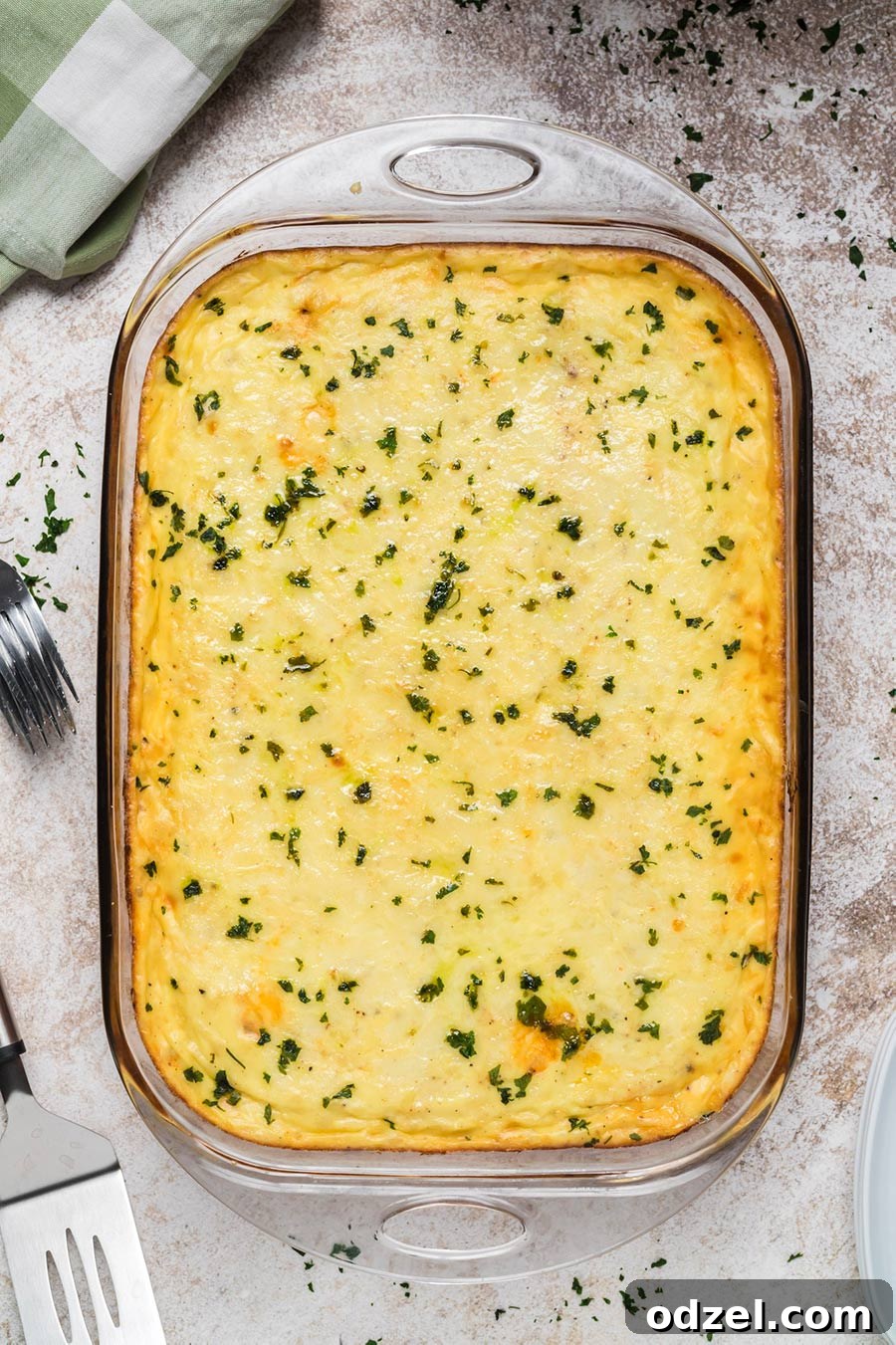
Authentic Greek Pastitsio: Your Guide to the Ultimate Baked Pasta
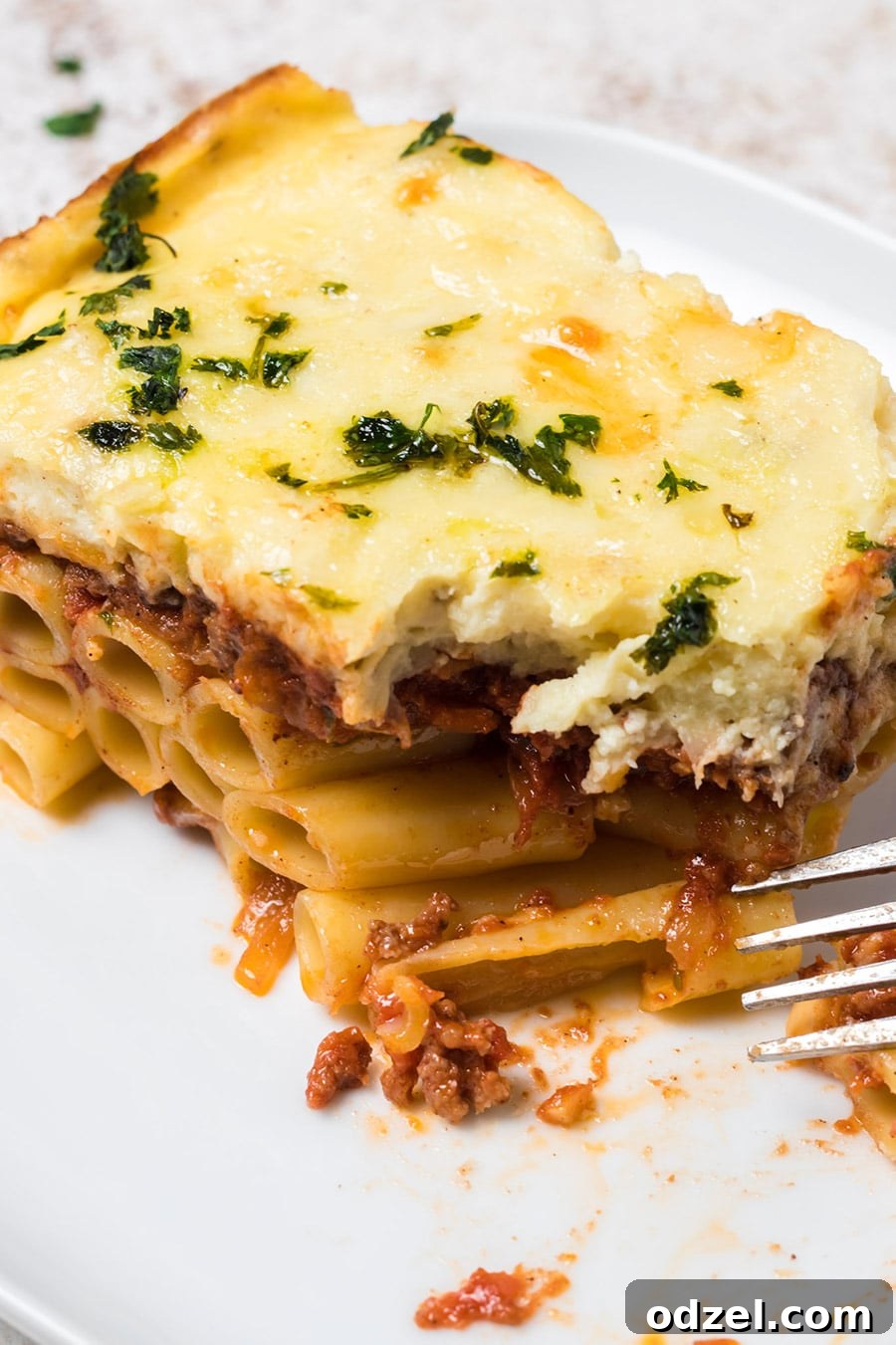
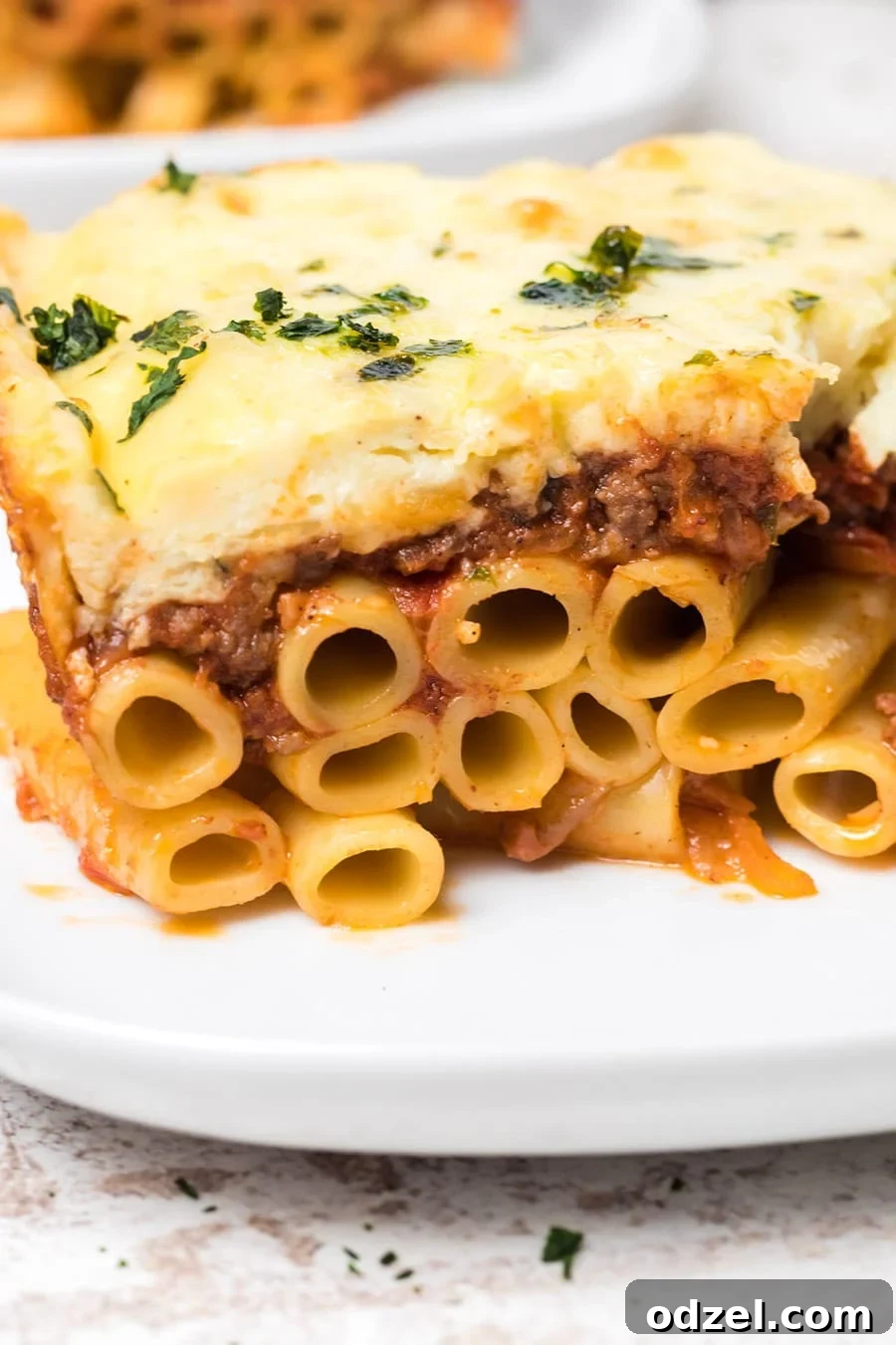
Embark on a culinary journey to Greece with this iconic Pastitsio recipe! Often dubbed “Greek lasagna,” Pastitsio is a deeply satisfying baked pasta dish featuring a symphony of flavors and textures. It boasts layers of perfectly cooked pasta, a rich and aromatic ground beef filling, and a luscious, creamy béchamel sauce crowning it all. Infused with fresh herbs, traditional spices, and a blend of two distinct cheeses, this dish promises a memorable and incredibly delicious meal that will have everyone asking for seconds.
Pastitsio holds a special place in Greek cuisine, frequently gracing family tables and celebratory feasts. While it shares structural similarities with Italian lasagna, its unique character comes from the use of a velvety white béchamel sauce instead of a red marinara, and a distinctive aromatic spice blend. The subtle hint of cinnamon, and sometimes nutmeg, in the meat sauce might surprise some, but it’s a signature touch that elevates the dish with an irresistible warmth and depth, creating a truly unforgettable flavor profile.
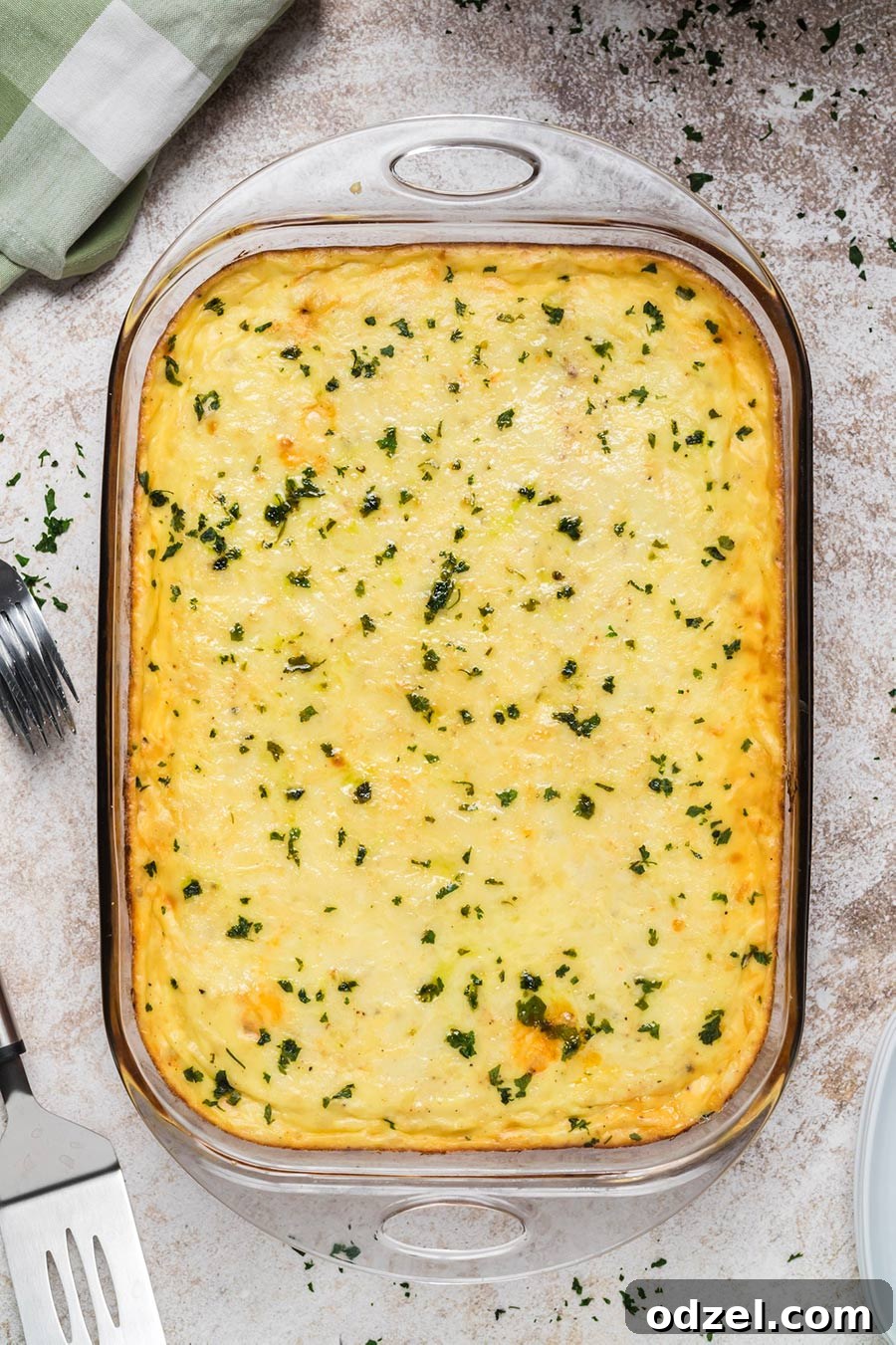
Why You’ll Love This Authentic Pastitsio Recipe
This Pastitsio recipe isn’t just another pasta dish; it’s a culinary masterpiece that brings comfort and joy with every bite. Here’s why it will become a staple in your kitchen:
- Authentic Greek Flavors: We stay true to the traditional preparation, ensuring you experience the genuine taste of Greek home cooking, complete with the unique spice blend that defines Pastitsio.
- Rich & Creamy Texture: The combination of tender pasta, savory meat, and the silkiest béchamel sauce creates an incredibly comforting and luxurious texture that melts in your mouth.
- Crowd-Pleaser: Perfect for gatherings, potlucks, or a hearty family dinner, Pastitsio is a dish that appeals to all ages and palates. It’s substantial, flavorful, and incredibly satisfying.
- Make-Ahead Friendly: This dish can be partially assembled ahead of time, making it ideal for busy weeknights or when entertaining guests.
Ingredients Spotlight: What Makes Pastitsio Shine
Crafting the perfect Pastitsio relies on a handful of key ingredients that each play a vital role in its distinctive taste and texture:
- Pasta: Traditionally, Pastitsio uses thick, hollow pasta like bucatini or ziti. These shapes are excellent for holding the rich meat sauce and providing a sturdy base.
- Ground Beef: Lean ground beef forms the hearty, savory core of the dish. Seasoned with aromatic spices, it creates a deeply flavorful layer.
- Aromatic Spices: Cinnamon and nutmeg are the secret weapons of Pastitsio, imparting a warm, slightly sweet, and utterly captivating aroma to the meat sauce. Don’t skip them for an authentic taste!
- Béchamel Sauce: This creamy, white sauce is the crowning glory of Pastitsio. Made from butter, flour, milk, and eggs, it provides a rich, silky top layer that bakes to a beautiful golden brown.
- Cheeses: Feta cheese adds a tangy, salty counterpoint to the pasta layer, while Gruyère cheese, known for its nutty flavor and excellent melting qualities, is incorporated into the béchamel and sprinkled on top for a delightful crust.
How to Make Greek Pastitsio: Step-by-Step Guide
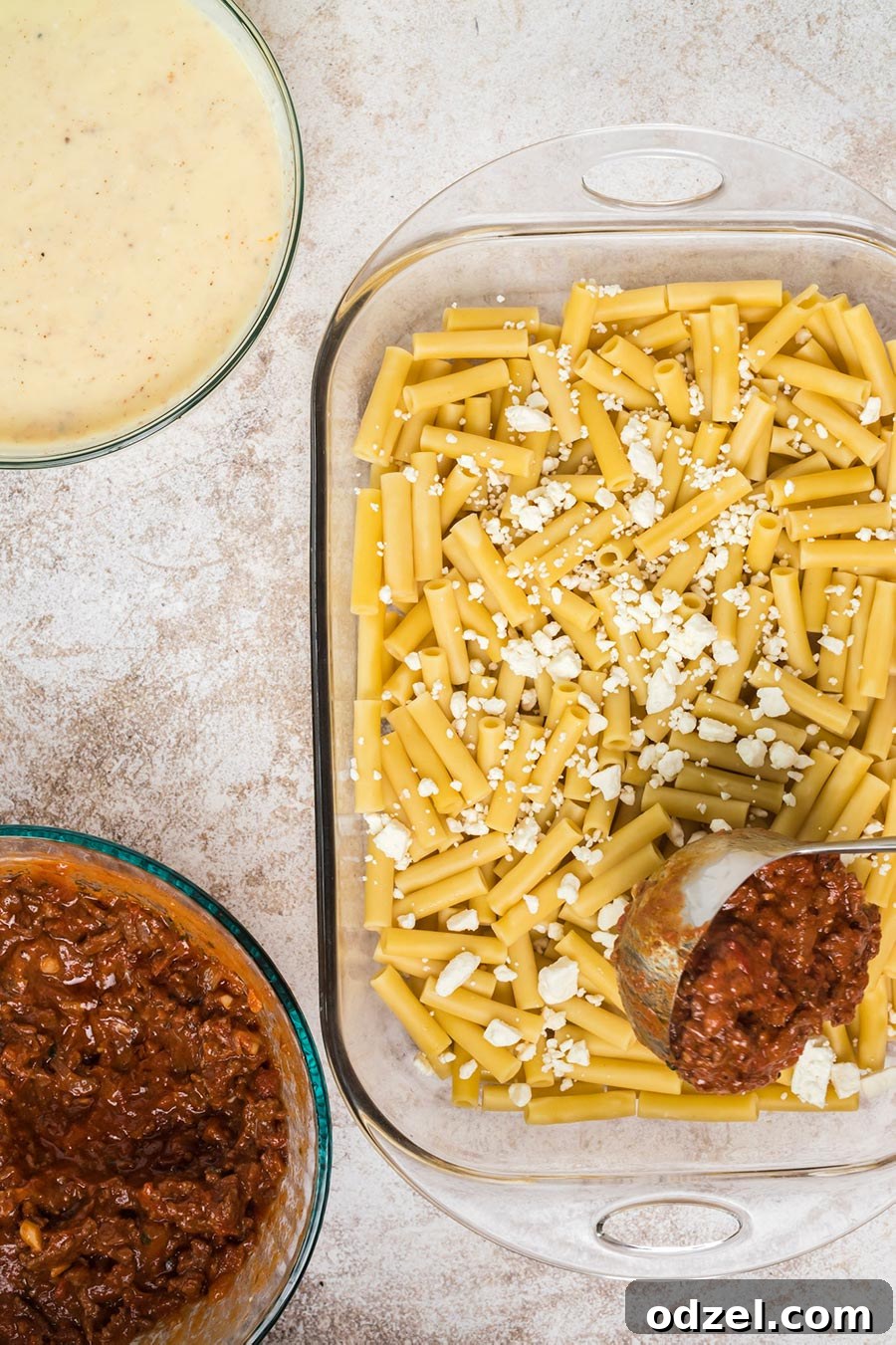
- Prep & Pasta Base: Begin by preheating your oven to 350 degrees F (175 C). Cook your ziti pasta according to package directions until al dente, then drain thoroughly. Spread the cooked pasta evenly across the bottom of a 13×9 inch baking dish. For an extra layer of flavor and texture, crumble half a cup of feta cheese over the pasta.
- Prepare the Savory Meat Sauce: In a large pan, heat 4 tablespoons of olive oil over medium-high heat. Add the diced onions, sugar, and fresh thyme sprigs, sautéing for about 3 minutes until the onions soften and become fragrant. Stir in the tomato paste and continue to sauté for another 2 minutes, allowing the flavors to deepen. Add the ground beef and cook, breaking it up with a spoon, for about 5-7 minutes until thoroughly browned. Drain any excess fat. Pour in the red wine and let it simmer for 2 minutes, allowing the alcohol to evaporate and the flavors to meld. Stir in the ground cinnamon and a beef bouillon cube. Reduce the heat to low, then add the diced tomatoes. Simmer gently for 5 minutes to allow the sauce to thicken slightly and flavors to harmonize, then remove from heat.
- Craft the Creamy Béchamel Sauce: In a separate saucepan, melt 1/2 cup of butter over medium heat. Once the butter is completely melted, whisk in 1/3 cup of all-purpose flour. Continue whisking constantly for 2 minutes to create a smooth roux. Gradually pour in 4 1/4 cups of milk, whisking continuously to prevent lumps and ensure a silky consistency. Season generously with salt and pepper. Cook for about 5 minutes, continuing to whisk occasionally, until the sauce thickens to a creamy, spoon-coating consistency. Remove from heat. Stir in 2 3/4 cups of the grated Gruyère cheese until it’s fully melted and incorporated (reserve the remaining 1/4 cup for topping). In a small bowl, whisk 5 eggs lightly, then slowly temper them into the béchamel sauce, whisking vigorously to prevent scrambling. Cook for another 2 minutes, stirring constantly, then remove from heat and stir in 1/2 teaspoon of nutmeg.
- Assemble Your Pastitsio Masterpiece: Take 3 tablespoons of the prepared béchamel sauce and stir it into your ground beef mixture; this adds moisture and helps bind the meat. Spread the meat mixture evenly over the pasta and feta layer in your baking dish. Next, carefully pour the remaining creamy béchamel sauce over the meat layer, spreading it to cover the entire surface. Finish by sprinkling the reserved 1/4 cup of grated Gruyère cheese and 1 tablespoon of fresh chopped parsley over the béchamel.
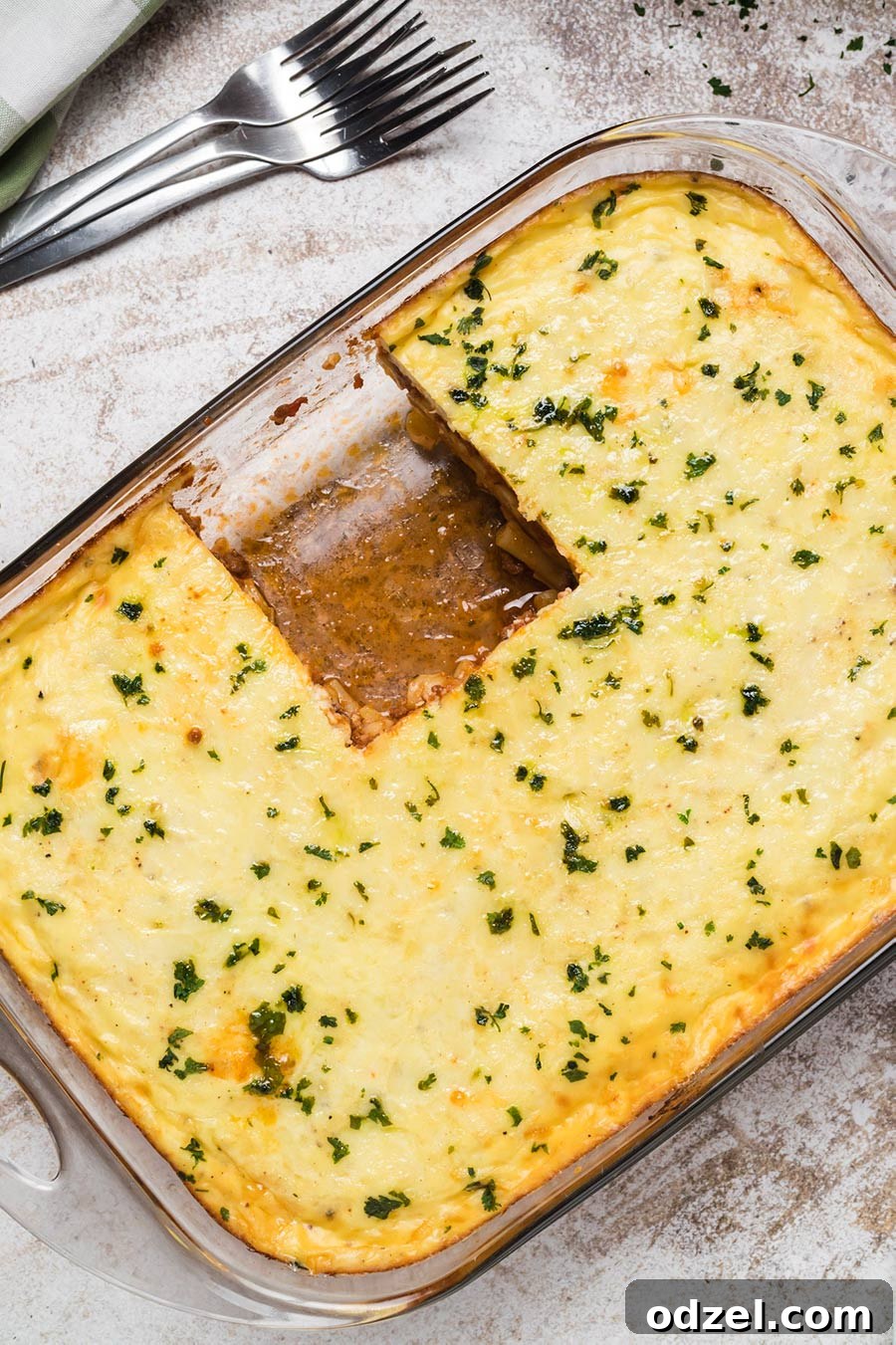
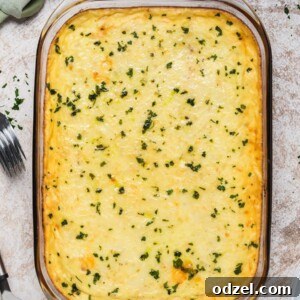
- Bake to Golden Perfection: Place the baking dish on the center rack of your preheated oven. Bake for approximately 50 minutes, or until the top layer of béchamel sauce turns a beautiful golden brown and is bubbling enticingly. Once baked, allow the Pastitsio to cool and set for at least 10-15 minutes before slicing and serving. This resting period is crucial for the layers to firm up, making for cleaner cuts and preventing the dish from falling apart. Enjoy your homemade Greek Pastitsio!
Top Tips For Achieving The Perfect Pastitsio Every Time
- Adjust the Cinnamon or Nutmeg to Taste: While cinnamon and nutmeg are hallmarks of traditional Pastitsio, their strong flavors can be polarizing. Many adore the warm, aromatic notes they impart to the savory meat sauce, while others prefer a milder touch. Feel free to adjust the quantities or even omit one or both spices if you’re unsure or catering to varying preferences. However, for an authentic Greek experience, we highly recommend including at least a hint of cinnamon.
- Experiment with Different Cheeses: The recipe calls for feta and Gruyère, which offer a perfect balance of saltiness and nutty creaminess. However, the world of cheese is vast! If you wish to customize, consider other firm, flavorful cheeses. Kefalotyri or Kasseri are excellent traditional Greek choices if you can find them. For a more accessible alternative, a good quality sharp white cheddar or even a blend of Parmesan and mozzarella could work, though they will subtly alter the traditional flavor profile. Remember that varying cheeses can significantly impact the taste and melting properties, so choose wisely.
- Non-Traditional Red Sauce Option: While béchamel is a defining characteristic of Pastitsio, if you’re craving a twist or prefer a more Italian-inspired flavor, you absolutely could swap out the creamy béchamel for a robust marinara sauce. This would transform the dish into something closer to a classic baked ziti or American lasagna, offering a delicious variation on the concept of layered pasta and meat.
- Ensure a Silky Béchamel: The béchamel sauce is crucial. To avoid lumps, ensure your butter and flour are cooked thoroughly into a roux before slowly whisking in warm milk. Continuously whisk as you add the milk, and keep stirring as it thickens. If you find any small lumps, a quick pass through a fine-mesh sieve can rescue your sauce.
- What to Serve with Your Greek Pastitsio: Pastitsio is a hearty and complete meal on its own, but it pairs wonderfully with light, fresh sides that cut through its richness. Think Mediterranean-inspired accompaniments, much like you would serve with an Italian classic. Great options include a crisp Greek Salad with a simple vinaigrette, roasted vegetables like asparagus or Brussels sprouts, lemon-infused couscous, or even a simple crusty bread to soak up any remaining sauce. For something different, cheesy corn or honey roasted carrots also make delightful additions.
- Bake on the Center Rack for Even Cooking: The position of your baking dish in the oven can significantly affect the cooking outcome. For Pastitsio, baking on the middle rack ensures the most even heat distribution, allowing the pasta to cook thoroughly, the meat sauce to warm perfectly, and the béchamel top to achieve a beautiful, consistent golden-brown crust without burning. Always remember to adjust your oven racks before preheating if they aren’t already in the optimal central position.
- Let it Rest: Patience is a virtue, especially after baking Pastitsio. Allowing the dish to rest for at least 10-15 minutes after it comes out of the oven is crucial. This resting period allows the layers to set properly, preventing the dish from falling apart when you slice into it and ensuring neat, attractive servings.
What is the Difference Between Moussaka and Pastitsio?
Moussaka and Pastitsio are both iconic Greek baked dishes, frequently topped with a creamy béchamel sauce, leading to common confusion. However, their foundational layers set them distinctly apart. Moussaka typically features sliced eggplant and/or potatoes as its base layer, often pan-fried or roasted, followed by a savory ground meat (lamb or beef) sauce. It’s akin to a Mediterranean shepherd’s pie. Pastitsio, on the other hand, is a layered pasta dish, using ziti or bucatini as its primary carbohydrate component, offering a texture more akin to a hearty Italian lasagna. While both are incredibly comforting and popular, their core ingredients — vegetables in Moussaka versus pasta in Pastitsio — define their unique identities.
What is the Difference Between Lasagna and Pastitsio?
Though both are celebrated baked pasta dishes, the differences between Italian Lasagna and Greek Pastitsio are quite significant, creating distinct culinary experiences. Classic Italian Lasagna is characterized by broad, flat lasagna noodles layered with a rich, slow-simmered beefy marinara (red) sauce, often featuring a blend of ricotta, mozzarella, and Parmesan cheeses. The emphasis is on a robust tomato flavor and gooey, melted cheese. Pastitsio, however, utilizes thick, hollow pasta like ziti, a spiced ground beef and tomato mixture (though less tomato-forward than marinara), and is topped with a distinctively creamy, egg-enriched béchamel sauce. The cheese used in Pastitsio typically includes feta for tang and Gruyère for its nutty notes and superior melting quality. The unique addition of cinnamon and nutmeg in Pastitsio’s meat sauce also sets it distinctly apart, providing a warm, aromatic complexity absent in Italian lasagna. In essence, while both offer comforting layers of pasta and meat, they diverge significantly in their sauce bases, spice profiles, and cheese choices.
Storage and Reheating Greek Pastitsio
- Fridge: Leftover Pastitsio can be stored in an airtight container in the refrigerator for up to 4 days. Make sure it’s completely cooled before transferring to storage.
- Freezer: For longer storage, Pastitsio freezes beautifully. Place cooled slices or the entire dish (if unbaked or baked and cooled) in an airtight, freezer-safe container. It can be frozen for up to 2 months. Thaw overnight in the refrigerator before reheating.
- Reheating: To reheat individual portions, the microwave works well, though the béchamel might lose some of its crispness. For best results, especially with larger portions, reheat in the oven at 300-325°F (150-160°C) until warmed through, usually 20-30 minutes for individual slices or 45-60 minutes for a whole dish, covered with foil to prevent drying out. Remove foil for the last 10 minutes if you want to re-crisp the top.
More Delicious Pasta Recipes You’ll Love
If you enjoyed the comforting layers of Pastitsio, you might also love these other delightful pasta creations:
- Instant Pot Rasta Pasta
- Shrimp Pesto Pasta
- Chicken and Shrimp Pasta Bake
- Creamy Shrimp Alfredo Pasta
You can find more delicious recipes and cooking tutorial videos on Youtube and Facebook.
Pastitsio Recipe
Julie Maestre
35 mins
50 mins
1 hr 25 mins
8
Ingredients
- 1 lb ziti pasta
- 1 lb ground beef
- 28 ounces diced tomatoes
- 1/2 cup feta cheese, crumbled
- 1 tsp granulated sugar
- 1 onion, diced
- 2 sprigs fresh thyme
- 2 tbsp tomato paste
- 2 oz red wine
- 1 tsp ground cinnamon
- 1/2 tsp ground nutmeg
- 1 beef bouillon cube
- 1/2 cup butter
- 1/3 cup all-purpose flour
- 4 1/4 cups milk
- 3 cups Gruyère cheese, grated (divided)
- 5 eggs
- 1 tbsp fresh parsley, chopped
- Salt and pepper to taste
- 4 tbsp olive oil
Instructions
- Preheat oven to 350 degrees F (175 C). Cook and drain pasta. Add to the bottom of a 13×9 casserole dish and top with feta cheese.
- Add 4 tbsp olive oil to a pan over medium-high heat. Add onions, thyme, and sugar. Sauté for 3 minutes. Add tomato paste and sauté for 2 minutes. Add ground beef, brown for 5 minutes. Add red wine and cook for 2 minutes. Then, add cinnamon and beef bouillon. Lower heat, add diced tomatoes. Simmer for 5 minutes and then remove from heat.
- In a saucepan, make the béchamel sauce. Melt butter. Once melted, add the flour and whisk while cooking for 2 minutes. Slowly incorporate milk, whisking often. Whisk in salt and pepper and cook for 5 minutes. The sauce will be slightly thick and creamy. Stir in 2 3/4 cups of grated Gruyère cheese until melted (set aside 1/4 cup for topping). Next, add eggs and whisk to combine. Cook for 2 minutes and remove from heat. Stir in nutmeg.
- Add 3 tbsp of béchamel sauce to ground beef mixture and stir to combine. Scoop meat mixture evenly atop noodles in the casserole dish.
- Pour the remaining béchamel sauce over the top of the meat mixture. Sprinkle the reserved 1/4 cup Gruyère cheese and fresh parsley over the top.
- Bake on the center rack for 50 minutes, or until the béchamel sauce turns golden brown. Allow to cool for about 10-15 minutes before slicing into it. Enjoy!
Nutrition
|
Carbohydrates: 57g
|
Protein: 32g
|
Fat: 35g
|
Saturated Fat: 18g
|
Cholesterol: 206mg
|
Sodium: 550mg
|
Potassium: 600mg
|
Fiber: 3g
|
Sugar: 11g
|
Vitamin A: 1058IU
|
Vitamin C: 3mg
|
Calcium: 419mg
|
Iron: 3mg
Nutrition information is automatically calculated, so should only be used as an approximation.
Additional Info
Julie Maestre
35 minutes
50 minutes
1 hour 25 minutes
Entree
American, Greek
8
680
Greek Lasagna, How to make pastitsio, Pastitsio
Like this recipe? Leave a comment below!