
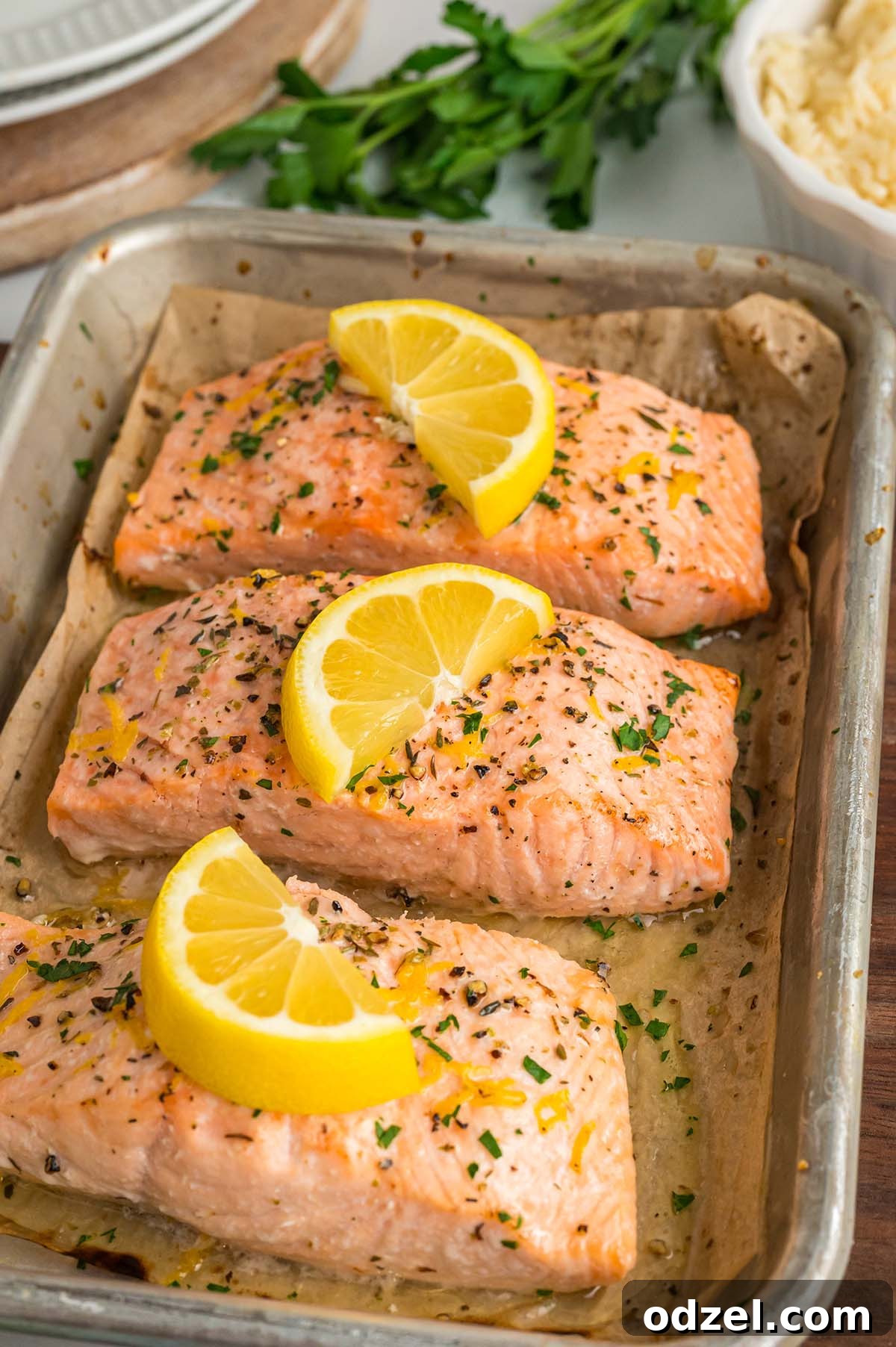
Welcome to the ultimate guide for preparing incredibly moist, juicy, and flaky **Baked Salmon**. This recipe transforms simple salmon fillets into a culinary delight with minimal effort, making it the perfect choice for a quick weeknight dinner or an elegant meal for guests. Oven-baked salmon is not only a powerhouse of nutrition but also a truly versatile dish that pairs beautifully with a variety of sides.
In just about 12 minutes in the oven, you can achieve salmon fillets seasoned to perfection, offering a tender texture that melts in your mouth. Forget dry, overcooked fish; this method focuses on gentle cooking to preserve the salmon’s natural richness and delicate flavor.
Serve this delightful **oven-baked salmon** alongside a vibrant garlic buttery rice and a medley of fresh, seasonal vegetables for a complete, healthy, and utterly satisfying dinner experience.
Life gets busy, and finding time for elaborate meals can be challenging. That’s precisely why I adore quick and easy weeknight meals that I can simply pop into the oven and tend to other things. This **healthy baked salmon recipe** is a game-changer, requiring less than 20 minutes of active preparation, yet delivering a delicious, low-carb, and nutrient-rich meal. It’s a testament to how simple ingredients and a straightforward cooking method can yield spectacular results.
A secret to my consistent enjoyment of salmon is keeping a stash of frozen fillets in the freezer. They thaw remarkably quickly, making them my go-to choice for a spontaneous, healthy meal. If you’re a fellow salmon enthusiast, you might also enjoy exploring other delightful recipes like crab stuffed salmon for a gourmet touch or air fryer salmon bites for a quick and fun appetizer.
Why Choose Baked Salmon for Dinner?
Baking salmon is arguably one of the best and easiest ways to cook this incredibly healthy fish. The gentle heat of the oven allows the salmon to cook evenly, retaining its moisture and natural oils, which are packed with beneficial Omega-3 fatty acids. Unlike pan-frying, baking requires minimal monitoring and results in less cleanup, making it ideal for busy individuals or families. It’s a foolproof method for achieving that coveted flaky texture without the risk of drying out your fillets.
Moreover, oven baking provides a fantastic canvas for flavor experimentation. From simple salt and pepper to complex spice blends and fresh herbs, salmon readily absorbs flavors, allowing you to customize your meal to suit any palate or dietary preference. It’s a truly versatile dish that never fails to impress with its simplicity and deliciousness.
Essential Ingredients for Flavorful Baked Salmon
Creating a truly exceptional **baked salmon** dish starts with a few key ingredients. Here’s a breakdown of what you’ll need and why each component is vital for that perfect taste and texture. (For precise quantities and step-by-step instructions, please refer to the detailed recipe card below.)
-
Salmon Fillets: The Star of the Show
I typically use farm-raised salmon for its consistent flavor and texture, but feel free to opt for wild-caught salmon if you prefer its distinct taste and often leaner profile. Whether fresh or frozen, ensuring your salmon is fully thawed before baking is crucial for even cooking. If using frozen salmon, transfer it to the refrigerator the night before, or for a quicker thaw, submerge sealed fillets in cold water, changing the water every 30 minutes until soft.
-
Fresh Lemon: A Burst of Citrus Brightness
Lemon is a classic companion to fish for good reason. Its bright, acidic notes cut through the richness of the salmon, enhancing its natural flavor without overpowering it. You’ll use both lemon juice for a tangy finish and lemon zest to infuse an aromatic citrus fragrance directly into the seasoning. If you’re not a fan of lemon, though, don’t hesitate to omit it or substitute with a splash of white wine or a mild vinegar.
-
Olive Oil (or Melted Butter): For Moisture and Golden Edges
A drizzle of olive oil, or melted butter if you prefer, serves multiple purposes. It helps the seasonings adhere to the fish, locks in moisture during baking, and contributes to a beautiful, golden-brown exterior. Any neutral-flavored oil like avocado oil also works wonderfully if olive oil isn’t on hand.
-
Salt and Freshly Ground Black Pepper: The Foundation of Flavor
These pantry staples are non-negotiable for any savory dish, and salmon is no exception. Generous seasoning with salt and pepper is essential to bring out the salmon’s inherent deliciousness. Without them, even perfectly cooked salmon can taste surprisingly bland. Adjust to your personal preference, remembering that salmon can handle a fair amount of seasoning.
-
Italian Seasoning: An Optional Aromatic Touch
Italian seasoning adds a lovely herbaceous depth with its blend of oregano, basil, thyme, rosemary, and marjoram. It’s completely optional, but highly recommended for an extra layer of flavor. Feel free to experiment with other spices and herbs that you love, such as dill, garlic powder, paprika, or a pinch of red pepper flakes for a subtle kick.
Achieving Perfectly Cooked Salmon Every Time
The Golden Rule: Don’t Overcook! How Long Do I Bake It For?
The single most important factor in achieving delicious, moist **baked salmon** is to avoid overcooking. Salmon cooks relatively quickly, and a few extra minutes can turn it from tender and succulent into dry and unappetizing. I always recommend starting to check the fish around the 12-minute mark when baking at 400 degrees F (200 degrees C). The precise baking time will depend on the thickness of your fillets.
A reliable indicator of doneness is an internal temperature of 145 degrees F (63 degrees C) measured at the thickest part of the fillet. If you don’t have a thermometer, look for visual cues: the salmon should be opaque throughout and easily flake with a fork. The center should still have a slightly pink hue, indicating maximum moisture. Overcooked salmon will become completely pale and firm, much like canned tuna fish, and nobody wants that!
Understanding Albumin: What’s That White Thing On The Sides Of The Salmon?
Have you ever noticed a white, cloudy substance appearing on your salmon as it cooks? That’s called albumin, a protein that solidifies and gets pushed to the surface of the fish when it’s exposed to high heat for too long. While it’s perfectly safe to eat and doesn’t affect the flavor, it can make the salmon look less appealing.
To minimize albumin, try cooking salmon at a slightly lower temperature (e.g., 375°F/190°C) for a few more minutes, or ensuring your fillets aren’t directly exposed to very high heat for extended periods. A gentle cooking process helps keep the albumin within the fish, resulting in a cleaner, more aesthetically pleasing presentation.
Step-by-Step Guide to Baking Salmon
Follow these simple steps to ensure your **oven-baked salmon** turns out perfectly every time:
-
Preheat Your Oven and Prepare Baking Sheet: Begin by preheating your oven to 400 degrees F (200 degrees C). While it heats, line a sturdy baking sheet with parchment paper. This simple step prevents sticking and makes for incredibly easy cleanup. A little trick is to crumple the parchment paper, then flatten it out – it sits better on the tray.
-
Prepare the Salmon Fillets: Gently pat the salmon fillets dry with a paper towel. This is an essential step as it helps the seasonings adhere better and encourages a more even browning on the exterior of the fish. Once patted dry, place the fillets on your prepared baking sheet, ensuring there’s a little space between each one for even heat circulation.
-
Season Generously: Drizzle each salmon fillet with a tablespoon of olive oil, spreading it evenly over the top and sides. Then, season them generously with salt, freshly ground black pepper, and the vibrant lemon zest. If using Italian seasoning, sprinkle it over the fillets now. Don’t be shy with the seasonings – salmon can handle a good amount of flavor, and adequate seasoning is key to a delicious outcome.
-
Add Lemon Juice and Bake: Squeeze the fresh lemon juice over the seasoned salmon fillets. The acidity of the lemon not only adds a bright flavor but also tenderizes the fish slightly as it bakes. Place the baking sheet into the preheated oven and bake for approximately 12 minutes. The precise timing may vary depending on the thickness of your salmon and your oven’s calibration. For ultimate accuracy, aim for an internal temperature of 145 degrees F (63 degrees C) with an instant-read thermometer. Remember our golden rule: be careful not to overcook the salmon; otherwise, it will turn out dry and tough.
-
Serve Immediately and Enjoy: Once baked to perfection, remove the salmon from the oven. Let it rest for a minute or two before serving. This brief resting period allows the juices to redistribute, ensuring every bite is moist and flavorful. Garnish with fresh parsley or extra lemon wedges, and enjoy your perfectly **flaky baked salmon**!
Serving Suggestions & Flavor Pairings
**Baked salmon** is incredibly versatile, making it easy to pair with a wide array of side dishes and sauces. Here are some ideas to elevate your meal:
Classic & Healthy Side Dishes
-
Garlic Buttery Rice: A comforting and flavorful pairing that complements the salmon perfectly. The richness of the butter and garlic adds depth without overshadowing the fish.
-
Roasted Asparagus or Broccoli: Roasting brings out the natural sweetness of these vegetables, and their slight bitterness provides a wonderful contrast to the salmon.
-
Steamed Green Beans or Zucchini: Light and refreshing, these simple vegetable sides keep the meal balanced and healthy.
-
Quinoa or Couscous: For a heartier but still healthy option, serve with fluffy quinoa or quick-cooking couscous, perhaps mixed with fresh herbs.
Sauces that Elevate the Experience
-
Lemon Dill Sauce: A creamy sauce made with Greek yogurt or mayonnaise, fresh dill, and lemon juice offers a bright, herbaceous counterpoint.
-
Tartar Sauce: The tangy, savory notes of tartar sauce are a timeless accompaniment to any fish dish.
-
Remoulade Sauce: A spicier, more complex cousin to tartar sauce, offering a delightful kick.
-
Simple Butter Sauce: A melted butter sauce infused with garlic and a squeeze of lemon can be incredibly satisfying and easy to prepare.
Creative Flavor Additions
While this recipe keeps things simple, feel free to get creative with additional toppings to boost flavor:
-
Capers: Their briny, salty pop adds an excellent textural and flavor contrast.
-
Cherry Tomatoes: Halved cherry tomatoes, baked alongside the salmon, burst with sweet acidity.
-
Fresh Garlic: Minced garlic spread over the salmon before baking infuses it with aromatic deliciousness.
-
Fresh Herbs: A sprinkle of fresh dill or parsley just before serving adds vibrant color and freshness.
Top Tips for the Best Baked Salmon
-
Prioritize Doneness Over Time: While 12 minutes is a great guideline, always remember that oven temperatures vary, and fillet thickness differs. Your best bet is to use an instant-read thermometer to reach 145°F (63°C), or check for flakiness with a fork. Overcooked salmon is dry salmon!
-
Season Like a Pro: Don’t underestimate the power of seasoning. A generous application of salt, pepper, and your chosen spices will transform your salmon from good to exceptional. Taste as you go, if possible, or follow the recipe quantities closely.
-
Embrace Flavorful Additions: While simple is delicious, don’t shy away from enhancing the flavor profile. Adding ingredients like capers, cherry tomatoes, and minced fresh garlic on top of the salmon before baking can create a truly gourmet experience.
-
Fresh vs. Frozen Salmon Debate: Many store-bought “fresh” salmon fillets have actually been previously frozen and thawed. For optimal freshness and convenience, I often recommend buying high-quality frozen salmon. It’s typically flash-frozen at peak freshness, preserving its texture and taste, and you control the thawing process.
-
Ensure Even Cooking: Select salmon fillets of similar thickness to ensure they cook evenly. If you have fillets that are much thicker in the center and thinner at the edges, the thinner parts will overcook and dry out while the center might still be undercooked. If your fillets are uneven, you can gently fold the thinner tail end under itself to create a more uniform thickness.
-
Rest Your Salmon: Just like with meat, allowing your salmon to rest for 2-3 minutes after baking helps the juices redistribute throughout the fillet, resulting in a more moist and tender bite. This is a small step that makes a big difference!
The Incredible Health Benefits of Salmon
Beyond its exquisite taste and ease of preparation, salmon is celebrated for its outstanding nutritional profile. It’s a true superfood that contributes significantly to a healthy diet.
-
Rich in Omega-3 Fatty Acids: Salmon is one of the best sources of long-chain Omega-3 fatty acids, specifically EPA and DHA. These essential fats are crucial for brain health, reducing inflammation, and supporting cardiovascular health.
-
Excellent Source of Protein: Each serving of salmon delivers a substantial amount of high-quality protein, which is vital for muscle repair, growth, and overall bodily function. It helps you feel full and satisfied, aiding in weight management.
-
Packed with Vitamins and Minerals: Salmon is a treasure trove of vitamins, including Vitamin D (important for bone health and immunity), B vitamins (essential for energy production), and minerals like selenium (an antioxidant) and potassium (important for blood pressure regulation).
-
Supports Bone Health: With its Vitamin D content, salmon contributes to stronger bones and teeth by helping the body absorb calcium effectively.
Incorporating **baked salmon** into your weekly meal rotation is a delicious way to boost your intake of these vital nutrients and support your overall well-being.
Troubleshooting Common Baked Salmon Issues
Even with a simple recipe, minor issues can arise. Here’s how to tackle them:
Why is my salmon dry?
The most common culprit for dry salmon is overcooking. Keep a close eye on your fillets and consider using an instant-read thermometer. Also, ensuring your fillets are of even thickness helps prevent thinner edges from drying out while the thicker parts cook. Patting dry and oiling also helps to retain moisture.
Why is my salmon bland?
Insufficient seasoning is usually the cause of bland salmon. Don’t be afraid to season generously with salt and pepper. Lemon zest and Italian seasoning also add crucial layers of flavor. If you find it still lacking, a drizzle of a fresh sauce or a sprinkle of fresh herbs after cooking can make a world of difference.
Frequently Asked Questions about Baked Salmon
-
How can I tell if my salmon is cooked through without a thermometer? You can check for doneness by gently pressing on the thickest part of the fillet with a fork. If it flakes easily and appears opaque throughout, it’s ready. The center may still have a slight pinkish hue, which indicates a perfectly moist fillet.
-
Can I bake frozen salmon directly from the freezer? While it’s generally best to thaw salmon for even cooking, you can bake frozen salmon, but it will take longer (about 20-25 minutes at 400°F). Make sure to season generously once partially thawed in the oven, or apply seasoning before baking if you prefer. Increase cooking time until it reaches 145°F internal temperature.
-
What is the best temperature to bake salmon? A temperature of 400°F (200°C) is excellent for baking salmon as it cooks quickly and creates a slightly crisp exterior while keeping the interior moist. Some recipes use 375°F (190°C) for a slower, gentler cook, which can help minimize albumin.
-
How long does baked salmon last in the refrigerator? Leftover baked salmon can be stored in an airtight container in the refrigerator for up to 3-4 days. It’s delicious cold in salads or gently reheated.
Baked Salmon Recipe
Julie Maestre
2 mins
12 mins
14 mins
3
Ingredients
- 3 salmon fillets
- 1 tablespoon olive oil
- 1 lemon, juiced
- ½ teaspoon lemon zest
- ½ teaspoon Italian seasoning
- salt and pepper to taste
Instructions
-
Preheat oven to 400 degrees F. and line a baking sheet with parchment paper.
-
Pat dry the salmon fillets with a paper towel and then season them generously with salt, pepper, lemon zest, and Italian seasoning.
-
Squeeze the lemon juice over the salmon fillets and then bake for 12 minutes or until the salmon fillets reach an internal temperature of 145 degrees F. Be careful not to overcook the salmon; otherwise, they will turn out dry.
-
Serve immediately and enjoy!
Notes
-
Do not overcook your salmon! Overcooked salmon equals dry salmon.
-
Season your salmon generously for the best possible flavor results.
-
For additional flavor, consider adding capers, cherry tomatoes, or minced fresh garlic on top before baking.
-
For consistent freshness, purchasing high-quality frozen salmon is often preferable to store “fresh” options which may have been previously frozen and thawed.
-
Ensure your salmon fillets are of similar thickness to promote even cooking. Uneven fillets can lead to some parts being overcooked while others are undercooked.
Nutrition
Carbohydrates: 4g |
Protein: 34g |
Fat: 16g |
Saturated Fat: 2g |
Polyunsaturated Fat: 5g |
Monounsaturated Fat: 7g |
Cholesterol: 94mg |
Sodium: 76mg |
Potassium: 887mg |
Fiber: 1g |
Sugar: 1g |
Vitamin A: 82IU |
Vitamin C: 20mg |
Calcium: 36mg |
Iron: 2mg
Nutrition information is automatically calculated, so should only be used as an approximation.
Additional Info
Julie Maestre
2 minutes
12 minutes
14 minutes
Entree
American
3
294
Baked Salmon
We hope you enjoy this fantastic **Baked Salmon recipe**! It’s a testament to how effortlessly you can create a healthy, delicious, and satisfying meal that everyone will love. For more culinary inspiration and easy recipes, be sure to follow us on Facebook or Pinterest. Happy cooking!