
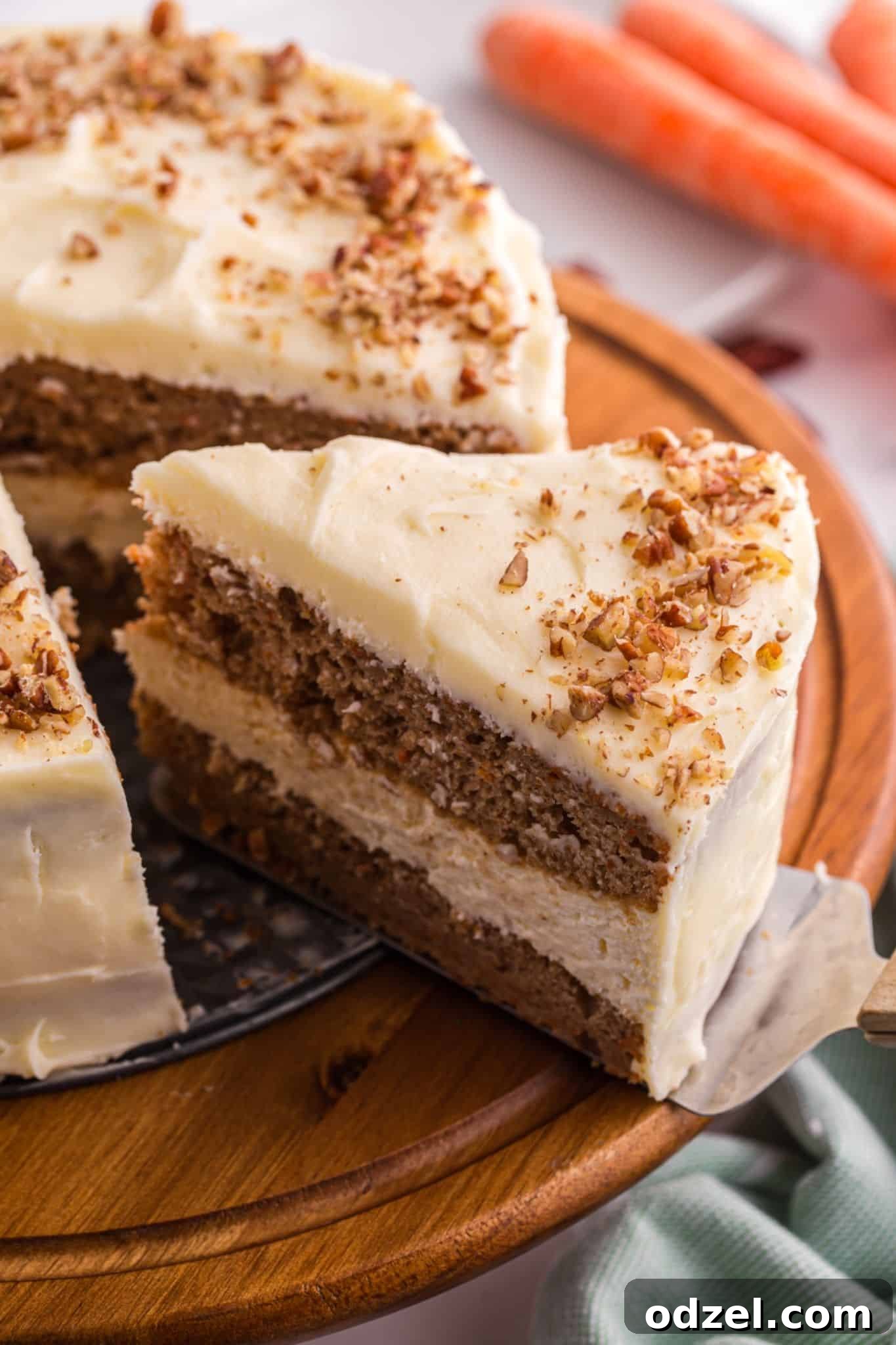
The Ultimate Carrot Cake Cheesecake: A Decadent Layered Delight
If your heart is torn between the comforting spices of a classic carrot cake and the silky smooth indulgence of a baked cheesecake, then prepare to be delighted. This **Carrot Cake Cheesecake** recipe truly offers the best of both worlds, presenting a stunning dessert with moist, perfectly spiced carrot cake layers sandwiching a thick, incredibly creamy baked cheesecake, all crowned with a rich and tangy cream cheese frosting. It’s a showstopper that looks incredibly impressive yet is surprisingly straightforward to create, making it ideal for Easter gatherings, holiday celebrations, or any moment you wish to serve a dessert that truly steals the spotlight.
While this magnificent creation requires a little patience due to essential cooling times, every minute spent is absolutely worth it. The final result is a dessert that is not only super moist and perfectly balanced in flavor but also thoughtfully crafted to avoid being overly sweet. It strikes a harmonious chord between two beloved classics, making it an unforgettable centerpiece for any special occasion.
For those who adore delightful cake recipes, you might also enjoy exploring our classic carrot cake, the comforting flavors of Southern red velvet cake, the surprisingly simple crack cake, or a refreshing strawberry bundt cake.
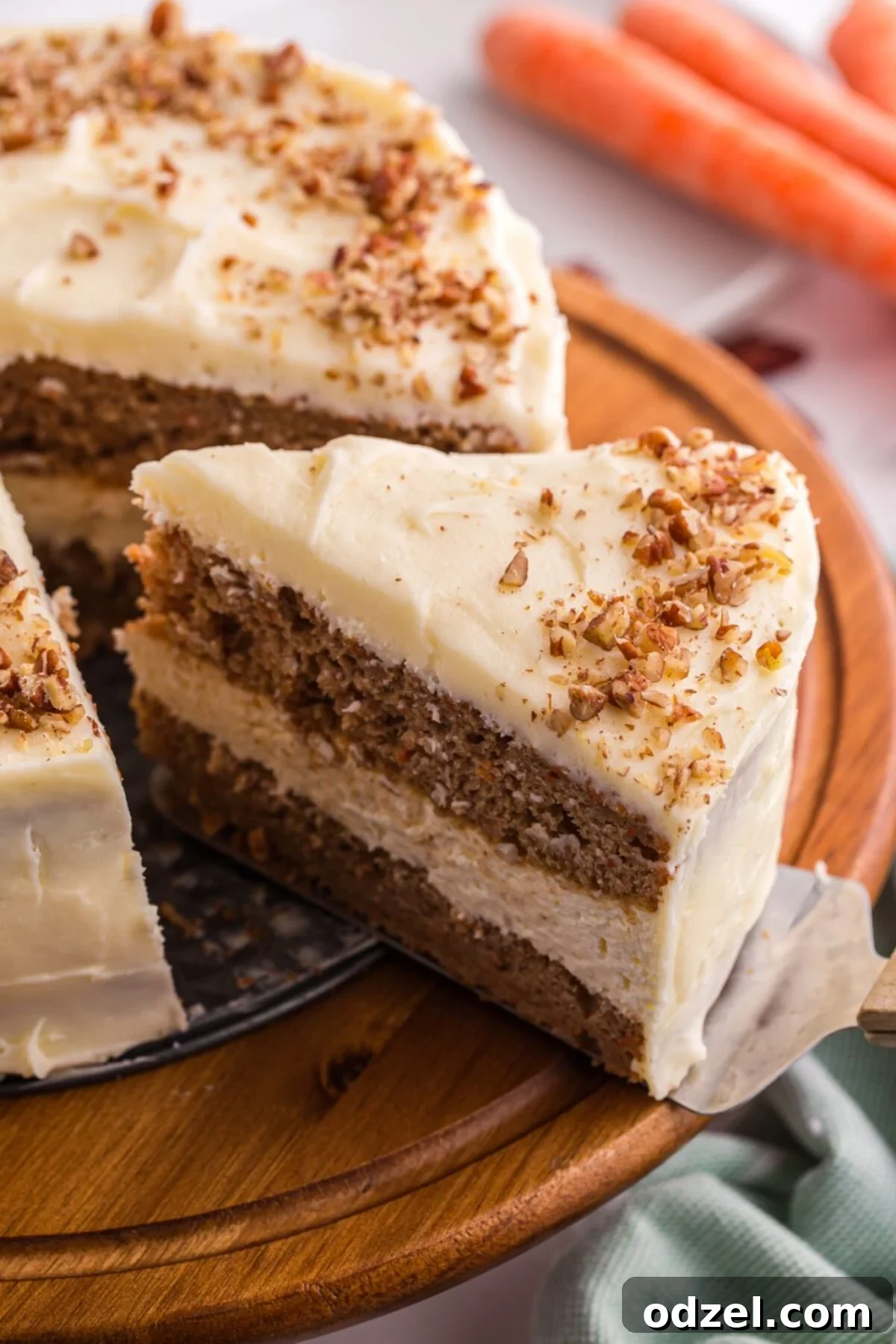
Table of Contents
- The Ultimate Carrot Cake Cheesecake: A Decadent Layered Delight
- Why This Layered Approach is Superior
- Essential Ingredient Notes for Success
- Pro Baking Tips for a Flawless Dessert
- Frequently Asked Questions
- Storage Guidelines
- Carrot Cake Cheesecake Recipe
Why This Layered Approach is Superior
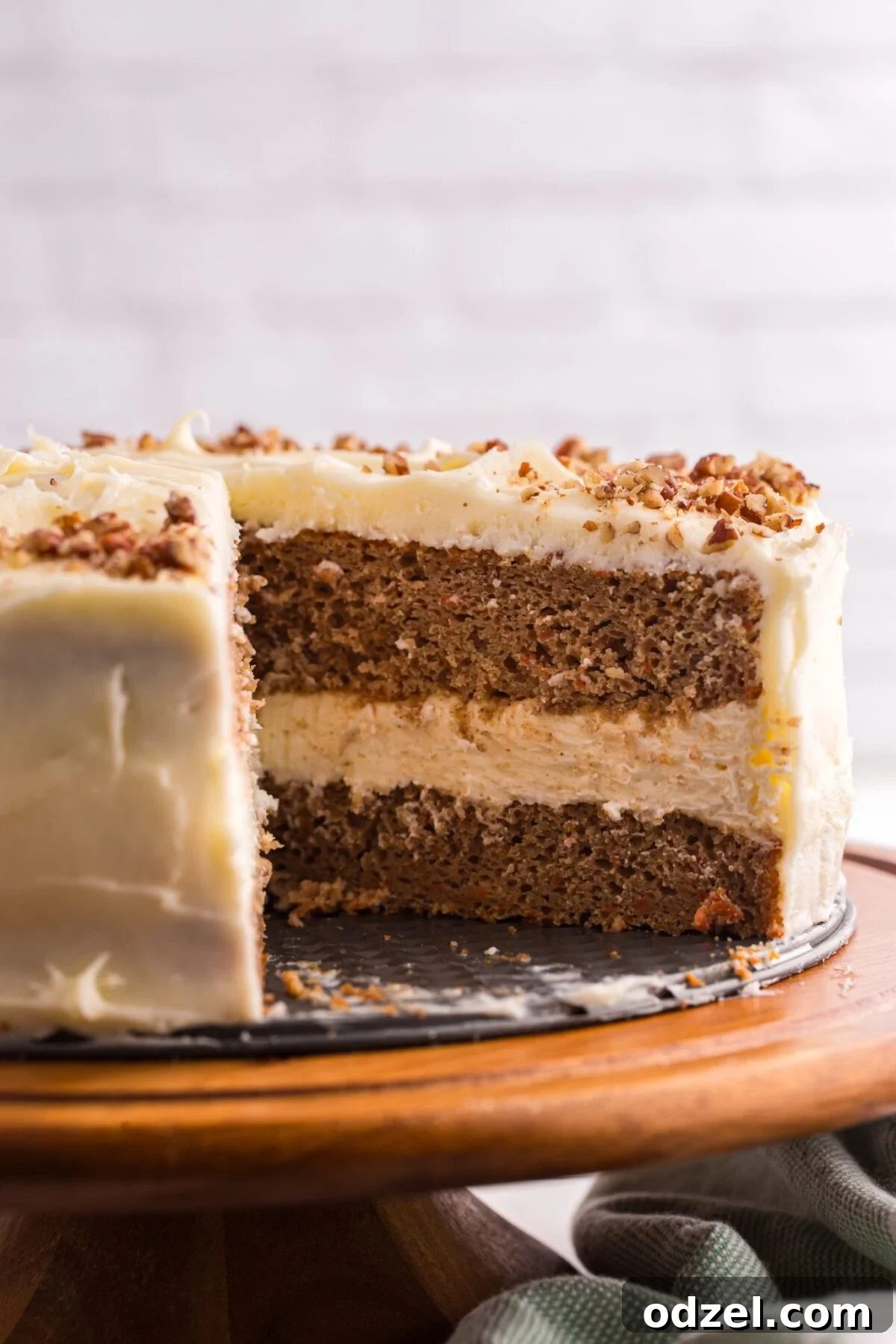
While many bakers and food bloggers opt for swirling carrot cake and cheesecake batters together, my personal preference, inspired by the iconic Juniors-style cheesecakes, is to create distinct, beautiful layers. This method results in a truly magnificent dessert featuring soft, moist carrot cake forming the top and bottom tiers, expertly cradling a thick, crustless, and incredibly creamy cheesecake layer right in the center. Each bite offers a perfect balance of textures and flavors – the spiced sweetness of the cake, the tangy richness of the cheesecake, and the luxurious creaminess of the frosting.
From my experience, this hands-down creates the best possible carrot cake cheesecake. I had the pleasure of bringing this very dessert to an Easter brunch last year, and it was met with rave reviews; everyone couldn’t stop talking about how delicious and unique it was. The distinct layers ensure that you get the full experience of both beloved desserts, without either flavor overpowering the other.
It’s important to note that while this dessert does require a minimum of 5 hours for proper cooling and setting, the waiting period is absolutely crucial and entirely worth every moment. Patience is a virtue when crafting such a masterpiece, ensuring perfect slices and an unbeatable texture.
Essential Ingredient Notes for Success
Refer to the detailed recipe card below for precise ingredient quantities and step-by-step instructions to achieve baking perfection.
Cream Cheese
For this recipe, you will need a generous 32 ounces of cream cheese. The key to a velvety smooth cheesecake and a wonderfully spreadable frosting is ensuring your cream cheese is fully softened to room temperature. I highly recommend using Philadelphia cream cheese for the best results. This isn’t a sponsored endorsement; it’s simply a genuine preference born from experience, as Philadelphia cream cheese consistently delivers the creamiest cheesecakes and the smoothest, most delightful cream cheese frostings.
Sour Cream
To achieve the optimal richness and a slight tang that perfectly complements the sweetness, I strongly advise using full-fat sour cream. Its higher fat content contributes to a luxuriously creamy cheesecake texture and a more robust flavor profile.
Crushed Pineapples
These tropical gems add a wonderful moisture and subtle sweetness to the carrot cake. It is crucial to drain them thoroughly before adding them to the batter. For the best texture distribution, I also recommend chopping them finely, even if they come “crushed,” to ensure they blend seamlessly into the cake.
Salted Butter for Frosting
When it comes to the cream cheese frosting, I emphatically recommend using salted butter. This recipe contains a good amount of sweetness, and the slight saltiness from the butter acts as a fantastic counterbalance, preventing the frosting from being overly sugary. It harmonizes all the flavors, elevates the entire dessert, and in my opinion, makes the frosting a solid 10 out of 10 in deliciousness.
Shredded Sweetened Coconut
For an optimal texture and flavor in your carrot cake, ensure you use soft, fresh shredded sweetened coconut. If the coconut feels hard or dry to the touch, it indicates it’s not fresh, and you should avoid using it. Fresh, soft coconut is essential for contributing to the cake’s moistness and providing a pleasant chew.
Pro Baking Tips for a Flawless Dessert
- **Bring All Wet Ingredients to Room Temperature:** This golden rule of baking applies to your sour cream, eggs, cream cheese, butter, and buttermilk. Ensuring all these ingredients are at room temperature is vital for achieving a smooth, well-emulsified batter and preventing lumps. It also promotes even baking, leading to a consistently textured cake and cheesecake.
- **Do Not Overbake – Not Even by a Minute:** Overbaking is the enemy of moist cakes and creamy cheesecakes. As soon as your cake or cheesecake is done (test with a toothpick or by gently shaking the pan for cheesecake), immediately transfer it from the oven to a cool countertop to prevent further cooking. Letting it linger on a hot oven will continue the baking process and can lead to dry cake or cracked cheesecake.
- **Loosen Edges Immediately:** Right after removing the cheesecake and cake layers from the oven, gently run a thin butter knife or offset spatula along the edges of the pans. This simple step helps to release the baked goods from the pan sides as they cool and contract, significantly reducing the chances of them sticking and making removal much easier once completely cooled.
- **Proper Cooling is Key:** Patience during the cooling process is non-negotiable for this dessert. Allow the cheesecake to cool completely at room temperature before transferring it to the refrigerator for its extended chill time. Similarly, ensure the carrot cake layers are entirely cool before you even think about frosting them. Attempting to frost warm cake layers or a warm cheesecake will result in a melted, messy frosting.
- **Embrace the Water Bath for Cheesecake:** For the ultimate creamy, crack-free cheesecake, a water bath (bain-marie) is highly recommended. This method provides a moist, even heat that prevents the cheesecake from drying out and cracking on top. Always wrap the outside of your springform pan tightly with several layers of heavy-duty foil to prevent any water from seeping in. This step is crucial for achieving that signature velvety cheesecake texture.
Frequently Asked Questions
Do I need a water bath for the cheesecake layer?
Yes, absolutely! I strongly recommend using a water bath for your cheesecake. It serves multiple crucial purposes: it helps the cheesecake bake incredibly evenly, significantly reduces the risk of unsightly cracks forming on the surface, and is the secret to achieving an ultra-creamy, smooth texture. Remember to wrap the outside of your springform pan tightly with heavy-duty aluminum foil to prevent any water from seeping into the cheesecake. Do not skip this step for truly professional results!
Can I add nuts or raisins to the carrot cake?
You most certainly can! Customizing your carrot cake with additions like nuts or raisins is a fantastic way to enhance its flavor and texture. Feel free to fold about 1 cup of chopped pecans or walnuts into the carrot cake batter during the final stages of mixing. If you prefer a more traditional carrot cake flavor profile, plump raisins also work wonderfully and add a delightful chewiness.
Can I make this Carrot Cake Cheesecake ahead of time?
This dessert is an excellent choice for making ahead! In fact, the cheesecake layer requires a minimum of 4 hours to chill, which means you’re already planning ahead. You can bake the carrot cake layers and the cheesecake layer 1-2 days in advance, storing the cooled cake layers wrapped tightly at room temperature and the chilled cheesecake in the refrigerator. Prepare the frosting the day you plan to assemble and serve, or even a day ahead and store it in the fridge (bring to room temp to re-whip slightly before using). Assembling closer to serving ensures the freshest taste and best presentation.
Storage Guidelines
Due to its creamy cheesecake layer and rich cream cheese frosting, this Carrot Cake Cheesecake must be stored properly to maintain its freshness and safety. Keep the entire cake, covered tightly, in the refrigerator for up to 4 days. It’s important to avoid leaving it at room temperature for extended periods.
Carrot Cake Cheesecake Recipe
Carrot Cake Cheesecake
By: Julie Maestre
This exceptional carrot cake cheesecake is a homemade masterpiece, combining a rich, tangy cheesecake with two layers of moist, spiced carrot cake, all finished with a smooth, delectable cream cheese frosting. Every component, from the cake to the frosting, is made from scratch for an unparalleled dessert experience.
Prep Time: 30 minutes
Cook Time: 1 hour 30 minutes
Refrigerate: 4 hours
Total Time: 6 hours
Servings: 10
Course: Dessert
Cuisine: American
Keyword: carrot cake cheesecake, layered cheesecake, Easter dessert
Equipment Needed
- Three 9-inch cake pans (two for carrot cake, one for cheesecake)
- Large mixing bowl(s)
- Electric mixer (stand mixer or hand mixer)
- Springform pan (for cheesecake, if not using a regular 9-inch cake pan)
- Large roasting pan (for water bath)
- Parchment paper
- Aluminum foil
- Rubber spatula
Ingredients
Cheesecake Layer
- 24 ounces cream cheese, softened to room temperature
- 1 cup granulated sugar
- 1 cup full-fat sour cream
- 3 large eggs, at room temperature
- 1 teaspoon pure vanilla extract
Carrot Cake Layers
- 2 cups all-purpose flour
- 2 cups granulated sugar
- 1 cup finely shredded carrots (about 2-3 medium carrots)
- 2 teaspoons baking soda
- 2 teaspoons ground cinnamon
- ½ teaspoon Kosher salt
- 3 large eggs, at room temperature
- ¾ cup buttermilk, at room temperature
- ¾ cup vegetable oil (or other neutral oil)
- 1 teaspoon pure vanilla extract
- 8 ounces canned crushed pineapples, thoroughly drained and finely chopped
- 1 cup sweetened shredded coconut, soft and fresh
Cream Cheese Frosting
- 8 ounces cream cheese, softened to room temperature
- ½ cup (1 stick) salted butter, softened to room temperature
- 3 cups powdered sugar (confectioners’ sugar), sifted if clumpy
- Optional: 1-2 tablespoons milk, if needed for consistency
Instructions
Part 1: Preparing the Cheesecake
- Begin by preparing the cheesecake, as it requires a minimum of 4 hours to refrigerate and set properly.
- Preheat your oven to 325°F (160°C). Generously grease a 9-inch cake pan or a springform pan with plenty of nonstick spray. Line the bottom with parchment paper to prevent sticking; ensure the sides of the pan are also well-greased.
- In a large mixing bowl, using an electric mixer, beat the softened cream cheese until it is completely smooth and creamy, with no lumps.
- Gradually add the granulated sugar to the cream cheese, mixing until well combined and smooth.
- Add the eggs one at a time, mixing gently on low speed after each addition until just incorporated. Avoid overmixing once the eggs are added, as this can introduce too much air and cause cracks.
- Stir in the vanilla extract and sour cream until the mixture is uniform and smooth.
- Pour the cheesecake batter into the prepared cake pan.
- To create a water bath, place the cheesecake-filled pan inside a larger roasting pan. Carefully pour hot water into the roasting pan until it reaches approximately halfway up the sides of the cheesecake pan. Ensure the cheesecake pan is tightly wrapped in foil to prevent water seepage.
- Bake for 10 minutes at 325°F (160°C), then reduce the oven temperature to 300°F (150°C) and continue baking for 1 hour and 15 minutes.
- Once baking is complete, turn off the oven but leave the cheesecake inside with the oven door closed for an additional 30 minutes. Then, slightly crack open the oven door and let it sit for another 10 minutes. This gradual cooling prevents cracking.
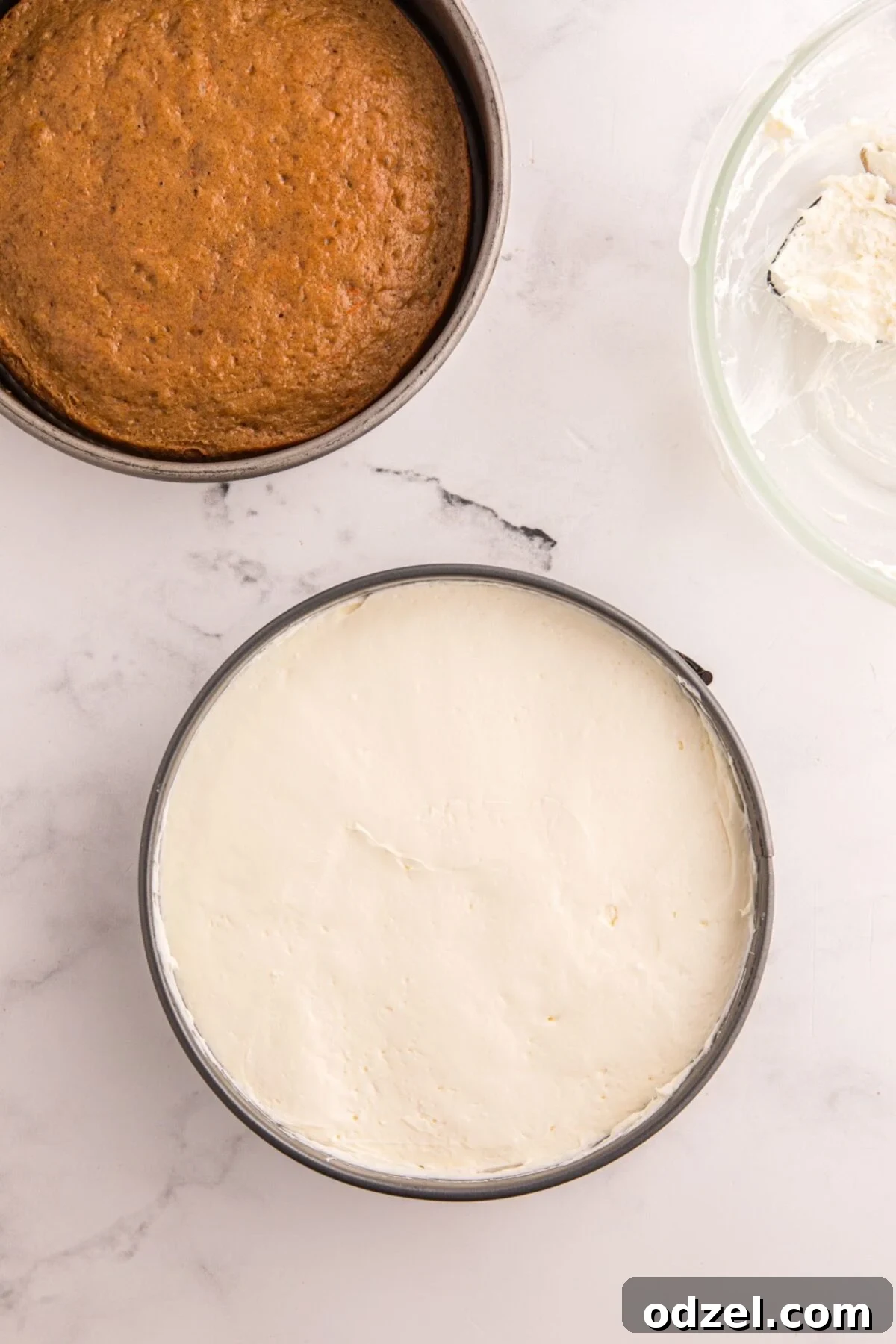
- Carefully remove the cheesecake from the water bath. Run a thin knife along the edges of the pan to loosen the cheesecake. Allow it to cool completely at room temperature for about 1 hour before transferring it to the refrigerator. Chill for at least 4 hours, or ideally overnight, until firm.
Part 2: Baking the Carrot Cake Layers
It’s recommended to bake the carrot cake layers once the cheesecake has chilled for at least 4 hours.
- Preheat your oven to 350°F (175°C). Grease and flour two 9-inch round cake pans. Line the bottoms with parchment paper for easy removal.
- In a large bowl, whisk together the dry ingredients: all-purpose flour, granulated sugar, baking soda, ground cinnamon, and Kosher salt.
- In a separate, medium-sized bowl, whisk together the wet ingredients: eggs, vegetable oil, buttermilk, and vanilla extract until smooth and well combined.
- Stir in the finely shredded carrots and the thoroughly drained, finely chopped pineapples into the wet ingredients.
- Gradually fold the dry ingredients into the wet ingredients, mixing just until combined. Be careful not to overmix the batter; a few streaks of flour are acceptable.
- Divide the carrot cake batter evenly between the two prepared 9-inch cake pans.
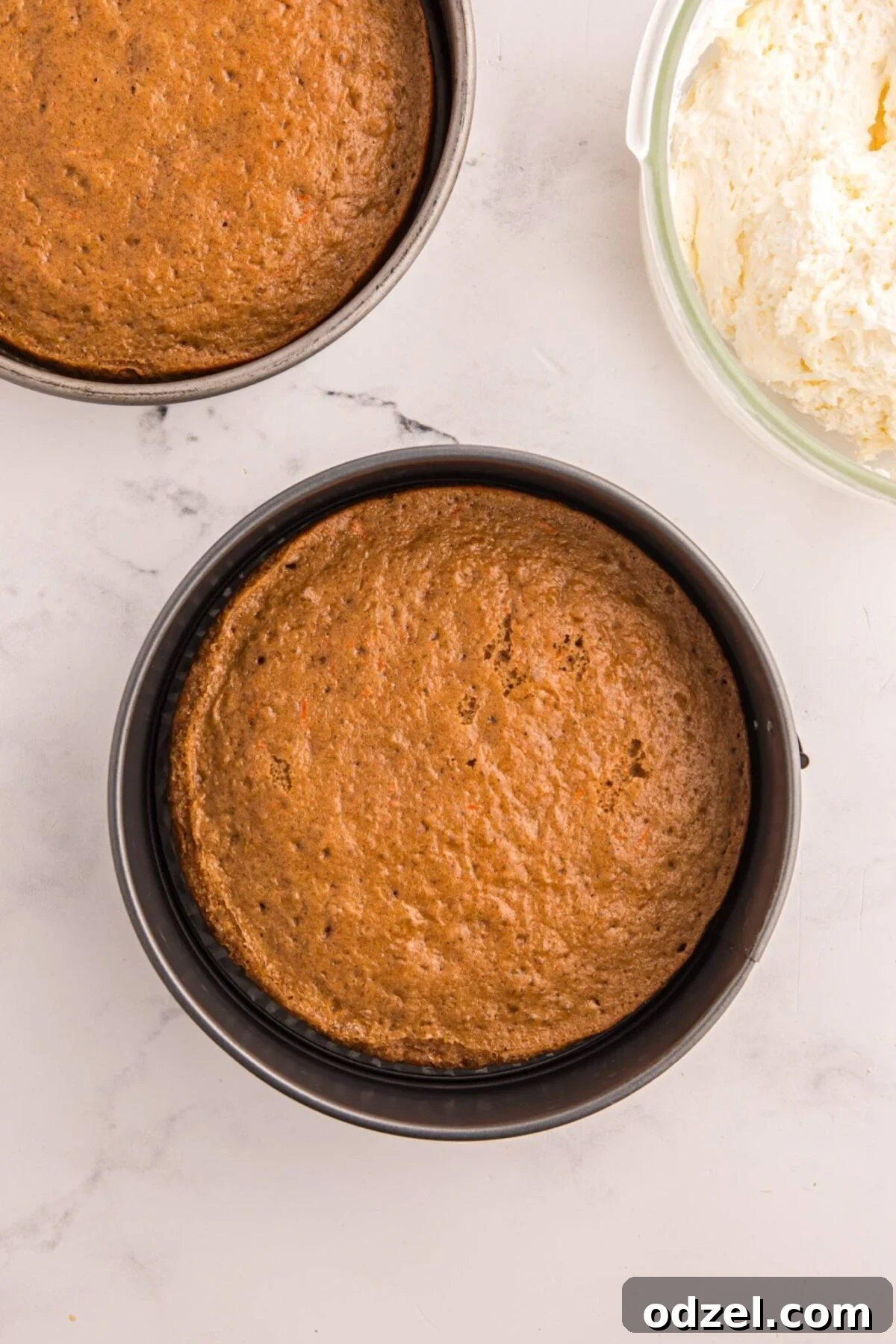
- Bake for approximately 27 to 30 minutes, or until a wooden skewer or toothpick inserted into the center of the cakes comes out clean. A few moist crumbs are fine, but there should be no wet batter.
- Allow the carrot cake layers to cool in their pans on a wire rack for about 10-15 minutes before inverting them onto the rack to cool completely. This usually takes about 45 minutes to 1 hour. Ensure they are fully cooled before frosting.
Part 3: Preparing the Cream Cheese Frosting
Prepare the cream cheese frosting once both the cheesecake and carrot cake layers are completely cooled.
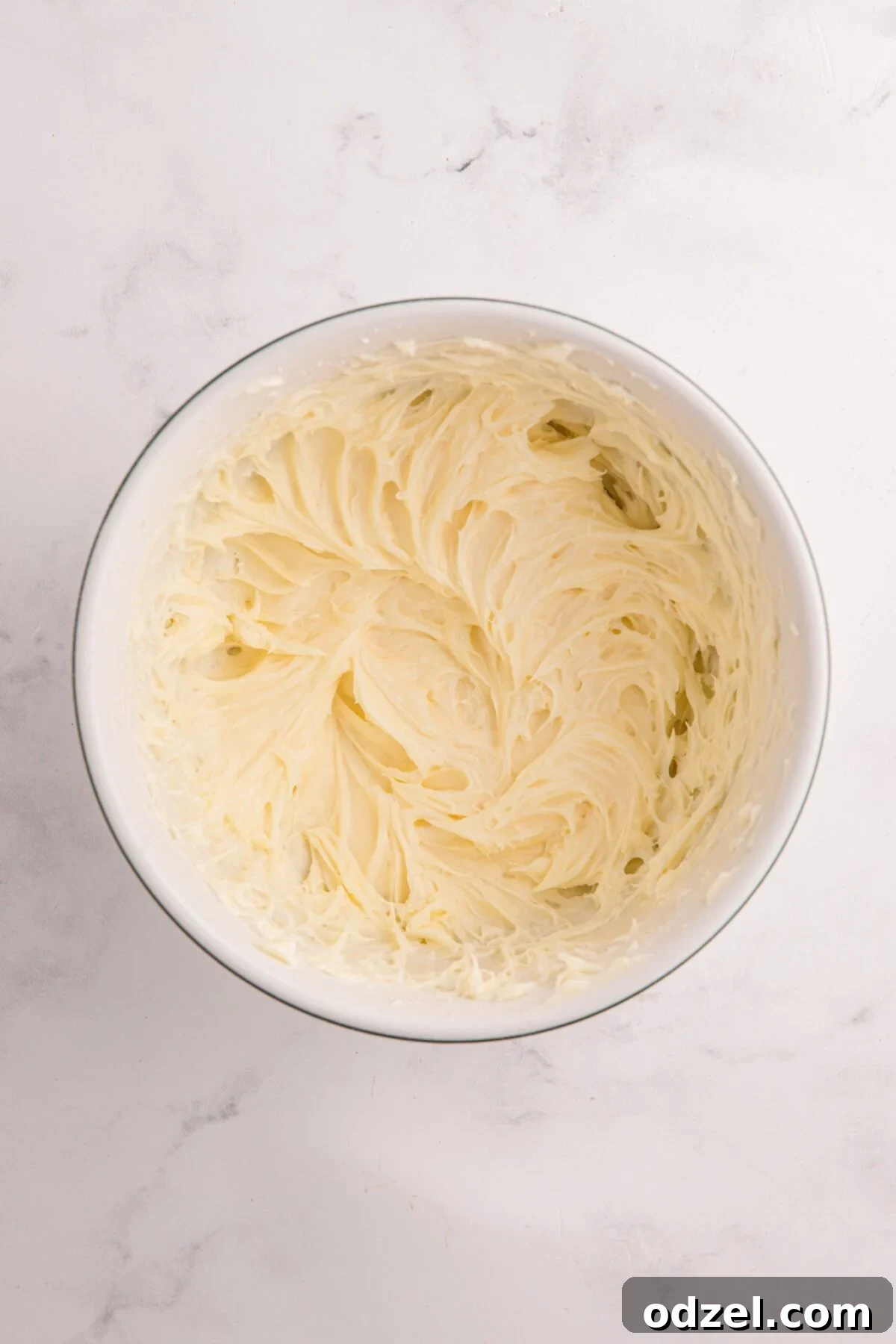
- In a large bowl, using an electric mixer, beat the softened cream cheese and softened salted butter together until the mixture is smooth, creamy, and fully combined.
- Gradually add the powdered sugar, mixing on low speed until it is incorporated, then increase to medium speed and beat for 3 to 4 minutes until light and fluffy. For an extra airy texture, increase to high speed for the final 10 seconds.
- If the frosting appears too thick, you may add a small splash (1-2 tablespoons) of milk until it reaches your desired spreadable consistency. However, if your butter and cream cheese were properly softened, it should be perfectly smooth and ready without additional liquid.
Part 4: Assembling Your Carrot Cake Cheesecake
- Carefully place one cooled carrot cake layer onto your chosen cake stand or serving plate. Ensure it is centered.
- Gently place the fully chilled and firm cheesecake layer directly on top of the bottom carrot cake layer. Center it carefully and press down slightly to ensure it sits flat and stable.
- Place the second cooled carrot cake layer on top of the cheesecake. Align it evenly so that the sides of the entire cake are straight and uniform.
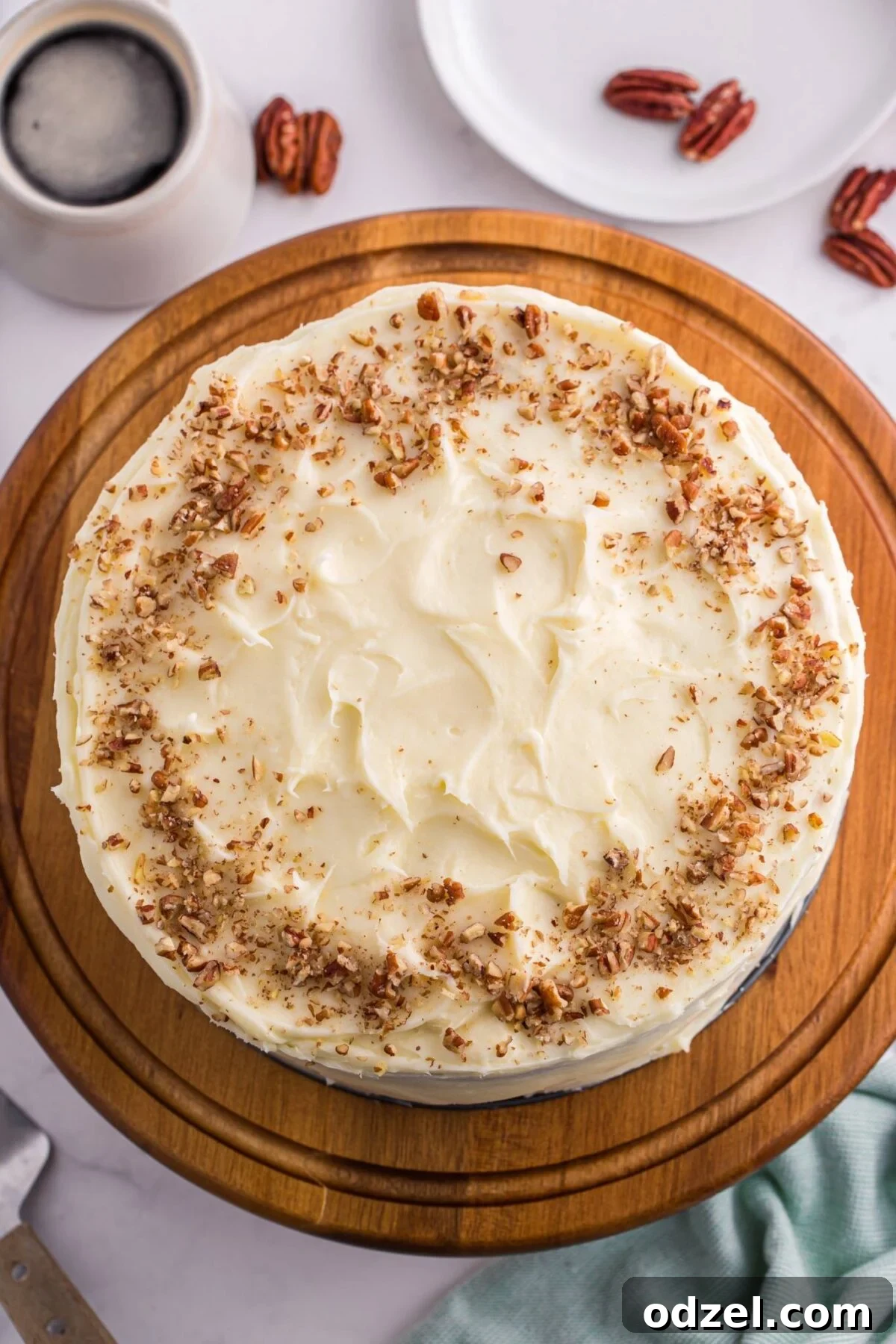
- Generously frost the top and sides of the assembled cake with your rich cream cheese frosting. Use an offset spatula to create smooth or decorative swirls.
- For an extra touch of elegance and flavor, garnish the top with chopped walnuts or pecans, if desired.
- Slice, serve, and enjoy your spectacular Carrot Cake Cheesecake!
Recipe Notes and Pro Tips
- **Room Temperature Rule:** Always ensure all your wet ingredients—sour cream, eggs, cream cheese, butter, and buttermilk—are at room temperature. This is critical for smooth batters and consistent baking results.
- **Prevent Overbaking:** Monitor baking times closely. Overbaking, even by a minute, can dry out your cake layers and cause cracks in the cheesecake. As soon as a cake or cheesecake is done, remove it from the immediate heat of the oven.
- **Edge Release:** Running a knife along the pan edges right out of the oven helps prevent sticking and makes cooled layers much easier to remove.
- **Patient Cooling:** Allow both the cheesecake (after its oven cooling time) and the cake layers to cool completely at room temperature before refrigerating the cheesecake or frosting any components. This prevents melted frosting and structural issues.
- **Water Bath for Cheesecake:** Don’t skip the water bath! It’s your best friend for a perfectly creamy, crack-free cheesecake. Double-wrap your springform pan with foil to prevent leaks.
- **Optional Add-ins:** Feel free to fold in ½ cup of chopped pecans, walnuts, or even plump golden raisins into the carrot cake batter for added texture and flavor.
Nutrition Information
Nutrition information is automatically calculated and should only be used as an approximation.
Calories: 1023 kcal
Carbohydrates: 131 g
Protein: 13 g
Fat: 52 g
Saturated Fat: 31 g
Polyunsaturated Fat: 3 g
Monounsaturated Fat: 13 g
Trans Fat: 0.4 g
Cholesterol: 230 mg
Sodium: 791 mg
Potassium: 343 mg
Fiber: 2 g
Sugar: 108 g
Vitamin A: 3968 IU
Vitamin C: 3 mg
Calcium: 168 mg
Iron: 2 mg
Enjoyed this recipe? Your feedback is incredibly valuable to us! We would greatly appreciate it if you could leave a review after trying this decadent Carrot Cake Cheesecake. ❤️
For more delicious recipes and insightful cooking tutorial videos, make sure to visit us on Youtube and Facebook.