
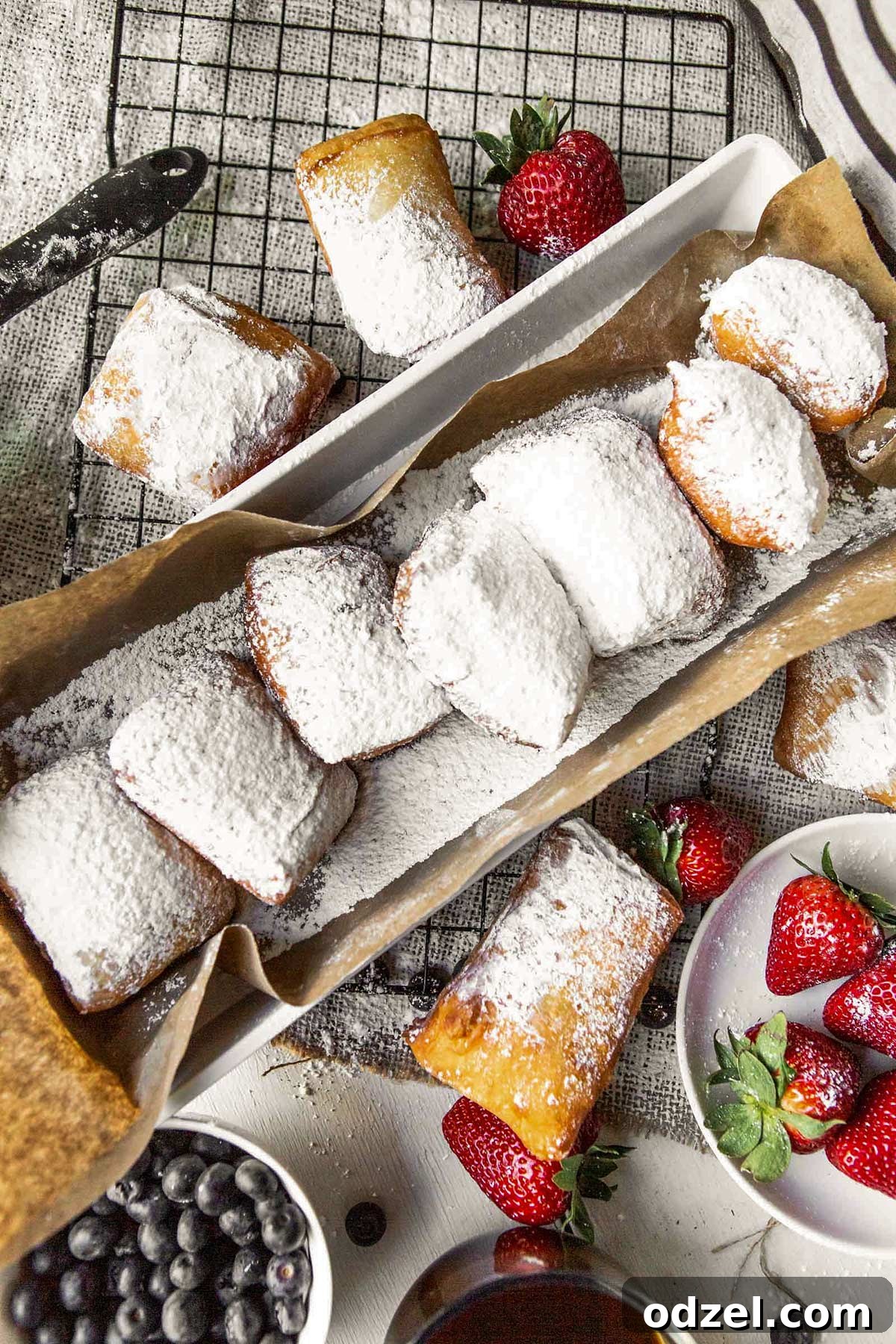
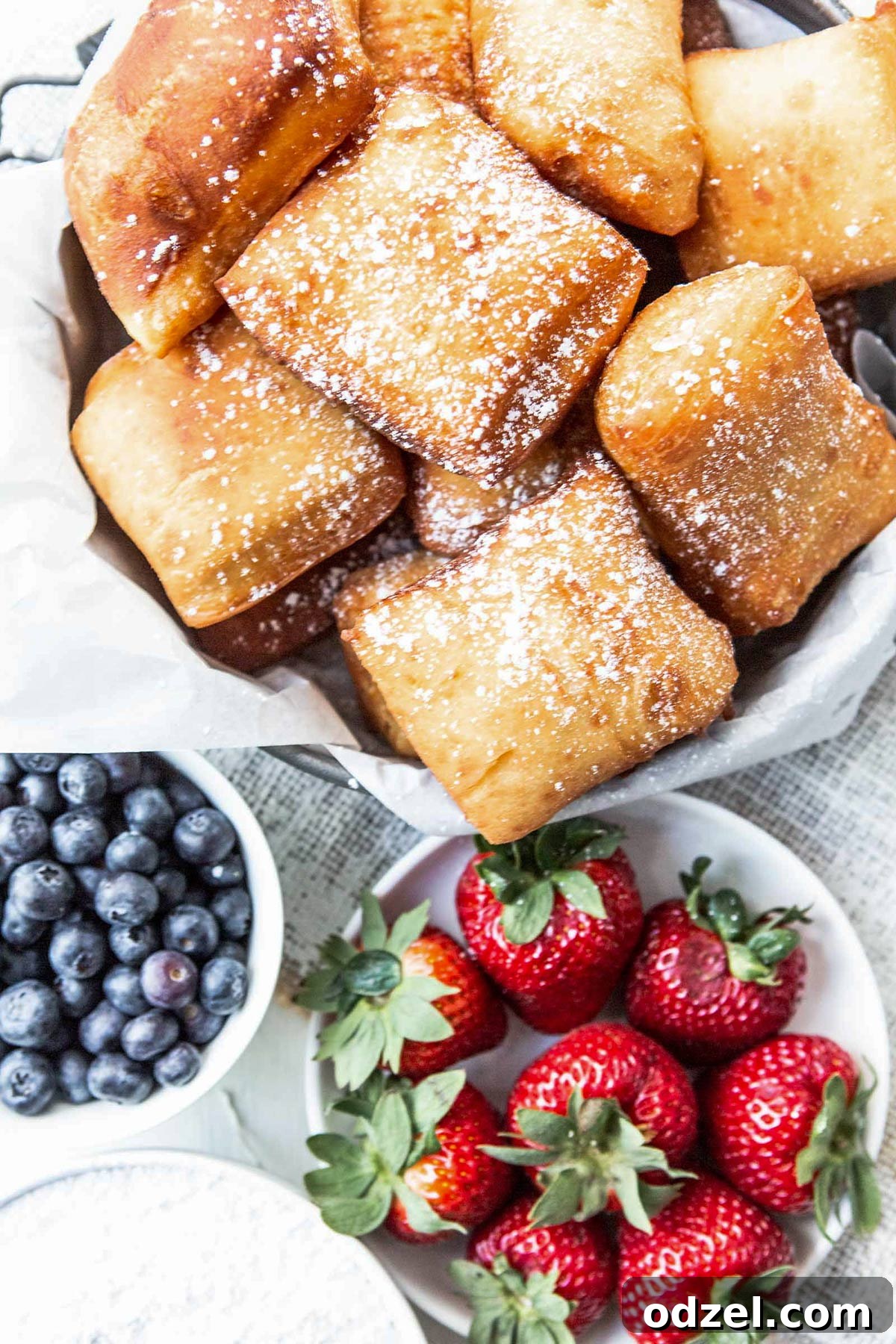
Transport your taste buds straight to the heart of France or the vibrant streets of New Orleans with these incredible homemade beignets. Each delightful pastry boasts a lightly crisp, golden-brown exterior that gives way to an invitingly soft and airy interior. Dusted generously with a cloud of powdered sugar, they are the quintessential treat for any occasion – be it a luxurious breakfast, a leisurely brunch, a comforting dessert, or a delightful afternoon snack. Prepare to fall in love with these utterly irresistible fried dough pillows.
The Irresistible Allure of Homemade Beignets
There’s something truly magical about deep-fried desserts. The way simple ingredients transform into golden, crispy, and fluffy delights is nothing short of culinary alchemy. And if I’m being honest, I have a profound affection for them. From the nostalgic charm of Deep Fried Oreos to the comforting sweetness of Apple Fritters, these fried wonders often steal the show. But among my personal favorites, these homemade beignets hold a special place. Their delicate texture and simple elegance make them an absolute joy to prepare and even more delightful to devour. I often find myself making smaller batches just to exercise a little self-control, as it’s nearly impossible to stop at just one! This recipe brings that authentic café experience right into your kitchen, promising a treat that is both easy to make and incredibly satisfying.
Step-by-Step Guide: Crafting Your Perfect Homemade Beignets
Creating these ethereal pastries might seem daunting, but with a clear, step-by-step approach, you’ll be frying up batches of perfectly puffy beignets in no time. The key lies in nurturing the yeast and handling the dough with care to ensure that signature light and airy texture.
- Activate the Yeast for Fluffy Dough: Begin by combining the active dry yeast with warm water in a large mixing bowl. The water should be comfortably warm, around 105-115°F (40-46°C), to properly activate the yeast without killing it. Stir in a teaspoon of sugar – this acts as food for the yeast, helping it to bloom. Let this mixture sit undisturbed for 10-15 minutes. You’ll know the yeast is active and ready when a frothy, bubbly layer forms on the surface. This step is crucial for achieving a light and airy beignet.
- Prepare the Wet Ingredients: In a separate, medium-sized bowl, whisk together the eggs, the remaining white sugar, and the evaporated milk until well combined. This creates a rich base that will contribute to the beignets’ tender texture and slight sweetness. Ensure everything is thoroughly mixed before proceeding.
- Combine Wet and Yeast Mixtures: Gently pour the egg and milk mixture into the bowl with the activated yeast. Whisk them together until they are fully incorporated. This blend forms the liquid foundation of your dough, ensuring an even distribution of flavors and leavening.
- Begin Forming the Dough: Now, add all of the shortening to the wet mixture, followed by about half of the bread flour. Mix these ingredients thoroughly, either with a sturdy spoon or a stand mixer fitted with a dough hook. The mixture will start to come together, forming a shaggy dough.
- Complete the Dough and Knead: Gradually add the remaining bread flour, mixing until all the flour is incorporated and a soft, slightly sticky dough forms. Continue to beat the dough until it becomes smooth and homogenous. Once mixed, turn the dough out onto a lightly floured surface. Knead the dough for about 5-7 minutes until it feels elastic and smooth. This develops the gluten, which is essential for the beignets’ chewy yet soft texture.
- Allow the Dough to Rise (The Patience Phase): Lightly grease a large bowl with oil. Place the dough ball into the greased bowl, turning it once to ensure the top is also lightly oiled. This prevents the dough from drying out. Cover the bowl with plastic wrap or a clean kitchen towel and let it rise in a warm, draft-free place for about 1 to 1.5 hours, or until it has doubled in size. For an even lighter texture, gently punch down the risen dough, lightly oil the top again, and let it rise for another hour. This second rise contributes to a finer crumb.
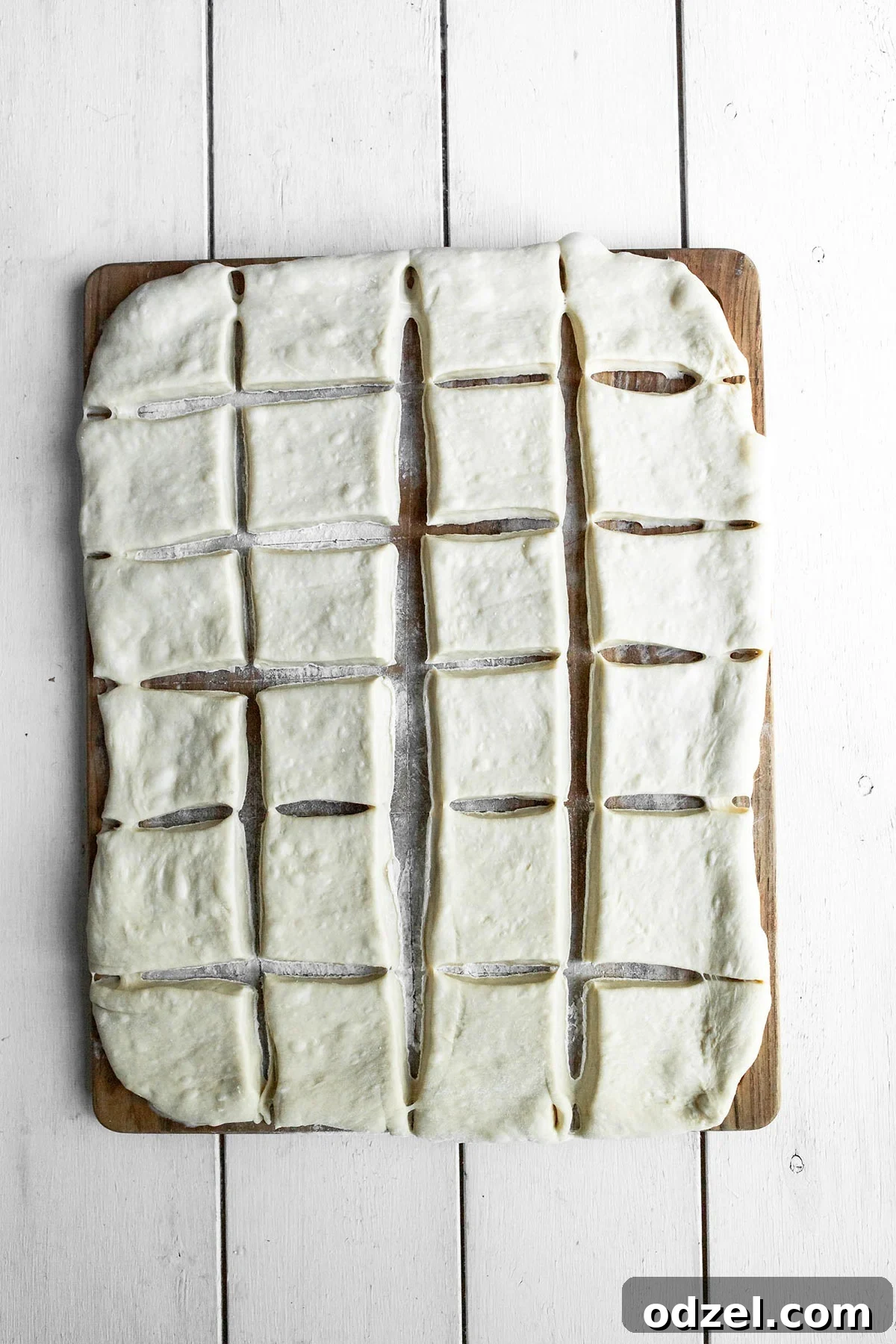
- Shape and Prepare for Frying: Once the dough has completed its rise, gently punch it down to release the air. Turn the dough out onto a lightly floured surface. Using a floured rolling pin, roll the dough out to an even thickness of about 1/4 to 1/2 inch (approximately 0.6 to 1.3 cm). Then, use a sharp knife or a pizza cutter to cut the dough into uniform squares or rectangles, typically about 2-3 inches (5-7.5 cm) in size. The precise shape isn’t critical, but uniformity helps them cook evenly.
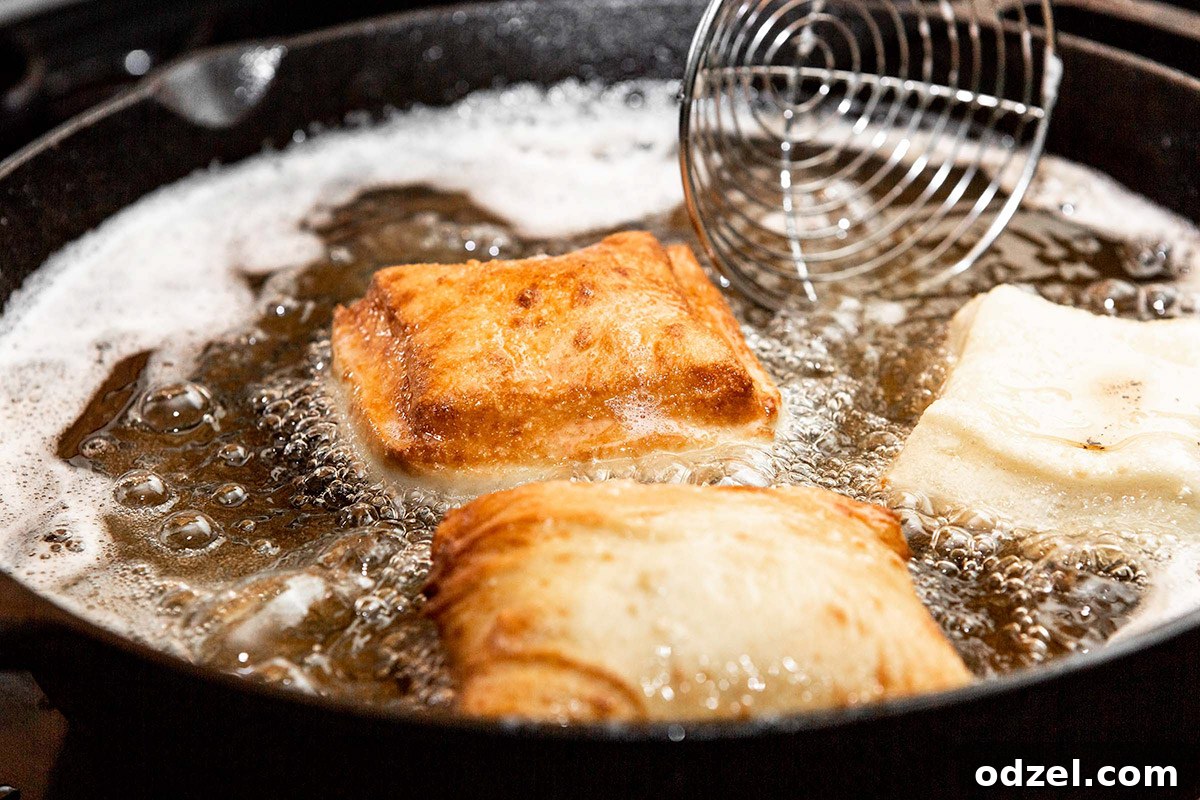
- Fry to Golden Perfection: Heat several inches of vegetable oil (or preferred frying oil) in a deep pot or Dutch oven to 350-375°F (175-190°C). It’s crucial to maintain the correct oil temperature for best results; too cool and the beignets will be greasy, too hot and they’ll brown too quickly without cooking through. Carefully place a few dough squares into the hot oil, being careful not to overcrowd the pot. Fry for about 2-3 minutes per side, or until they are puffed up and beautifully golden brown. Use a slotted spoon or spider to turn them and remove them from the oil.
- Drain, Dust, and Serve: As you remove the fried beignets from the oil, immediately transfer them to a plate lined with paper towels to drain any excess oil. While still warm, generously coat them with a liberal dusting of powdered sugar. A fine-mesh sieve works wonderfully for an even coating. Serve them immediately and enjoy the warm, fluffy goodness!
Mastering Your Beignets: Tips for Success and Delicious Variations
Achieving the perfect beignet experience goes beyond just following the steps. Here are some expert tips and creative variations to enhance your homemade pastries:
- Optimal Storage Solutions: To keep your beignets fresh, allow them to cool completely before storing. Place them in an airtight container or cover them tightly with plastic wrap.
- Refrigerator: Stored in the fridge, beignets will remain fresh for up to 2 weeks.
- Freezer: For longer preservation, freeze them for up to 3 months. Make sure they are well-wrapped to prevent freezer burn.
- Pantry: At room temperature in the pantry, they are best enjoyed within 3-5 days.
- Reheating for Freshness: Beignets are always best warm.
- From Fridge or Pantry: A quick blast in the microwave for 5-10 seconds per beignet will bring back their warmth and softness. Be careful not to overheat, as they can become tough.
- From Freezer: Allow frozen beignets to thaw at room temperature for an hour or two before briefly heating them in the microwave for a few seconds. Alternatively, you can crisp them up in a preheated oven at 300°F (150°C) for about 5 minutes.
- Beyond Powdered Sugar: Creative Toppings and Dipping Sauces: While powdered sugar is classic, don’t hesitate to get creative!
- Chocolate Lover’s Dream: Drizzle warm chocolate syrup over your beignets or serve it as a decadent dipping sauce.
- Caramel Indulgence: A rich caramel sauce adds a delightful sticky sweetness.
- Marshmallow Magic: Warm marshmallow sauce offers a unique, gooey experience.
- Fresh Fruit Fiesta: Pair them with fresh berries (like strawberries, blueberries, or raspberries) or sliced bananas for a refreshing contrast to the richness of the fried dough.
- Savory Twist (Advanced): For an adventurous take, consider a savory cheese or herb topping, though this deviates significantly from the traditional sweet beignet.
- Preparing Dough Ahead: Yes, you can prepare the dough in advance! After the initial rise and punch down, wrap the dough tightly in plastic wrap and freeze it for up to 2-3 weeks. When you’re ready to make beignets, transfer the frozen dough to the refrigerator overnight to thaw, then let it come to room temperature and complete its second rise before rolling out and cutting. This makes for a convenient make-ahead option for spontaneous cravings or entertaining.
- The Importance of Yeast (No-Yeast Option?): For this particular recipe, yeast is a fundamental ingredient. It’s responsible for the distinct airy texture and subtle flavor that defines traditional beignets. Without yeast, the pastries would lack their characteristic puffiness and softness, resulting in a denser product closer to a traditional doughnut. While there are some quick-bread style fried dough recipes that don’t use yeast, they won’t yield the authentic beignet experience this recipe aims for.
- Oil Temperature Control: Using a kitchen thermometer to monitor your oil temperature is a game-changer. Maintaining 350-375°F (175-190°C) ensures your beignets cook perfectly – golden brown on the outside and thoroughly cooked and fluffy on the inside.
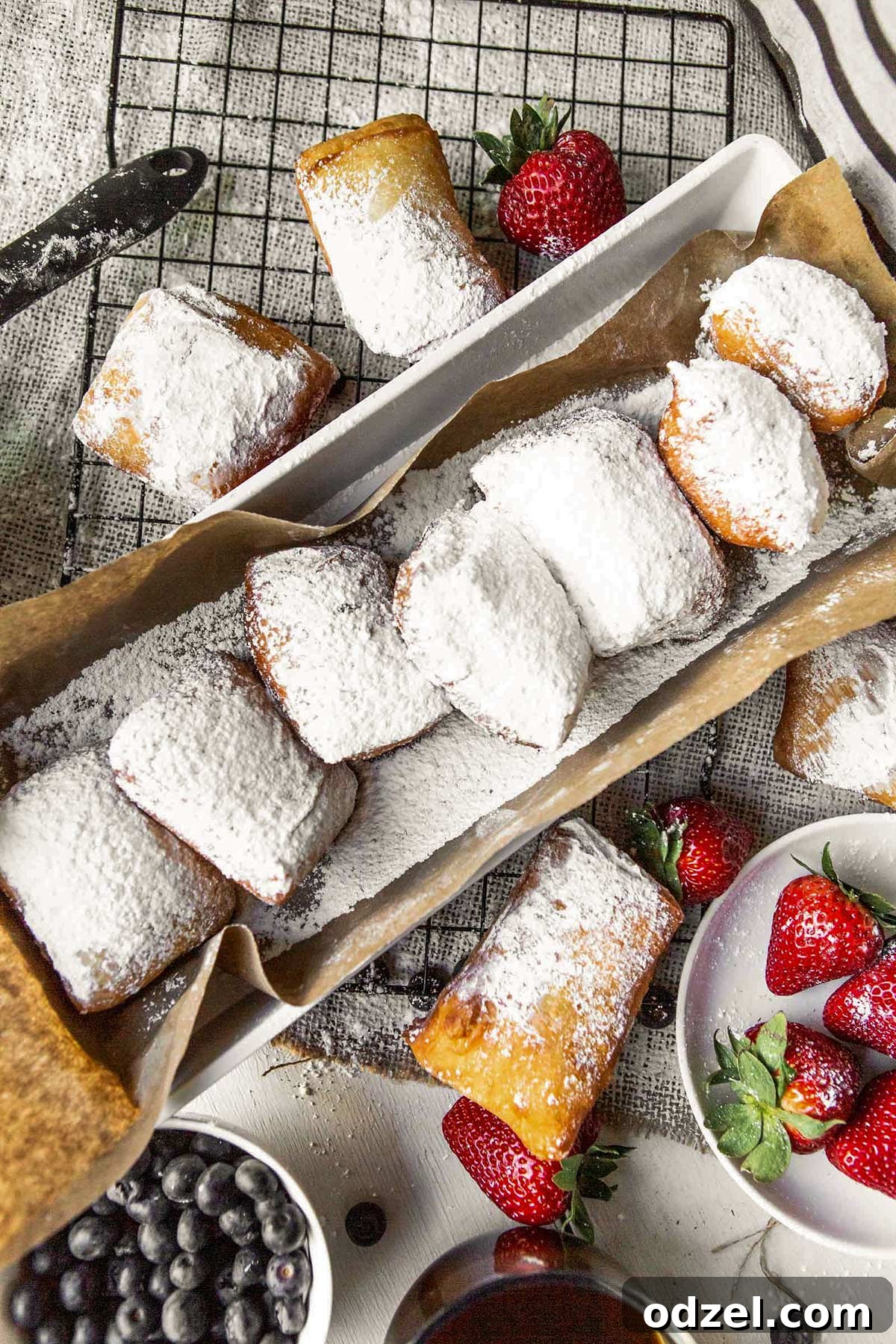
The Legendary New Orleans Beignet: A Culinary Icon
While beignets have French origins, they gained iconic status in New Orleans, particularly at the world-renowned Cafe Du Monde in the historic French Quarter. This recipe strives to replicate that unforgettable experience. Even if you’ve enjoyed beignets elsewhere, many argue that you haven’t truly tasted a beignet until you’ve experienced Cafe Du Monde’s version, served piping hot with café au lait. Their mastery of the process, though using a fundamentally similar recipe, results in an unparalleled outcome – a perfect balance of crispness and melt-in-your-mouth tenderness. Visiting Cafe Du Monde for a plate of these sugar-dusted delights is undoubtedly a bucket list item for any food enthusiast, and I highly recommend adding it to yours! It’s not just a pastry; it’s a piece of culinary history and culture.
Beignet vs. Donut: Understanding the Delicious Distinctions
At first glance, donuts and beignets appear quite similar: both are beloved fried dough pastries, often topped with a sweet coating like confectioner’s sugar. However, there are some key differences that set them apart. Traditional beignets, particularly those from New Orleans, are typically square or rectangular and lack a hole in the center. Their texture tends to be slightly chewier and heartier than many traditional ring-shaped donuts, which are often lighter and fluffier. Beignets are usually made with a yeast-leavened dough that results in a unique light, hollow interior when fried, while donuts can be yeast-leavened or cake-based.
Over the years, the lines between these two delicious categories have blurred, with many modern donut variations adopting characteristics akin to beignets. For instance, rich, filled donuts like these Nutella Stuffed Donuts share a satisfying density and rich interior that strongly reminds me of a classic beignet. Ultimately, both offer a comforting, sweet indulgence, but the beignet maintains its distinct identity through its traditional shape, unique texture, and cultural heritage.
Frequently Asked Questions (FAQs) About Homemade Beignets
- Why isn’t my dough rising? Several factors can affect dough rising. Ensure your yeast is fresh and active (check for frothiness after dissolving in warm water). The water temperature should be warm, not hot (which kills yeast) or cold (which inhibits it). Also, make sure your rising environment is warm and draft-free. Patience is key; sometimes dough just needs more time.
- Why are my beignets greasy? Greasy beignets are usually a sign that your oil temperature was too low. The dough absorbs oil instead of cooking rapidly. Ensure your oil is consistently at 350-375°F (175-190°C) and don’t overcrowd the pot, as this will drop the oil temperature.
- Can I use all-purpose flour instead of bread flour? While bread flour provides a chewier, more elastic texture due to its higher protein content, you can use all-purpose flour. The beignets might be slightly less chewy but will still be delicious.
- How do I get that perfect puff? Proper yeast activation, sufficient kneading to develop gluten, and allowing the dough to rise adequately are all crucial. Additionally, ensure your oil is hot enough. The shock of hot oil causes the dough to puff rapidly.
- Is shortening essential, or can I use butter? Shortening contributes to the tender crumb and slight crispness of beignets. While butter can be used, it has a lower melting point and different fat composition, which might slightly alter the texture. For the most authentic result, stick with shortening.
More Delectable Pastry Recipes to Explore:
If you’ve enjoyed making these beignets, you’ll surely love these other delightful pastry-style recipes:
- Crispy & Sweet Churros
- Classic Donut Holes
- Flaky Pastelitos de Guayaba y Queso
- Savory Pastelitos de Carne
- Decadent Baked Chocolate Donuts
Ready to create a little French Quarter magic in your own kitchen? Go ahead and give these Homemade Beignets a whirl! I’d love to hear what you think and see your creations, so please share your thoughts and photos in the comments below!
You can find more delicious recipes and cooking tutorial videos on Youtube and Facebook.
Homemade Beignets
Rate Recipe
Print Recipe
Ingredients
- 2 tsp dry active yeast
- 1/2 cup white sugar
- 1 1/2 cups warm water
- pinch of salt
- 2 eggs
- 1 cup evaporated milk
- 1/4 cup shortening
- 5 1/2 cups bread flour
- Powdered Sugar to Taste
Instructions
-
In a large bowl, dissolve the dry active yeast in warm water. Add a tsp of sugar and let it sit for about 10-15 minutes until frothy.
-
In a separate bowl, combine the condensed milk, eggs, and remaining sugar and mix thoroughly.
-
Add the prepared wet ingredients mixture to the activated yeast mixture and whisk well to combine.
-
Add half of the bread flour and all of the shortening, then mix until partially incorporated.
-
Add the remaining flour and continue to mix until a coherent dough forms and all ingredients are well incorporated.
-
Beat the dough until it becomes nice and smooth, aiming for a soft, slightly sticky ball of dough.
-
Turn the dough out onto a lightly floured surface and knead it for 5-7 minutes until it is smooth and elastic.
-
Place the dough in a greased bowl, turning it once to ensure the top is also greased. Cover the bowl and let it rise in a warm place for 2 hours, or until doubled in size.
-
Once risen, gently punch the dough down. Turn it onto a floured surface, roll it out evenly with a floured rolling pin, and then cut it into small squares or rectangles of your desired size.
-
Heat vegetable oil in a deep pot to 350-375°F (175-190°C). Fry each dough square for about 2-3 minutes on each side, or until golden brown and puffed.
-
Remove fried beignets to paper towels to drain excess oil. Sprinkle generously with powdered sugar while still warm and enjoy!
Video
Nutrition
Carbohydrates: 52g |
Protein: 9g |
Fat: 7g |
Saturated Fat: 2g |
Cholesterol: 33mg |
Sodium: 34mg |
Potassium: 138mg |
Fiber: 1g |
Sugar: 10g |
Vitamin A: 90IU |
Vitamin C: 0.4mg |
Calcium: 68mg |
Iron: 0.7mg
Nutrition information is automatically calculated, so should only be used as an approximation.
Additional Info