
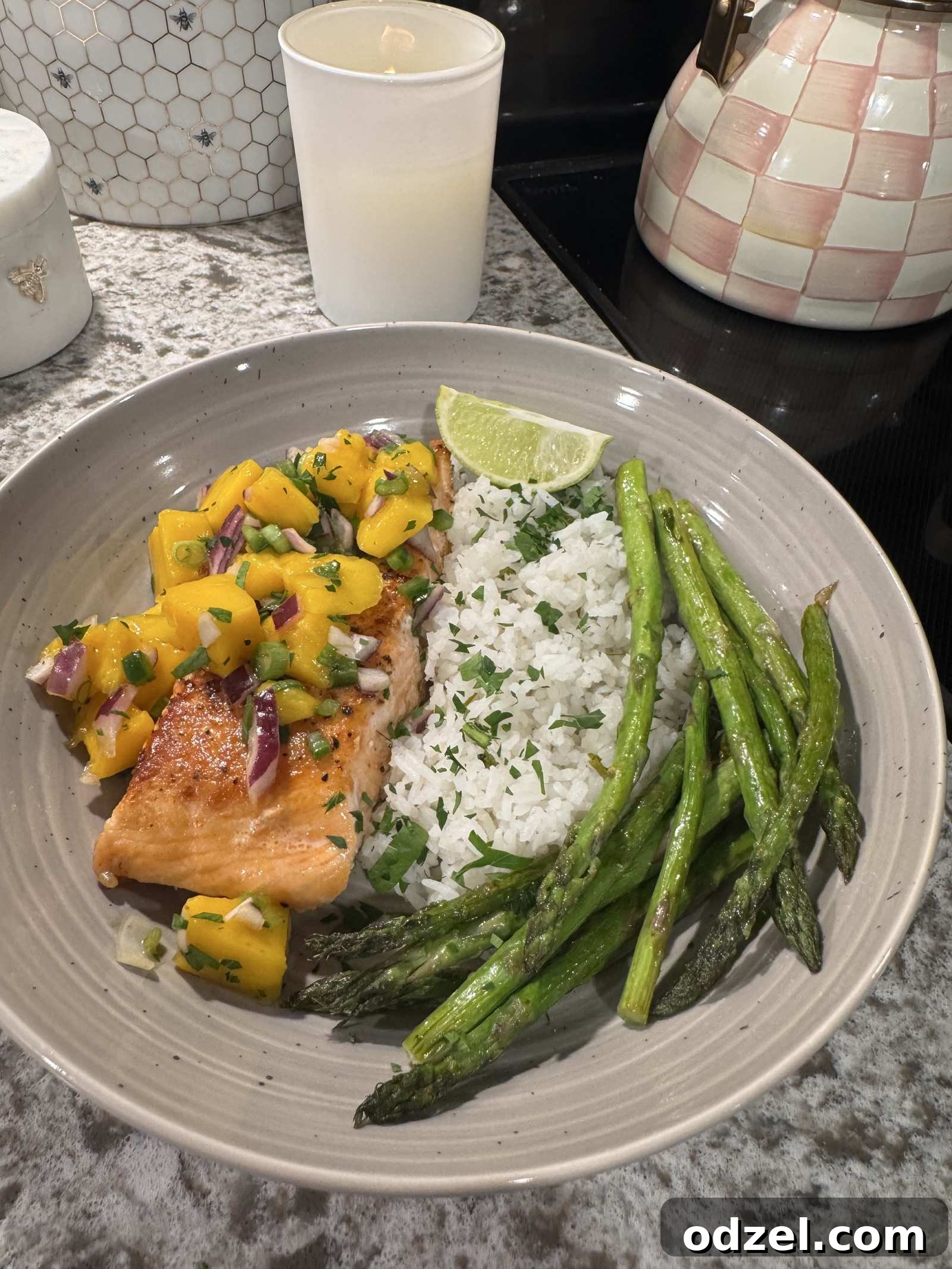
Embark on a culinary journey with this incredible **Mango Salmon Bowl**, a dish designed to transform healthy eating into an exhilarating experience. Imagine perfectly cooked, flaky salmon, seasoned to perfection, resting atop a bed of fragrant cilantro lime rice. Each bite is a delightful fusion of sweet and savory, enhanced by a vibrant, tangy mango salsa that bursts with fresh flavors. This isn’t just a meal; it’s a celebration of taste and wellness, effortlessly blending nutrition with undeniable deliciousness.
While cilantro lime rice offers an unparalleled flavor complement, those with different preferences can easily substitute it with a comforting garlic buttery rice or classic plain white or brown rice. The adaptability of this bowl ensures it caters to every palate and dietary need.
Traditionally served with tender asparagus, this versatile dish invites you to customize your vegetable accompaniment. Consider roasted parmesan brussels sprouts, steamed green beans, a crisp side salad, or any seasonal vegetable you desire. The goal is a balanced, fulfilling meal that supports your healthy lifestyle without ever feeling like a compromise.
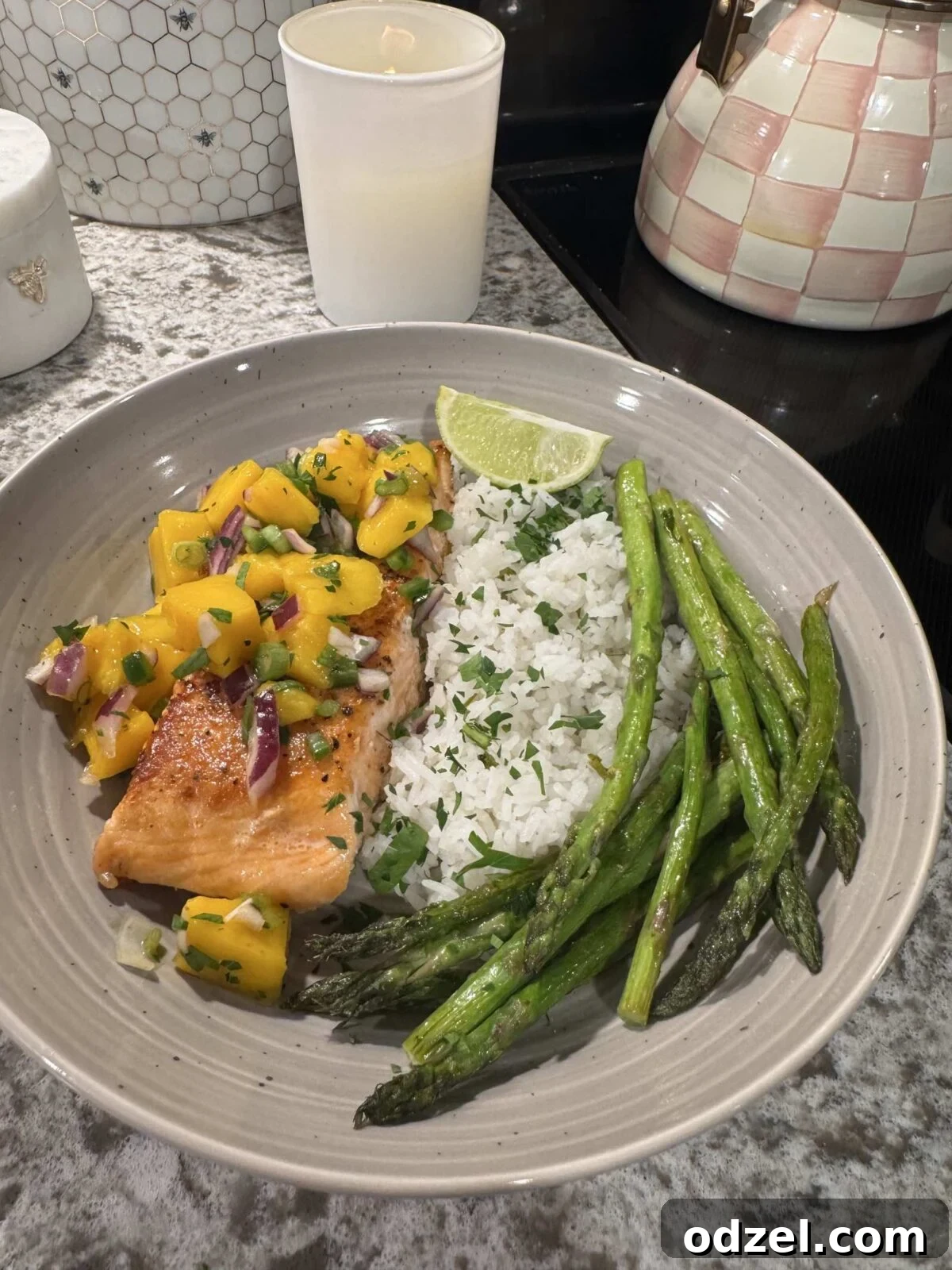
Table of Contents
- Why Choose Salmon?
- The Star Ingredient: Vibrant Mango Salsa
- Achieving Perfectly Cooked Salmon
- Versatile Rice and Vegetable Pairings
- Exploring Protein Alternatives for Your Bowl
- Creative Fruit Substitutions for the Salsa
- Smart Storage and Meal Prep Tips
- Mango Salmon Bowl Recipe
- Leave a Comment
Why Choose Salmon for Your Healthy Bowl?
Salmon is not just delicious; it’s a powerhouse of nutrition, making it an ideal choice for a healthy meal like our Mango Salmon Bowl. This fatty fish is celebrated for its high content of Omega-3 fatty acids, which are crucial for cardiovascular health, supporting brain function, and significantly reducing inflammation throughout the body. Furthermore, salmon is an excellent source of high-quality lean protein, essential for muscle repair, growth, and maintaining satiety, keeping you feeling full and satisfied long after your meal. Beyond its remarkable health benefits, salmon offers a rich, distinctive flavor profile that pairs exceptionally well with the bright, sweet, and tangy notes of mango salsa. Its naturally flaky texture, when cooked correctly, provides a luxurious mouthfeel that elevates the entire dish, proving that healthy eating can indeed be gourmet and exciting. Incorporating salmon into your diet regularly can contribute to a well-balanced and nutritious lifestyle.
The Star Ingredient: Vibrant Mango Salsa
The mango salsa is truly what makes this salmon bowl sing. Its bright, refreshing flavors cut through the richness of the salmon, creating a harmonious balance that will tantalize your taste buds. This salsa isn’t just about mango; it’s a carefully curated blend of sweet, tangy, and subtly spicy elements that elevate every forkful. It transforms a simple salmon and rice dish into an extraordinary tropical experience, making each bite an explosion of fresh, invigorating tastes.
Choosing the Perfect Mangoes
For the best mango salsa, selecting perfectly ripe mangoes is paramount. A ripe mango should yield slightly to gentle pressure when squeezed lightly in your palm and emit a wonderfully sweet, fruity aroma near the stem. Avoid mangoes that are overly soft, mushy, or have extensive dark bruises, as these may be overripe. Conversely, very firm mangoes are typically underripe and will lack the desired sweetness and soft texture. Remember that the color of the skin isn’t always the best indicator of ripeness, as some varieties, like Ataulfo or Honey mangoes, can remain yellow even when ripe, while others like Tommy Atkins may show red blush but still need time to soften. Aim for firm yet yielding flesh for easy dicing and optimal flavor.
Crafting the Flavor Profile
Our mango salsa expertly combines diced ripe mangoes with finely diced red onion for a subtle pungent crunch and a vibrant color contrast. Deseeded and finely diced jalapeño introduces a gentle, controlled kick of heat, ensuring the salsa is lively without being overwhelmingly spicy. Finely sliced scallions add a mild, fresh oniony note, enhancing the aromatic complexity. Fresh cilantro, with its distinctive herbaceous quality, is an essential component, tying all the flavors together. A generous drizzle of fresh lime juice provides the crucial acidity, brightening all the ingredients and preventing the salsa from being too sweet. Finally, a touch of honey balances any tartness and enhances the mango’s natural sweetness, while a pinch of salt and pepper ties everything together. The result is a salsa that’s fresh, fruity, zesty, and incredibly addictive – a perfect, vibrant topping for your perfectly cooked salmon.
Achieving Perfectly Cooked Salmon
Cooking salmon to perfection is an art that’s surprisingly easy to master with a few key techniques. The ultimate goal is a tender, moist, and flaky interior complemented by a beautifully seared, slightly crispy exterior. Overcooking salmon is a common pitfall that can lead to dry, unappetizing results, emphasizing why precision and attention to detail are paramount.
Preparation is Key for Optimal Results
Before you even think about introducing heat, ensure your salmon fillets are meticulously prepared. The most crucial step is to thoroughly pat them dry with paper towels. This step is indispensable for achieving that desirable crispy skin and a beautifully seared crust. Any residual moisture on the surface of the fish will cause it to steam rather than sear, hindering the development of that golden-brown exterior. Additionally, it’s beneficial to take the salmon out of the refrigerator about 15-20 minutes before you plan to cook it. Allowing the fillets to come closer to room temperature promotes more even cooking throughout the fish, preventing the common issue where the outside cooks too quickly while the center remains underdone.
Mastering the Pan-Sear Technique
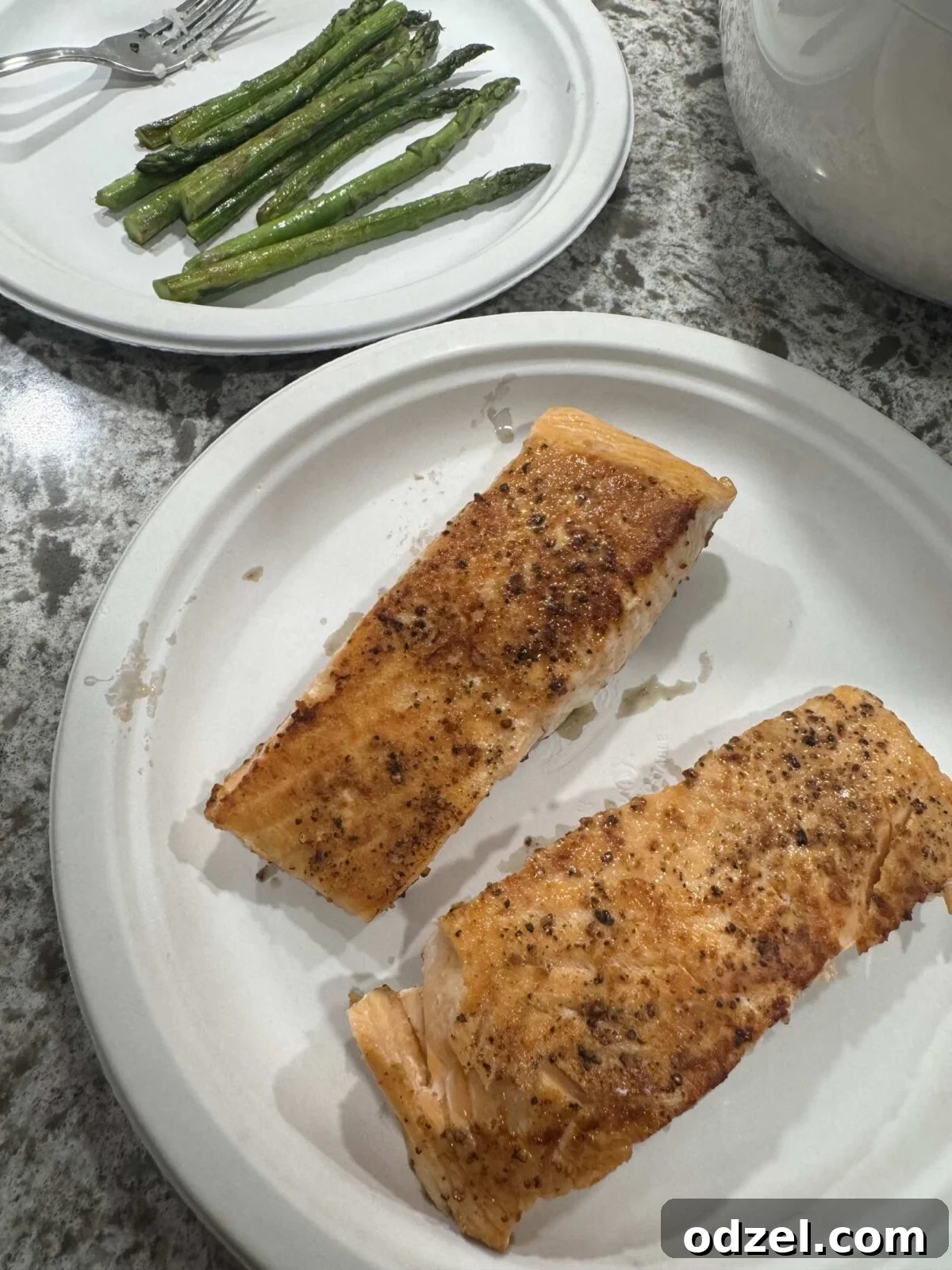
When pan-searing salmon, maintaining a consistent medium heat is your best friend. A skillet that is too hot will inevitably cause the exterior of the salmon to burn and blacken before the interior has a chance to cook through, resulting in an uneven and unappealing texture. Begin by heating a small amount of high-smoke-point oil (like avocado or grapeseed oil) in your skillet over medium heat until it shimmers. Carefully place the seasoned salmon fillets, ideally skin-side down first (if the skin is on), into the hot skillet. Cook for approximately 3-4 minutes per side. The skin will become wonderfully crispy and separate easily from the pan. For accuracy, the most reliable way to determine doneness is by using an instant-read thermometer. Aim for an internal temperature of **125-130°F (52-54°C) for medium-rare**, keeping in mind that the salmon will continue to cook slightly (known as carryover cooking) after it’s removed from the heat. This carryover cooking will gently bring it up to a perfect medium, yielding moist, tender, and beautifully flaky results every single time. Remove the salmon from the pan and let it rest for a minute or two before serving to allow the juices to redistribute, ensuring maximum flavor and moisture.
Versatile Rice and Vegetable Pairings
The foundation of this flavorful bowl relies heavily on its complementary side dishes, particularly the rice and vegetables. Beyond the core recipe, there are numerous ways to tailor this dish to your specific taste preferences or to utilize ingredients you already have on hand, ensuring maximum flexibility and enjoyment.
Beyond Cilantro Lime Rice: Exploring Grain Options
While the zesty and herbaceous cilantro lime rice perfectly complements the bright flavors of the mango salmon, don’t feel restricted. For those who prefer a more classic and understated flavor profile, simple steamed white or brown rice works beautifully, allowing the salmon and salsa to take center stage. If you’re looking for another flavorful option that adds a savory depth, consider a rich garlic buttery rice, which can provide a comforting warmth to the bowl. For a healthier, higher-fiber alternative, fluffy quinoa is an excellent choice, offering added protein and a slightly nutty flavor. Another quick and light grain option is couscous, which absorbs flavors wonderfully and provides a fine, delicate texture. Whichever grain you choose, ensure it’s cooked to perfection, providing a soft base that can absorb the delicious juices and flavors of the salmon and salsa.
Elevating Your Vegetables: Creative Side Dishes
Asparagus is a fantastic choice for this bowl, offering a tender-crisp texture and an earthy flavor that contrasts beautifully with the main components. To prepare it, simply heat a little oil in a separate skillet, add the asparagus spears, season generously with salt and pepper, and cook for 6-7 minutes, turning occasionally, until they reach a vibrant green color and are tender-crisp. However, the possibilities for vegetable pairings are truly endless. Consider roasted broccoli or green beans for a classic, robust side. Steamed sugar snap peas offer a delightful crunch and natural sweetness. For a refreshing contrast, a simple mixed green salad dressed with a light vinaigrette can be a wonderful addition, cutting through the richness. Other great options include sautéed spinach with garlic, roasted bell peppers, or even grilled zucchini. The key is to choose a vegetable that provides a fresh, textural, and flavorful counterpoint to the rich salmon and sweet-tangy salsa, creating a well-rounded and satisfying meal.
Exploring Protein Alternatives for Your Bowl
Not a fan of salmon, or simply looking to add variety to your meal rotation? This Mango Salmon Bowl recipe is incredibly adaptable, allowing you to substitute the salmon with various other proteins without sacrificing the dish’s vibrant flavor profile. The key is to choose a thick, firm fish or lean meat that can hold up well to the robust and flavorful mango salsa.
- **Chicken Breast:** For a versatile poultry option, perfectly seasoned and either grilled, pan-seared, or baked chicken breast offers a lean and neutral base. You can cut it into bite-sized cubes or serve it as a whole fillet, ensuring it’s cooked until tender and juicy.
- **Chilean Sea Bass:** Known for its rich, buttery flavor and delicate, flaky texture, Chilean sea bass is a luxurious alternative that pairs exquisitely with the tropical notes of the mango salsa. If you particularly enjoy this specific pairing, you might want to explore dedicated recipes like this Chilean sea bass with mango salsa recipe.
- **Mahi-Mahi:** A firm, white fish with a mild, slightly sweet flavor, mahi-mahi holds up exceptionally well to grilling or pan-searing. Its clean taste makes it an excellent complement to the vibrant tropical flavors of the salsa.
- **Halibut:** Another premium choice, halibut is a firm, white fish that is subtly sweet and remarkably flaky. Its robust texture ensures it maintains its integrity within the bowl, making it a wonderful alternative for a more upscale feel.
- **Cod or Tilapia:** For more budget-friendly and widely available options, cod or tilapia can also be used. While they are milder in flavor compared to salmon or sea bass, they provide a good source of lean protein. You may find that these fish benefit from a bit more seasoning to ensure they stand out alongside the bold mango salsa.
Regardless of your protein choice, always ensure it is cooked to perfection – tender, juicy, and safely done – to absorb and beautifully complement the bright flavors of the mango salsa and the chosen rice or grain.
Creative Fruit Substitutions for Your Salsa
While mango is undeniably the vibrant star of this salsa, culinary creativity knows no bounds, and the recipe is wonderfully forgiving. If mangoes are out of season, hard to find in your local market, or simply not to your taste, several other fruits make excellent substitutes. Each alternative brings its unique twist and flavor profile to the dish, allowing for seasonal variations and personal preference.
- **Pineapple:** A classic tropical choice, ripe pineapple offers a similar sweet-tangy profile to mango, though often with a more pronounced acidity and a slightly firmer, fibrous texture. When diced finely for the salsa, it creates a delicious and refreshing alternative that still captures that exotic essence.
- **Peaches:** When perfectly in season during the summer months, ripe peaches offer a softer, more delicate sweetness and a wonderfully tender texture. Their subtle floral notes pair wonderfully with the other salsa ingredients, creating a distinctly summery and perhaps less intensely tropical flavor, leaning towards a sweet orchard fruit profile.
- **Papaya:** For an even more exotic and delicate twist, ripe papaya brings a milder sweetness and a uniquely creamy texture. Its subtle flavor allows other components of the salsa, such as lime and cilantro, to truly shine through, creating a nuanced and sophisticated experience.
- **Nectarines:** Similar to peaches but distinguished by their smooth skin, ripe nectarines offer a delightful sweetness combined with a firmness that holds up exceptionally well in a fresh salsa. They provide a juicy, slightly tangy component that can be incredibly refreshing.
- **Kiwi:** For a vibrant green and tangy option, finely diced kiwi can add a tart, refreshing burst to the salsa. Its slightly sour notes would provide a wonderful counterpoint to the sweetness, though you might adjust the honey in the recipe.
- **Mixed Berry Salsa:** For a truly unique and surprisingly delicious take, a salsa made with a medley of diced strawberries, blueberries, and raspberries can provide a beautiful array of colors and a burst of tart-sweet flavor. This option would lean towards a very sweet and slightly less savory profile, perfect for those who enjoy a fruit-forward salsa.
When making substitutions, always remember to taste and adjust the amounts of honey or lime juice as needed. Different fruits vary significantly in their natural sugar content and acidity levels, so fine-tuning these elements will ensure you achieve your desired balance of sweet and tart flavors in your personalized salsa.
Smart Storage and Meal Prep Tips
To ensure your Mango Salmon Bowl remains fresh, flavorful, and safe for future enjoyment, proper storage is absolutely essential. Due to the varying textures, moisture content, and optimal serving temperatures of the individual components, it’s best practice to store them separately.
- **Separate Containers are Key:** Always keep the **cooked salmon, cooked rice, and the vibrant mango salsa in separate airtight containers**. This crucial step prevents the moisture and acidity from the salsa from prematurely making the rice soggy and the delicate salmon mushy, which would significantly compromise the texture and overall flavor of your prepared meal.
- **Understanding Shelf Life:**
- **Cooked Salmon:** When stored correctly in an airtight container, cooked salmon will stay fresh and delicious in the refrigerator for up to 3 days. Ensure it cools completely before refrigerating.
- **Cooked Rice:** Cooked rice can be safely refrigerated for approximately 3 to 4 days. It’s important to cool the rice quickly after cooking to prevent bacterial growth and then store it in a sealed container.
- **Mango Salsa:** The fresh mango salsa is best enjoyed within 1 to 2 days of preparation. The diced fresh fruit, once mixed with acidic ingredients like lime juice, tends to soften relatively quickly, losing some of its crispness and vibrant texture. For optimal freshness and peak flavor, consider preparing the salsa just before serving, or assemble it right before your meal prep session if you plan on consuming it within 24 hours.
- **Smart Reheating Strategy:** When it’s time to enjoy your prepped bowl, only warm the salmon and rice. The mango salsa is designed to be served cold, providing a delightful and refreshing contrast in temperature and flavor to the warm components. Reheating the salsa would diminish its fresh, vibrant flavor and compromise its crisp texture. Simply heat the salmon and rice gently (in a microwave or on the stovetop), then spoon a generous amount of the chilled salsa over the top just before serving.
These comprehensive storage and reheating tips make this Mango Salmon Bowl an excellent candidate for efficient meal prepping, allowing you to enjoy delicious, healthy, and convenient meals throughout your busy week with minimal effort and maximum flavor retention.
Mango Salmon Bowl Recipe
Mango Salmon Bowl
Julie Maestre
This mango salmon bowl makes healthy eating exciting. Flaky salmon over cilantro lime rice with sweet mango salsa creates the perfect sweet-savory bite.
10 mins
20 mins
30 mins
3
Rate Recipe
Print Recipe
Ingredients
- 3-4 salmon fillets
- 2 mangos , ripe
- ½ red onion , finely diced
- ½ jalapeno, deseeded and diced
- 1 scallion, finely sliced
- ½ lime, juiced
- 1 bunch cilantro, freshly chopped
- 1 tbsp olive oil
- 1 tsp honey
- salt and pepper to taste
- oil, for cooking salmon
- 1 lb asparagus
- cilantro lime rice (or your preferred rice)
Instructions
-
First, prepare your chosen rice. If you’re opting for cilantro lime rice, follow its specific recipe directions. Otherwise, prepare plain white or brown rice according to the package instructions.
-
To make the vibrant mango salsa, peel and dice the ripe mangoes into small, bite-sized cubes. Combine them in a mixing bowl with the finely diced red onion, deseeded and diced jalapeño, and finely sliced scallion. Add the freshly chopped cilantro, then drizzle in the lime juice, olive oil, and honey. Season generously with salt and pepper. Gently mix all ingredients until thoroughly combined. Refrigerate the salsa while you prepare and cook the salmon, allowing the flavors to meld beautifully.
-
Heat a small amount of cooking oil in a skillet over medium heat. While the skillet heats, pat the salmon fillets completely dry with paper towels to ensure a crisp sear. Season both sides generously with kosher salt and freshly ground black pepper. Place the salmon in the hot skillet and cook for 3–4 minutes per side, or until the internal temperature reaches 125-130 degrees F (52-54 degrees C) for a perfect medium-rare, which will continue to cook to medium after removal from heat.
-
Concurrently, as the salmon cooks, heat a little oil in a separate skillet for the asparagus. Add the asparagus spears, season them with salt and pepper, and cook for 6–7 minutes until they are tender-crisp. Turn them occasionally to ensure even cooking and a beautiful vibrant green color.
-
To assemble your bowl, place a generous serving of cooked rice on the bottom. Top with the perfectly cooked salmon fillet, then spoon a generous amount of the chilled mango salsa over the salmon. Serve with the tender-crisp asparagus on the side. Enjoy this fresh, healthy, and incredibly flavorful meal immediately!
Recipe Notes
- When cooking the salmon, maintaining medium heat is crucial. High heat will burn the exterior before the interior is cooked, resulting in an unevenly cooked fillet.
- For optimal results, remove salmon from the fridge about 20 minutes before cooking. Cooking ice-cold fish can lead to uneven doneness. Avoid overcooking; 4 minutes per side is a general guide, but an internal temperature of 125–130°F (52-54°C) for medium is the most reliable indicator, as it will continue cooking off the heat.
- Always use ripe mangoes for the salsa. They provide the natural sweetness and tender texture that are essential for the salsa’s balanced flavor.
Nutrition Information (Approximate per serving)
- Calories: 416 kcal
- Carbohydrates: 32g
- Protein: 39g
- Fat: 16g
- Saturated Fat: 3g
- Polyunsaturated Fat: 5g
- Monounsaturated Fat: 7g
- Cholesterol: 94mg
- Sodium: 82mg
- Potassium: 1440mg
- Fiber: 6g
- Sugar: 25g
- Vitamin A: 2955 IU
- Vitamin C: 68mg
- Calcium: 85mg
- Iron: 5mg
Nutrition information is automatically calculated and should be used as an approximation only. Individual results may vary based on exact ingredients and preparation methods.
Additional Info
Julie Maestre
10 minutes
20 minutes
30 minutes
Entree
American (Fusion)
3
416
mango salmon bowl, healthy salmon, salmon dinner, quick dinner, tropical flavors
Enjoyed This Flavorful Recipe?
We’d love to hear your thoughts! Please leave a comment and share your experience below. Your feedback helps us create even more delicious recipes for you. ❤️
Find more culinary inspiration and helpful cooking tutorial videos on our YouTube channel and Facebook page.