
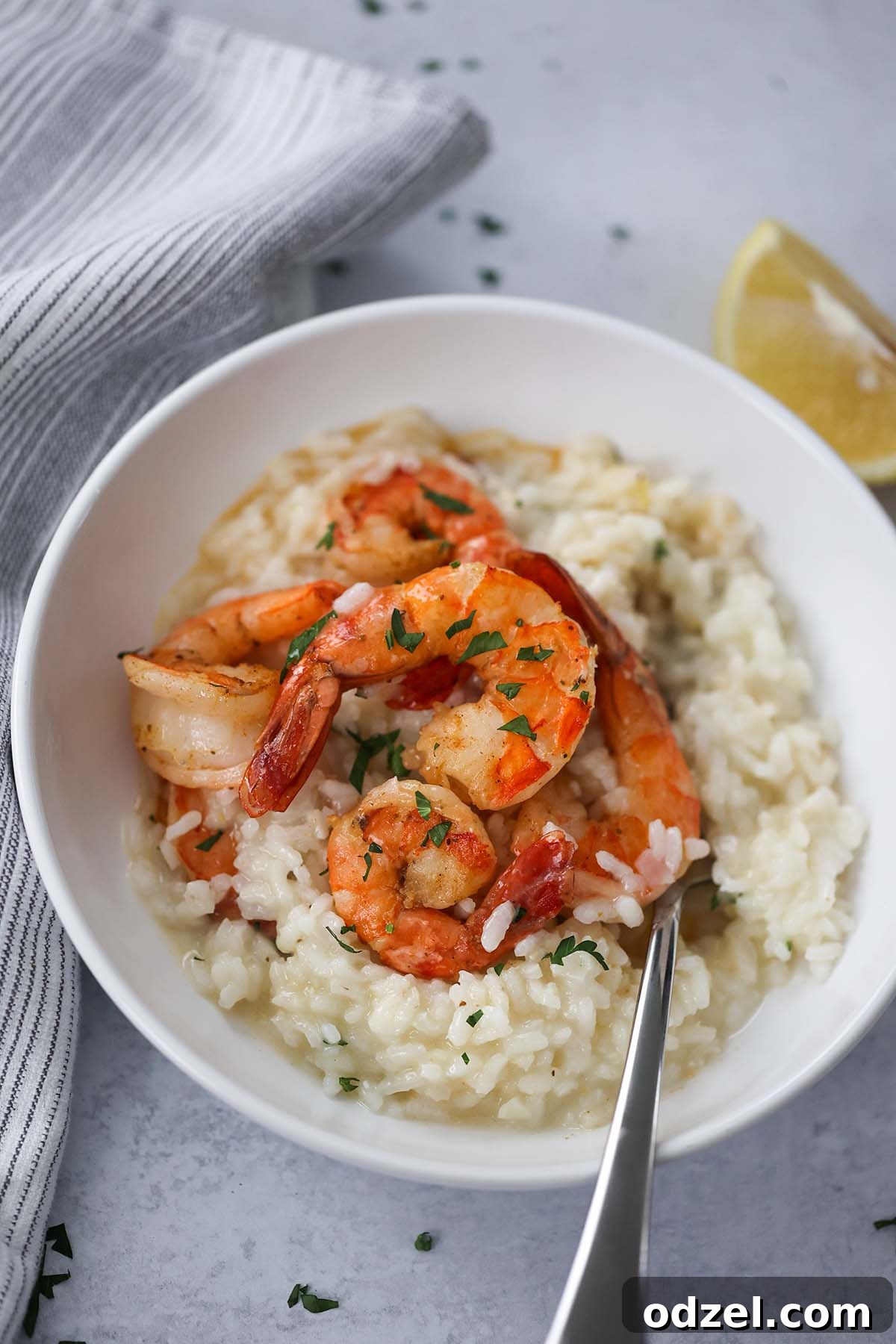
Indulge in the unparalleled comfort of a truly exceptional **Creamy Shrimp Risotto**. This dish transforms simple ingredients into a luxurious, restaurant-quality meal right in your own kitchen. Featuring tender Arborio rice, slow-cooked to perfection with flavorful chicken stock, and generously infused with rich Parmesan cheese, it’s then crowned with succulent, perfectly seasoned shrimp. The result is a velvety, intensely satisfying experience that’s both elegant and surprisingly easy to achieve.
Often considered a culinary masterpiece that requires dedication, risotto is, at its heart, a dish of patience and fresh components. The magic happens through the continuous stirring, which coaxes the starch from the Arborio rice, creating its signature creamy texture. Whether you’re planning a romantic dinner, a special family meal, or simply craving something comforting and delicious, this shrimp risotto recipe is designed to impress with minimal fuss. It’s perfect as a standalone main course, offering a complete and balanced meal, or as a sophisticated side to other Italian-inspired dishes. For a truly complete and unforgettable dinner experience, consider pairing this delightful risotto with a side of warm, cheesy garlic bread and a vibrant medley of air-fried vegetables.
The Art of Creamy Shrimp Risotto: A Step-by-Step Guide
Making a truly exquisite risotto isn’t about complex techniques; it’s about understanding the core principles and using quality ingredients. The secret lies in the slow, gradual addition of warm stock and the constant, gentle stirring. This process ensures the Arborio rice grains release their starches gradually, creating that luxurious, creamy consistency without becoming mushy. With just a little patience and a selection of fresh, vibrant ingredients, you’ll be able to prepare a risotto that rivals any Italian restaurant.
While this Shrimp Risotto stands beautifully as a satisfying main course, its versatility also allows it to shine as an elegant side dish. If you’re aiming for a substantial main, incorporating a protein is key. Beyond shrimp, consider other delectable seafood options like tender lobster, sweet scallops, or even succulent crab meat to elevate the dish further. For those adventurous in the kitchen, experimenting with different flavor profiles can unlock new favorites. You might explore a rich and earthy truffle mushroom risotto for an umami-packed experience, or a classic, comforting creamy Parmesan risotto where the cheese is the undisputed star. Each variation promises its own unique charm and depth of flavor.
Essential Ingredients for Perfect Shrimp Risotto
Crafting the perfect shrimp risotto begins with selecting the right ingredients. Each component plays a vital role in achieving the dish’s signature texture and rich flavor profile.
- Arborio Rice – This short-grain Italian rice is non-negotiable for authentic risotto. Its high starch content is precisely what creates the creamy, velvety texture as it cooks, while still maintaining a pleasant chewiness. Do not substitute with other rice varieties like long-grain or jasmine rice, as they lack the necessary starch to achieve the desired consistency.
- Shrimp – The star protein of our dish. Any size of raw, peeled, and deveined shrimp will work beautifully. For the best flavor and texture, opt for fresh shrimp if available. If using frozen, ensure they are fully thawed and patted dry before cooking to prevent excess moisture. Larger shrimp (like jumbo or colossal) make a more impressive presentation, while smaller ones integrate more seamlessly into each bite.
- Old Bay Seasoning – A classic American spice blend, renowned for its distinctive savory and slightly spicy profile, perfectly complementing seafood. If Old Bay isn’t to your taste or readily available, feel free to get creative. Consider a vibrant Cajun seasoning for a spicy kick, or a simple blend of paprika, garlic powder, onion powder, and a pinch of cayenne pepper for a custom flavor.
- White Wine – A dry white wine, such as Pinot Grigio or Chardonnay, is traditionally used to deglaze the pan and add a layer of complex acidity and depth to the risotto. The alcohol evaporates during cooking, leaving behind only its delicious essence. Avoid sweet or fruity white wines, as they can alter the flavor profile undesirably. If you prefer to cook without alcohol, simply omit the wine and substitute with an additional 1/2 cup of chicken stock, though the depth of flavor will be slightly different.
- Chicken Stock – The foundation of risotto’s flavor and creaminess. High-quality chicken stock will significantly enhance the overall taste. Vegetable stock is an excellent alternative for a vegetarian version, and for an even richer seafood flavor, consider using shrimp stock (made from shrimp shells) or a combination of chicken and shrimp stock. Always ensure the stock is warm before adding it to the rice; this helps maintain a consistent cooking temperature and prevents shocking the rice, ensuring an even cook.
- Butter – Both salted or unsalted butter can be used, depending on your preference and overall sodium intake. Butter is added at the end (a technique known as “mantecare”) to impart a luxurious richness and enhance the creamy texture, making the risotto incredibly smooth and decadent.
- Shallots – Preferred for their milder, sweeter, and more delicate flavor compared to regular onions, shallots are ideal for building a subtle aromatic base without overpowering the other ingredients. If shallots aren’t accessible, finely diced scallions (green onions, white parts) or yellow onions can serve as suitable alternatives, though the flavor will be slightly more pungent.
- Garlic Cloves – Freshly minced garlic adds an indispensable aromatic depth to the risotto, elevating its savory character.
- Lemon Zest – A completely optional but highly recommended addition. The zest provides a bright, potent burst of fresh citrus flavor that cuts through the richness of the risotto, offering a wonderful balance. Use only the zest, as lemon juice can make the risotto too acidic or thin.
- Fresh Parmesan Cheese – Grated Parmesan cheese is stirred in at the end to add a salty, umami-rich, and creamy finish. Always use freshly grated Parmesan for the best flavor and melting quality; pre-grated cheeses often contain anti-caking agents that can hinder proper melting.
- Fresh Parsley – For garnish, adding a touch of color and a fresh, herbaceous note.
- Salt and Pepper – To season generously throughout the cooking process, adjusting to your taste.
Step-By-Step Instructions to Master Shrimp Risotto
Follow these detailed steps to create a show-stopping creamy shrimp risotto that will delight your senses.
- Prepare the Stock: Begin by pouring your chicken stock into a medium saucepan. Bring it to a gentle simmer over medium-low heat and keep it warm throughout the entire cooking process. This is crucial as adding cold stock will drastically lower the temperature of the rice, interrupting the cooking process and affecting the final texture.
- Sauté Aromatics: In a large, heavy-bottomed skillet or Dutch oven, heat the olive oil over medium heat. Add the finely diced shallots and minced garlic. Sauté for approximately 30-60 seconds, or until fragrant and the shallots are translucent but not browned. Be careful not to burn the garlic, as it can turn bitter quickly.
- Toast the Rice: Stir the Arborio rice into the skillet with the aromatics. Cook for about 1 minute, stirring continuously. This step, known as “toasting” or “tostatura,” helps to seal the outer layer of each rice grain, allowing it to absorb liquid evenly and retain its al dente texture while the exterior becomes creamy. Do not rinse the rice before this step, as rinsing removes the essential starches needed for creaminess.
- Deglaze with Wine: Pour in the white wine and stir constantly until it is completely absorbed by the rice and the alcohol has evaporated, which typically takes 1-2 minutes. The wine adds a wonderful layer of acidity and complexity to the dish.
- Gradually Add Stock: Now, begin adding the warmed chicken stock, about 1/2 cup at a time, to the rice. Stir gently and continuously until each addition of liquid is almost completely absorbed before adding the next. This process should take approximately 25-30 minutes. Keep stirring! This constant agitation is what encourages the rice to release its starches, creating the hallmark creamy texture of risotto. The rice should be tender but still have a slight bite (al dente) at its core.
- Finish the Risotto: Once the risotto has reached your desired tenderness and creaminess, remove it from the heat. Stir in the butter, freshly grated Parmesan cheese, and the optional lemon zest. Season generously with salt and freshly ground black pepper to taste. Cover the skillet and let it rest for 1-2 minutes; this allows the flavors to meld and the risotto to become even creamier.
- Cook the Shrimp: While the risotto rests, prepare the shrimp. In a separate skillet, heat a tablespoon of olive oil over medium-high heat. Add the peeled and deveined shrimp and cook for only 1-2 minutes per side, or until they turn pink and opaque. Overcooking will make them tough. Season the shrimp generously with Old Bay seasoning (or your preferred spice blend) while they cook.
- Serve and Garnish: Spoon the creamy risotto into individual bowls. Top each serving with the perfectly cooked shrimp. Garnish with a sprinkle of fresh chopped parsley for color and a final touch of freshness. Serve immediately and enjoy the warm, comforting flavors!
Expert Tips for the Best Shrimp Risotto
Achieving risotto perfection is easier with a few key insights. Keep these tips in mind as you cook:
- Truffle Indulgence: For an extra layer of gourmet flavor, consider drizzling your finished shrimp risotto with a high-quality truffle oil. Just a few drops can elevate the dish with its distinctive earthy aroma and taste, making it even more decadent and delicious. White truffle oil is generally milder and more aromatic, while black truffle oil offers a deeper, more robust flavor.
- Customize Consistency: Risotto texture is a matter of personal preference. If you enjoy your risotto extra creamy and with a looser, more flowing consistency, simply add a bit more warm chicken stock at the very end until it reaches your desired “onda” (wave-like) texture. Conversely, if you prefer it on the drier, firmer side, reduce the amount of stock you add.
- Incorporate Vegetables: Risotto is wonderfully adaptable. Feel free to incorporate your favorite vegetables to add nutrients, color, and texture. Green peas, sautéed mushrooms (cremini or shiitake work well), asparagus tips, or even spinach can be stirred in during the last few minutes of cooking the rice.
- Warm Stock is Non-Negotiable: Always ensure your chicken stock is kept warm and simmering on a separate burner throughout the entire risotto cooking process. Adding cold stock will dramatically drop the temperature of the rice, preventing even cooking and hindering the starch release, which is essential for that signature creamy texture.
- Do Not Rinse the Rice: Unlike other rice dishes, Arborio rice for risotto should never be rinsed. The starchy coating on the grains is crucial for achieving the creamy texture that defines a good risotto. Rinsing would wash away this essential starch.
- Shrimp Preparation: While topping the risotto with whole, cooked shrimp is visually appealing and allows for separate seasoning, you can also chop the cooked shrimp into bite-sized pieces and gently fold them into the risotto just before serving. This ensures every spoonful has a piece of succulent shrimp.
- Taste and Adjust Seasoning: Throughout the cooking process, especially after adding Parmesan and butter, taste your risotto. Adjust salt and pepper as needed. Remember that chicken stock and Parmesan cheese both contribute saltiness, so season gradually.
Storing and Reheating Shrimp Risotto
While risotto is undeniably best enjoyed immediately after it’s cooked, when it’s at its peak of creamy perfection and warmth, you can certainly save leftovers. To maintain quality, transfer any remaining shrimp risotto to an airtight container and refrigerate promptly. It will keep well for up to 2 days.
When reheating, risotto can tend to dry out and lose some of its creamy consistency. To revive it, gently reheat small portions in a skillet over low heat, adding a splash of chicken stock, water, or even a little milk or cream. Stir continuously until it regains a creamy texture. Avoid microwaving large quantities, as this can make the rice tough and unevenly heated.
More Delicious Rice Recipes You Might Enjoy
If you’ve enjoyed mastering this creamy shrimp risotto, you might be interested in exploring other flavorful rice-based dishes. Here are a few recommendations to expand your culinary repertoire:
- Flavorful Yellow Rice with Corn
- Authentic Spanish Rice
- Garlic Buttery Rice: A Simple Side Dish
- Classic Yellow Rice
We hope you thoroughly enjoy making this Creamy Shrimp Risotto! If you’ve tried this recipe and loved it, please take a moment to leave a star rating in the recipe card below and share your thoughts in the comments section. Your feedback is invaluable! For more culinary inspiration and daily recipe ideas, consider following us on Facebook, Instagram, or Pinterest!
Shrimp Risotto
Julie Maestre
10 minutes
25 minutes
35 minutes
4
Rate Recipe
Print Recipe
Ingredients
- 1 cup Arborio rice, do not rinse
- 1 lb shrimp, raw, peeled and deveined
- 1 tsp Old Bay seasoning, or to taste
- 1/2 cup dry white wine (like Pinot Grigio or Chardonnay)
- 4 cups chicken stock, warmed
- 1 cup Parmesan cheese, freshly grated
- 2 tbsp butter
- 2 tbsp olive oil
- 1 shallot, finely diced
- 2 garlic cloves, finely minced
- 1 tsp lemon zest, optional, or to taste
- 1 tbsp fresh parsley, chopped, for garnish
- Salt and freshly ground black pepper, to taste
Instructions
-
Warm the Stock: In a saucepan, bring the chicken stock to a gentle simmer over low heat. Keep it warm throughout the cooking process.
-
Sauté Aromatics: In a large, heavy-bottomed skillet or Dutch oven, heat 2 tablespoons of olive oil over medium heat. Add the finely diced shallots and minced garlic. Cook for 30 seconds to 1 minute, stirring constantly, until fragrant and translucent. Be careful not to brown the garlic.
-
Toast the Rice: Add 1 cup of Arborio rice to the skillet. Stir constantly for about 1 minute until the edges of the grains become translucent. This toasting step is crucial for the rice to maintain its structure.
-
Deglaze with Wine: Pour in 1/2 cup of white wine. Continue to stir until the wine is completely absorbed by the rice and its aroma dissipates (about 1-2 minutes).
-
Gradually Add Stock: Begin adding the warm chicken stock, 1/2 cup at a time. Stir continuously until each portion of stock is almost entirely absorbed before adding the next. This stirring and gradual addition should take approximately 25-30 minutes, resulting in tender, creamy rice with a slight al dente bite.
-
Finish the Risotto: Once the risotto is cooked to your preferred consistency, remove it from the heat. Stir in 2 tablespoons of butter, 1 cup of freshly grated Parmesan cheese, and 1 teaspoon of lemon zest (if using). Season generously with salt and freshly ground black pepper to taste. Cover the skillet and let it rest for 1-2 minutes to allow the flavors to meld and the risotto to become extra creamy.
-
Cook the Shrimp: In a separate skillet, heat a touch more olive oil over medium-high heat. Add the 1 lb of peeled and deveined shrimp. Cook for 1-2 minutes per side, just until pink and opaque. Season with 1 teaspoon of Old Bay seasoning while cooking. Be careful not to overcook the shrimp.
-
Serve: Spoon the creamy risotto into serving bowls. Arrange the cooked shrimp on top of each serving. Garnish with fresh chopped parsley and enjoy immediately!
Notes
- For an elevated experience, drizzle a little truffle oil over the finished shrimp risotto for an extra burst of flavor.
- Adjust the amount of chicken stock to achieve your preferred risotto consistency. More stock for a looser, creamier risotto; less for a firmer result.
- Feel free to add vegetables such as green peas or sautéed mushrooms during the last few minutes of the rice cooking process.
- If Old Bay seasoning isn’t preferred, season the shrimp with garlic powder, paprika, a pinch of cayenne, or your favorite seafood blend.
- Always ensure your chicken stock is warm before adding it to the Arborio rice to maintain an even cooking temperature and prevent shocking the rice.
- Do not rinse Arborio rice; its natural starches are essential for the creamy texture of risotto.
Nutrition Facts (per serving)
Calories: 330 kcal
|
Carbohydrates: 12 g
|
Protein: 15 g
|
Fat: 22 g
|
Saturated Fat: 9 g
|
Polyunsaturated Fat: 2 g
|
Monounsaturated Fat: 10 g
|
Trans Fat: 0.2 g
|
Cholesterol: 39 mg
|
Sodium: 792 mg
|
Potassium: 329 mg
|
Fiber: 0.3 g
|
Sugar: 5 g
|
Vitamin A: 393 IU
|
Vitamin C: 2 mg
|
Calcium: 318 mg
|
Iron: 1 mg
Nutrition information is automatically calculated, so should only be used as an approximation.
Additional Recipe Information
Julie Maestre
10 minutes
25 minutes
35 minutes
Entree
Italian American
4
330
risotti with shrimp, Risotto, shrimp risotto