
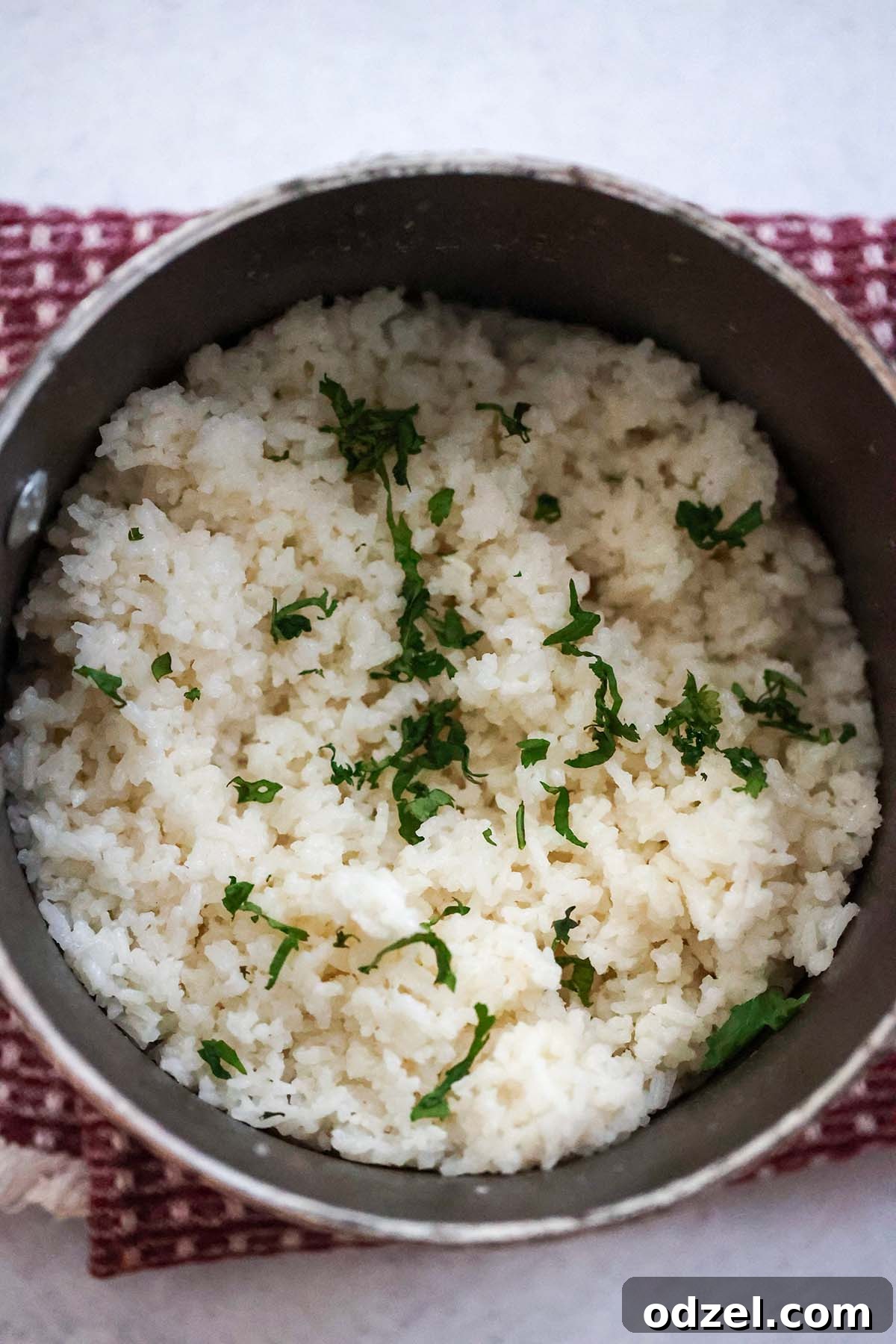
Sometimes finding that perfect side dish that is both quick to prepare and incredibly flavorful can feel like a culinary quest. Look no further! This **easy coconut rice recipe** is my absolute go-to, transforming simple ingredients into a fragrant, fluffy, and utterly delicious accompaniment to almost any meal. Whether you’re a seasoned chef or a kitchen novice, this dish promises to be a staple in your repertoire, requiring minimal fuss and cooking in under 30 minutes.
(Detailed instructions for both stovetop and rice cooker methods are included below to ensure perfect results every time!)
The Ultimate Guide to Fluffy and Fragrant Coconut Rice: Your New Favorite Side Dish
Imagine perfectly cooked rice, each grain infused with the creamy richness of coconut milk, a subtle sweetness, and a hint of savory depth. That’s precisely what this **homemade coconut rice** delivers. It’s wonderfully fluffy, beautifully buttery, and delicately sweet, creating a harmonious balance of flavors that elevates any dish it accompanies. While I adore topping it with fresh, vibrant cilantro for a burst of herbaceousness, feel free to personalize it with toasted shredded coconut for extra texture and flavor, or crunchy toasted almonds for a delightful nutty counterpoint. If you enjoy unique rice dishes, make sure to explore my yellow rice recipe and my garlic buttery rice for more culinary inspiration.
Why You’ll Love This Easy Coconut Rice Recipe
There are countless reasons why this **quick coconut rice** will quickly become a household favorite. Its unique flavor profile and straightforward preparation make it an indispensable side dish for busy weeknights and special occasions alike. Here’s why you should add it to your cooking rotation:
- **Exquisite Flavor Profile:** This isn’t just plain rice. It’s a symphony of tastes – creamy from the coconut milk, subtly sweet, savory with a touch of garlic (if you choose), and perfectly balanced with salt. The aroma alone will transport you to a tropical paradise!
- **Effortlessly Simple:** With just a few basic ingredients and a simple cooking process, even beginners can achieve restaurant-quality results. No complicated techniques or obscure ingredients are required.
- **Remarkably Quick:** From start to finish, this dish is ready in under 30 minutes. This makes it an ideal option when you need a fast yet impressive side to complete your meal without spending hours in the kitchen.
- **Incredibly Versatile:** Coconut rice pairs beautifully with an astonishing array of cuisines. Whether you’re serving up Asian curries, grilled seafood, spicy chicken, or hearty vegetarian stews, its delicate flavor complements rather than overpowers.
- **A Crowd-Pleaser:** Its appealing taste and comforting texture make it a hit with both adults and children. It’s a fantastic way to introduce new flavors in a familiar format.
- **Naturally Gluten-Free (and easily Vegan):** For those with dietary restrictions, this recipe is a fantastic choice. It’s inherently gluten-free, and by swapping butter for olive oil or a plant-based alternative, it easily becomes a delicious vegan side.
Ingredient Notes for the Best Coconut Rice
The secret to exceptional coconut rice lies in selecting the right ingredients. Each component plays a vital role in achieving that perfect texture and balanced flavor. For precise quantities and comprehensive instructions, please refer to the detailed recipe card further below.
- Rice – The Foundation of Fluffiness: For optimal results, I strongly recommend using **Jasmine rice** or another high-quality long-grain rice such as Basmati. These varieties cook up fluffy and distinct, preventing the grains from clumping together. It’s crucial to *avoid short-grain rice* like Arborio or sushi rice, as their higher starch content will result in a much stickier, mushier texture that isn’t desirable for this recipe. Rinsing the rice thoroughly before cooking is also key – more on that in the instructions!
- Coconut Milk – Creamy Goodness: This is the star ingredient! It’s absolutely essential to use unsweetened **canned full-fat coconut milk**. Do not confuse it with “cream of coconut,” which is a sweetened product typically used for cocktails and desserts. Full-fat coconut milk provides the rich, creamy texture and authentic coconut flavor that defines this dish. While light coconut milk can be used for a slightly less rich result, full-fat is truly superior here.
- Water – The Perfect Hydration: Even with coconut milk, a precise amount of water is needed to ensure the rice cooks perfectly without becoming overly heavy or sticky. The combination of coconut milk and water creates the ideal liquid ratio for fluffy grains.
- Sugar – The Balancing Act: A small amount of granulated sugar is added not just for sweetness, but to beautifully balance the savory notes and enhance the natural flavors of the coconut. It brings all the elements together, creating a well-rounded taste profile.
- Garlic – An Optional, Flavorful Boost: While optional, a finely minced garlic clove adds an incredible depth of savory flavor that complements the coconut beautifully. If you’re a garlic lover, I highly encourage its inclusion. For a milder aroma, you can crush it slightly rather than mincing.
- Unsalted Butter – For Richness and Separation: A tablespoon of unsalted butter adds a lovely richness and helps to keep the rice grains separate and fluffy. If you don’t have unsalted butter on hand, you can use salted butter and adjust the added salt accordingly, or substitute with a drizzle of olive oil or coconut oil for a dairy-free option.
- Kosher Salt – Flavor Enhancer: Essential for seasoning the rice and bringing out all the other flavors. Kosher salt is often preferred by chefs for its larger flakes and ability to dissolve evenly, but fine sea salt can also be used. Always taste and adjust to your preference.
- Fresh Cilantro – The Perfect Garnish: While optional, a sprinkle of fresh, chopped cilantro right before serving adds a burst of color and a refreshing herbaceous note that beautifully contrasts the rich coconut. It’s the perfect finishing touch!
How to Make the Best Coconut Rice: Step-by-Step
Achieving perfectly fluffy and flavorful coconut rice is surprisingly simple with these clear steps. Follow along to create a side dish that will impress every time.
- **Thoroughly Rinse the Rice:** This crucial first step helps remove excess starch, which is a common culprit for sticky or mushy rice. Place the measured Jasmine or long-grain rice in a fine-mesh sieve and rinse it under cold running water. Agitate the rice gently with your fingers until the water runs completely clear, indicating that most of the surface starch has been washed away. This process ensures individual, fluffy grains.
- **Combine Ingredients and Bring to a Boil:** Transfer the rinsed rice to a heavy-bottomed nonstick saucepan (this helps prevent sticking). Add the unsweetened canned coconut milk, water, unsalted butter, minced garlic (if using), sugar, and Kosher salt. Stir all the ingredients together thoroughly to combine, ensuring the salt and sugar dissolve. Place the saucepan over medium-high heat and bring the mixture to a rolling boil.
- **Reduce Heat, Cover, and Simmer:** As soon as the mixture reaches a vigorous boil, reduce the heat to its lowest setting. Cover the saucepan tightly with a lid. It’s essential to use a lid that fits snugly to trap all the steam. Allow the rice to cook undisturbed for precisely **20 minutes**. During this phase, the rice absorbs the liquid and steams to perfection.
- **Uncover, Fluff, and Finish Cooking:** After 20 minutes, remove the saucepan from the heat. Carefully lift the lid. You’ll likely see small pockets of coconut milk on the surface. Using a fork (not a spoon, which can mash the grains), gently fluff the rice to separate the grains and distribute the remaining moisture and coconut goodness. Re-cover the saucepan immediately and let the rice rest for another **5 minutes off the heat**, *uncovered*. This allows any remaining liquid to evaporate and the grains to further firm up, resulting in wonderfully fluffy, distinct rice.
- **Taste, Garnish, and Serve:** Once the resting period is complete, give the rice another gentle fluff with your fork. Taste a small amount and adjust seasoning if necessary (add a pinch more salt or sugar to your preference). Garnish generously with fresh, chopped cilantro for a pop of color and freshness, and serve warm immediately. Enjoy your perfectly cooked, aromatic coconut rice!
Rice Cooker Instructions for Coconut Rice
For those who prefer the convenience of a rice cooker, preparing this coconut rice is even simpler. Just a slight adjustment to the liquid ratio is needed:
- **Adjust Water Content:** When using a rice cooker for coconut rice, you will need to reduce the total liquid slightly compared to the stovetop method. For this recipe, use approximately **1/2 cup less water** than specified for the stovetop. The coconut milk adds significant moisture, and rice cookers are very efficient at trapping steam, so less added water prevents mushiness.
- **Combine All Ingredients:** Place the thoroughly rinsed Jasmine rice, coconut milk, the adjusted amount of water, butter, minced garlic, sugar, and salt into the inner pot of your rice cooker. Stir all the ingredients well to ensure everything is evenly distributed.
- **Cook and Steam:** Close the lid of your rice cooker and select the “White Rice” function. Allow the cooker to complete its cycle. Once the cooking cycle finishes and the cooker switches to “Keep Warm” mode, **do not open the lid immediately**.
- **Rest and Fluff:** It’s crucial to let the rice steam for an additional **8-10 minutes** while still in the “Keep Warm” setting (or simply left undisturbed with the lid closed). This allows the residual steam to fully cook the grains and firm up the texture, resulting in perfectly fluffy rice. After the resting period, open the lid, gently fluff the rice with a fork, taste for seasoning, and serve warm.
Expert Tips for Perfect Coconut Rice Every Time
While the recipe is straightforward, these professional tips will ensure your coconut rice is consistently light, fluffy, and full of flavor, moving it from good to absolutely outstanding.
- **The Importance of Rinsing:** Don’t skip rinsing your rice! This step is paramount for removing excess starch. Unrinsed rice will inevitably lead to a gummy, sticky, and unappealing texture. Rinse until the water running through the grains is perfectly clear.
- **Start with a Boil, Then Simmer:** Beginning the cooking process over medium-high heat until the mixture comes to a boil accelerates the process and ensures even cooking. Immediately after it boils, reduce the heat to the lowest setting and cover tightly. This transition from high heat to low, covered simmer creates the ideal steamy environment for the rice to cook through without burning or drying out.
- **Resist the Urge to Peek!** Once the lid is on, leave it on for the full 20 minutes (or the entire cooking cycle in a rice cooker). Lifting the lid releases precious steam, which is vital for cooking the rice evenly and maintaining the correct temperature. Constant peeking can extend cooking time and result in undercooked or inconsistent rice.
- **Fluff with a Fork, Not a Spoon:** When it’s time to fluff the rice, always use a fork. A spoon can mash the delicate grains, especially when they are hot and tender. A fork gently separates them, allowing steam to escape and creating that desired fluffy texture.
- **The Uncovered Finish is Key:** The final 5 minutes of cooking uncovered (after fluffing) is a critical step for stovetop rice. This period allows any residual moisture to evaporate and ensures that the thick coconut milk pockets fully cook and integrate, leaving you with perfectly distinct and non-soggy grains.
- **Taste and Adjust Seasoning:** Always taste your rice before serving. Salt levels can vary depending on the brand of coconut milk and personal preference. A little extra pinch of salt or a tiny dash of sugar can make a huge difference in balancing the flavors.
- **Quality Coconut Milk Makes a Difference:** Invest in good quality, full-fat canned coconut milk. It’s the primary flavor component, and a good brand will deliver superior creaminess and taste.
- **Consider Additional Aromatics:** While garlic is optional, feel free to experiment with other aromatics. A thin slice of fresh ginger, a bay leaf, or even a couple of kaffir lime leaves can be added to the pot with the other ingredients for an extra layer of fragrant complexity.
Serving Suggestions: What to Pair with Coconut Rice
The beauty of this **versatile coconut rice** is its ability to complement a vast array of main courses. Its rich, slightly sweet, and savory profile makes it an ideal accompaniment for dishes that benefit from a creamy, aromatic contrast. Here are some of my favorite and highly recommended pairings to inspire your next meal:
- **Asian & Thai Inspired Dishes:** Coconut rice is a natural fit for many Asian and particularly Thai dishes. The sweetness and creaminess beautifully mellow out spicy curries and complement savory stir-fries.
- **Creamy Coconut Shrimp Curry:** The ultimate pairing! The coconut in the rice enhances the flavors of the curry, creating a truly cohesive and indulgent meal.
- **Chicken or Vegetable Stir-Fries:** A simple chicken and broccoli stir-fry with a savory sauce tastes exceptional alongside this rice.
- **Spicy Thai Basil Chicken (Pad Krapow Gai):** The cooling effect of the coconut rice is perfect for balancing the heat.
- **Seafood Delights:** The subtle sweetness of coconut rice pairs wonderfully with various seafood preparations, enhancing their delicate flavors.
- **Creamy Lemon Salmon:** The tang of lemon and the richness of salmon find a perfect match in the fragrant rice.
- **Hawaiian Garlic Shrimp:** A vibrant, garlicky shrimp dish is elevated by the tropical notes of the coconut rice.
- **Pan-Seared Scallops or White Fish:** A simple preparation allows the rice to shine.
- **Poultry & Meat Dishes:** Don’t limit coconut rice to just Asian flavors. It’s a fantastic counterpoint to many hearty meat and poultry dishes.
- **Rich Butter Chicken:** The creamy, tomato-based sauce of butter chicken is perfectly soaked up and complemented by the subtle sweetness of coconut rice.
- **Grilled Chicken or Pork Skewers:** Marinated and grilled meats get an extra layer of flavor when served over coconut rice.
- **Vegetarian & Vegan Options:** For plant-based meals, coconut rice offers a fulfilling and flavorful base.
- **Lentil or Chickpea Curries:** A hearty vegetarian curry with vegetables and legumes is always better with a side of this aromatic rice.
- **Roasted Vegetables:** Simple roasted broccoli, cauliflower, or sweet potatoes get a tropical twist.
- **For Breakfast or Dessert (Sweet Version):** While this recipe is savory, a slight modification (more sugar, less salt, maybe some vanilla) can turn it into a delightful base for tropical fruit bowls or even a unique rice pudding!
Storage, Reheating, and Make-Ahead Tips
This **easy coconut rice** is fantastic when fresh, but it also stores and reheats beautifully, making it an excellent candidate for meal prep.
- **Proper Storage:** Once cooked, allow any leftover coconut rice to cool completely to room temperature as quickly as possible (within 1 hour) before refrigerating. This is crucial to prevent the growth of bacteria. Transfer the cooled rice to an airtight container and store it in the refrigerator for up to **3-4 days**.
- **Reheating Instructions (Microwave):** For a quick reheat, place your desired portion of rice in a microwave-safe bowl. To restore moisture and prevent drying out, add a small splash of water (about a tablespoon per cup of rice) over the top of the rice before covering the bowl loosely with a lid or microwave-safe plastic wrap. Microwave on high for 1-2 minutes, stirring halfway through, until thoroughly heated.
- **Reheating Instructions (Stovetop):** Alternatively, for a stovetop reheat, place the rice in a nonstick saucepan with a splash of water or a tiny bit of coconut milk. Cover and heat over low heat, stirring occasionally, until warmed through and fluffy. This method can help maintain a better texture than microwaving.
- **Freezing Coconut Rice:** Yes, you can freeze coconut rice! Once completely cooled, portion the rice into freezer-safe bags or containers, pressing out as much air as possible. It can be stored in the freezer for up to **3 months**. Thaw overnight in the refrigerator before reheating as described above, adding a touch of extra liquid if it seems dry.
- **Make-Ahead Advantage:** This recipe is perfect for making ahead! Cook a larger batch on the weekend, and you’ll have a versatile side dish ready to go for quick lunches or dinners throughout the week.
Frequently Asked Questions About Coconut Rice
Here are answers to some common questions you might have about making this delightful **fragrant coconut rice**:
- **Q: Why is my coconut rice mushy?**
A: Mushy rice is usually due to too much liquid, insufficient rinsing of the rice, or lifting the lid too often during cooking. Ensure you use the exact liquid measurements, rinse your rice until the water is clear, and resist the urge to peek while it simmers.
- **Q: Can I use light coconut milk?**
A: While you *can* use light coconut milk, expect a less creamy and rich flavor. Full-fat coconut milk provides the best results for texture and taste. If using light, you might need a tiny bit less water.
- **Q: What kind of rice is best for coconut rice?**
A: Jasmine rice is highly recommended due to its aromatic qualities and fluffy texture. Basmati rice is another excellent long-grain option that yields similar results. Avoid short-grain varieties.
- **Q: Is coconut rice spicy?**
A: No, this traditional recipe for coconut rice is not spicy. It’s a mild, sweet, and savory dish. However, you can always add chili flakes or a touch of fresh chili if you desire a spicy kick.
- **Q: Can I make this vegan?**
A: Absolutely! Simply substitute the unsalted butter with an equal amount of olive oil or a plant-based butter alternative to make this recipe completely vegan.
- **Q: How do I prevent the rice from sticking to the bottom of the pan?**
A: Using a good quality heavy-bottomed nonstick saucepan is key. Also, ensuring the heat is reduced to low as soon as it boils and not disturbing the rice during the 20-minute simmer helps immensely. The butter or oil also contributes to preventing sticking.
- **Q: Can I add other flavors like lime or ginger?**
A: Yes! A squeeze of fresh lime juice or a teaspoon of lime zest added at the end can brighten the flavor. A slice of fresh ginger root added during cooking can also impart a lovely warmth and aroma.
Fluffy & Fragrant Coconut Rice
Julie Maestre
2
25
27
8
Pin this Recipe for later!
Leave a Rating! |
Print Recipe
Ingredients
(Serving size for 8)
- 2 cups Jasmine rice
- 1 ¾ cups unsweetened canned coconut milk , full-fat recommended
- 1 ½ cups water
- 1 tablespoon unsalted butter (or olive oil for vegan)
- 1 garlic clove, finely minced (optional)
- 1 teaspoon granulated sugar
- 2 teaspoons Kosher salt , or to taste
- fresh cilantro, for garnishing (optional)
Instructions (Stovetop Method)
-
**Rinse the Rice:** Place the rice in a fine-mesh sieve and rinse under cold running water, agitating gently, until the water runs completely clear. This removes excess starch, ensuring fluffy individual grains.
-
**Combine and Boil:** Transfer the rinsed rice to a heavy-bottomed nonstick saucepan. Add the coconut milk, water, butter, minced garlic (if using), sugar, and salt. Stir well to combine. Bring the mixture to a rolling boil over medium-high heat.
-
**Simmer, Covered:** As soon as it boils, reduce the heat to the lowest setting, cover the saucepan tightly with a lid, and cook undisturbed for **20 minutes**. Do not lift the lid during this time.
-
**Fluff and Finish:** Remove from heat and lift the lid. Gently fluff the rice with a fork to separate the grains. Re-cover the saucepan and let it rest for an additional **5 minutes uncovered**, allowing any remaining moisture to evaporate and the grains to firm up.
-
**Serve:** Taste and adjust seasoning if needed. Garnish with fresh cilantro, if desired, and serve warm immediately.
Rice Cooker Instructions
-
**Adjust Water:** For rice cooker, use approximately **1/2 cup less water** than the stovetop method (so 1 cup water instead of 1.5 cups).
-
**Combine & Cook:** Place all ingredients (rinsed rice, coconut milk, adjusted water, butter, garlic, salt, sugar) into your rice cooker pot. Stir well. Close the lid and select the “White Rice” function.
-
**Rest & Serve:** Once cooking is complete, do not open immediately. Allow the rice to steam for an additional **8-10 minutes** in the “Keep Warm” mode. Then, open, fluff with a fork, check seasoning, and enjoy!
Notes for Success
- **Rinse your rice thoroughly** until the water runs clear to prevent mushiness.
- **Do not lift the lid** during the 20-minute simmering period on the stovetop; steam is crucial for proper cooking.
- **Always fluff the rice with a fork** rather than a spoon to avoid mashing the delicate grains.
- The final **5 minutes of uncovered cooking** (stovetop) is essential to evaporate excess moisture and ensure distinct, fluffy grains.
- For the best flavor and texture, serve your coconut rice **warm** and freshly made.
- When using a rice cooker, remember to **reduce the water content** slightly to accommodate the efficient steam retention.
Nutrition Information (per serving)
Carbohydrates: 39g |
Protein: 4g |
Fat: 12g |
Saturated Fat: 10g |
Polyunsaturated Fat: 0.3g |
Monounsaturated Fat: 1g |
Trans Fat: 0.1g |
Cholesterol: 4mg |
Sodium: 593mg |
Potassium: 164mg |
Fiber: 1g |
Sugar: 1g |
Vitamin A: 44IU |
Vitamin C: 1mg |
Calcium: 25mg |
Iron: 2mg
Nutrition information is automatically calculated, so should only be used as an approximation.
Additional Recipe Details
Julie Maestre
2
25
27
Side Dish
Asian
8 servings
281 kcal
coconut rice, how to cook coconut rice, fluffy rice, easy side dish
Did you enjoy this recipe? We’d love to hear from you!
Please leave a star rating and comment below to share your experience. Your feedback helps us grow!
We hope you enjoy making this incredible **fragrant and fluffy coconut rice**. It’s more than just a side dish; it’s an experience that brings a touch of the tropics to your table with minimal effort. Don’t forget to leave a star rating and share your thoughts in the comments section below after you’ve tried it. Your feedback is truly appreciated! And for more delicious recipes and cooking tips, consider following us on Facebook or Pinterest!