
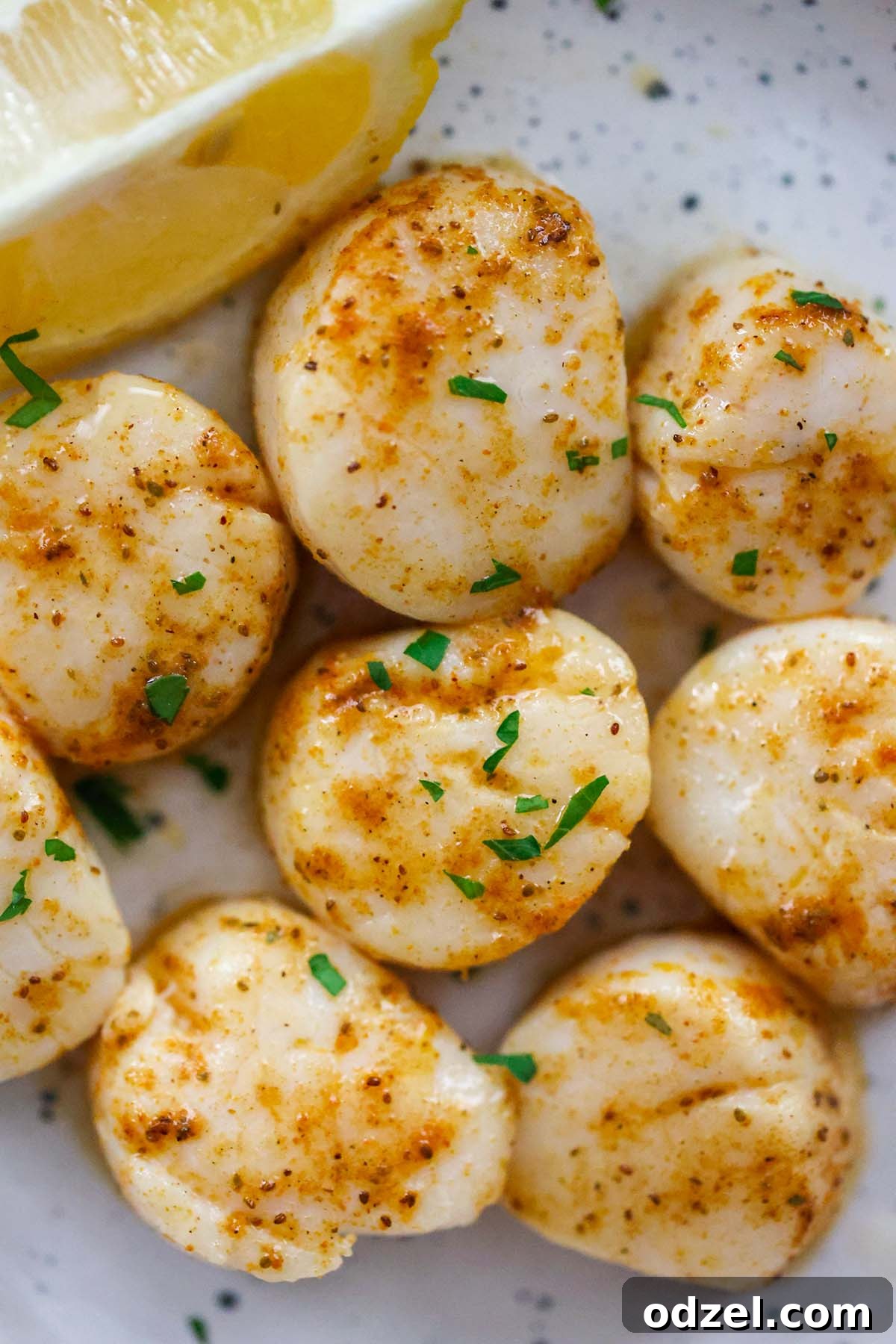
Buttery, tender, and undeniably delicious, these **easy baked scallops** come together with just 4 essential ingredients in a remarkable 15 minutes. Whether you’re seeking a crowd-pleasing appetizer or a sophisticated main course, they pair beautifully with sides like creamy parmesan risotto, a perfectly seared ribeye steak, or vibrant roasted vegetables for a complete and memorable meal.
Effortless Elegance: Mastering Easy Baked Scallops at Home
Do you associate baked scallops with a lavish dining experience, exclusively reserved for upscale restaurants? It’s time to rethink that notion! Contrary to popular belief, preparing **tender, buttery scallops** at home is not only incredibly easy but also remarkably versatile. Over the years, I’ve experimented with countless scallop cooking methods – from pan-searing and air frying to deep frying and grilling. While each method has its merits, I’ve consistently found baking to be the simplest, most foolproof way to achieve perfectly cooked, succulent scallops with minimal effort and maximum flavor.
This comprehensive guide will walk you through everything you need to know to create a restaurant-quality scallop dish right in your own kitchen. We’ll cover ingredient selection, essential preparation tips, the perfect cooking times, and even how to store and reheat your delicious leftovers. Get ready to impress your family and friends, or simply treat yourself to a delightful seafood experience with these **oven baked scallops**!
Why Baked Scallops Stand Out as the Best Cooking Method
While pan-searing often gets the spotlight for its ability to create a beautiful crust, baking offers a different, equally delightful experience, especially for home cooks seeking simplicity and consistency. Baking scallops gently cooks them through, ensuring a consistently tender interior without the risk of over-browning or uneven cooking that can sometimes occur with high-heat searing. It’s a hands-off method that allows you to prepare other components of your meal simultaneously, making it ideal for both busy weeknights and entertaining. The oven’s consistent heat envelops the scallops, infusing them with the rich flavors of butter and seasoning, resulting in a naturally sweet and delicate bite every time. This method also minimizes the need for excessive oil, letting the natural sweetness of the scallop truly shine.
Essential Ingredients for Perfect Baked Scallops
One of the true beauties of this **easy baked scallop recipe** is its reliance on a minimal number of high-quality ingredients. You likely have most of these pantry staples on hand already, making it a spontaneous culinary choice. Here’s a closer look at what you’ll need to create these delectable ocean gems:
- Scallops: The star of our dish! You can use either fresh or frozen sea scallops for this recipe, and both will yield fantastic results. If opting for frozen scallops, remember to thaw them completely in the refrigerator overnight or under cold running water for a quicker method. Ensure they are fully drained and patted dry before cooking. We’ll discuss the difference between sea and bay scallops in more detail below, but for a robust and satisfying texture, sea scallops are my preferred choice for baking. Look for scallops that are plump, firm, and have a fresh, mild sea scent.
- Old Bay Seasoning: This classic seafood blend adds an incredible depth of flavor with its aromatic mix of herbs and spices. It complements the natural sweetness of scallops beautifully, providing a distinctly American seafood flavor profile. However, if Old Bay isn’t to your liking or readily available, a simple yet effective alternative is a generous sprinkle of salt, freshly ground black pepper, and a pinch of garlic powder or smoked paprika. Feel free to adjust the seasoning to your personal preference, perhaps even adding a touch of cayenne for a subtle kick.
- Unsalted Butter: Crucial for achieving that rich, buttery flavor and helping the scallops cook evenly without drying out. Using unsalted butter is key as it gives you complete control over the overall sodium content of your dish, especially when using Old Bay Seasoning which already contains salt. For those with dietary restrictions or looking for a lighter option, high-quality dairy-free butter alternatives, olive oil, or ghee can be used as excellent substitutes, though the flavor profile will subtly change.
- Lemon: While optional, a squeeze of fresh lemon juice is highly recommended. Its bright, zesty acidity perfectly cuts through the richness of the butter and enhances the delicate seafood flavor, adding a refreshing finish to your **oven baked scallops**. Lemon wedges served alongside are also a fantastic presentation and flavor booster, allowing diners to add extra brightness to taste.
Expert Tips for The Ultimate Baked Scallops
Achieving perfectly tender and flavorful **homemade scallops** is simpler than you think with these key preparation and cooking tips:
- Crucial Muscle Removal: Before baking, it’s absolutely essential to prepare your scallops by removing the small, fibrous muscle located on the side. This rectangular or crescent-shaped piece of tissue is tough and unpleasant to bite into. Fortunately, it’s very easy to discard: simply pinch the muscle flap between your thumb and index finger and gently pull it away from the scallop. Don’t skip this step for the best texture!
- Thoroughly Pat Them Dry: After thawing (if frozen) and removing the side muscle, use paper towels to thoroughly pat both sides of each scallop dry. This step is critical! Excess moisture can steam the scallops instead of allowing them to caramelize slightly and absorb the flavors, leading to a less desirable rubbery texture. A dry surface is paramount for optimal results and a tender interior.
- Ensure Uniform Size: For even cooking, try to select scallops that are all roughly the same size. If you have a mix of very large and smaller scallops, consider separating them and adjusting cooking times slightly. Larger scallops will naturally require a minute or two more in the oven than smaller ones.
- Season Generously on Both Sides: Don’t be shy with your seasoning! Apply melted butter, a squeeze of fresh lemon juice, and Old Bay (or your chosen spices) to both sides of each scallop. This ensures maximum flavor penetration and a well-rounded taste in every bite. A light coating of fat (butter) also helps conduct heat and prevents sticking.
- Garnish for Freshness: To lighten up the dish and create a perfect balance of flavor, garnish your **baked scallops** with fresh herbs immediately after cooking. Finely chopped parsley, chives, thyme, dill, or tarragon add a burst of color and aromatic freshness that beautifully complements the rich seafood.
- Emulate a Restaurant Experience: For a truly fancy dinner presentation, serve your baked scallops with extra lemon wedges for squeezing and a small ramekin of warm, melted butter or a delicate lemon-butter sauce on the side for dipping. A sprinkle of flaky sea salt just before serving can also enhance the experience.
Sea Scallops vs. Bay Scallops: Which is Best for Baking?
Often confused, sea scallops and bay scallops are distinct in size, texture, and flavor. Understanding their differences is key to choosing the right type for your **scallop recipe** and ensuring culinary success.
- Sea Scallops: These are the larger, more robust scallops typically found in restaurants. Caught year-round in cold, deep ocean waters, they usually range from 1 ½ to 2 inches in diameter. Due to their larger size, sea scallops have a slightly firmer, chewier texture compared to their smaller counterparts, and a rich, sweet ocean flavor. They hold up well to various cooking methods, including baking, and are perfect when you want the scallop to be the star of the dish, allowing their substantial bite to be fully appreciated. For this particular **baked scallops recipe**, I specifically recommend using sea scallops for their satisfying texture and robust flavor profile.
- Bay Scallops: In contrast, bay scallops are much smaller, typically averaging around ½ inch in diameter. They are harvested from shallow, colder bay waters and boast a wonderfully tender texture and a sweeter, more delicate flavor. Their small size means they cook very quickly. While you *can* use bay scallops for baking, they require exceptionally careful monitoring to prevent overcooking, which can turn them rubbery in an instant due to their delicate nature. Personally, I find bay scallops shine brightest in dishes where they are combined with other ingredients and not the sole focus, such as pasta dishes or this delightful Tuscan Shrimp and Scallops recipe, where their delicate nature complements other flavors without overpowering them. If you do choose bay scallops for this recipe, keep a very close eye on them in the oven and reduce the cooking time accordingly – they might be done in as little as 5-7 minutes.
Wet vs. Dry Scallops: The Critical Distinction for Flavor and Texture
When purchasing scallops, you’ll encounter two main types: “wet-packed” and “dry-packed.” Understanding this distinction is crucial for achieving the best possible results in your cooking, especially for **tender scallops**.
- Dry-Packed Scallops: These are scallops that have been harvested and immediately flash-frozen or kept fresh without any chemical treatment. They taste naturally sweet and pristine, retaining their pure ocean flavor. They have a firm texture and will caramelize beautifully when cooked, developing a desirable golden-brown crust if seared, or a lovely tender texture when baked. I unequivocally recommend using **dry-packed scallops** for this recipe and any other scallop dish you prepare. They are worth seeking out from a reputable fishmonger or seafood counter.
- Wet-Packed Scallops: These scallops have been soaked in a solution of sodium tripolyphosphate (STP) and water. This brining process makes the scallops absorb water, increasing their weight and appearing plumper. However, this comes at a significant cost: wet scallops often have a slightly soapy, metallic, or bitter taste due to the chemicals. More importantly, as they cook, they leach out all that absorbed water, leading to a soggy dish and causing the scallops to shrink considerably (often by up to a third of their original size). This excess moisture also makes it impossible to achieve any caramelization, resulting in a less appealing texture and flavor. Always ask your fishmonger for dry-packed scallops to ensure the best quality and taste – it will make a world of difference in your final dish.
How Long to Cook Scallops for Perfection Every Time
Cooking scallops perfectly is all about precision, as they can go from sublimely tender to disappointingly rubbery in a matter of moments. While oven temperatures can vary slightly, I’ve consistently found the best results for **oven baked scallops** by following these guidelines:
- Optimal Temperature: Preheat your oven to a robust 400°F (200°C). This high temperature ensures the scallops cook quickly and evenly without drying out, creating a delicate crust on the outside while maintaining a succulent interior.
- Precise Timing: Bake the scallops for a precise 10-12 minutes. The exact time will depend on the size of your scallops and the specific calibration of your oven. For smaller sea scallops, lean towards 10 minutes; for larger ones, 12 minutes might be perfect.
- Internal Temperature: For optimal tenderness and safety, scallops are perfectly cooked when they reach an internal temperature of 125-130°F (52-54°C). Use an instant-read thermometer inserted into the thickest part of the largest scallop to verify doneness accurately. This is the most reliable method.
- Visual and Textural Cues: You’ll know your **baked scallops** are done when they are no longer translucent in color and have turned an opaque, pearly white. They should feel firm to the touch but still give just slightly when pressed gently. Be careful not to overcook, as this is the primary cause of rubbery scallops, losing their delicate texture and sweet flavor.
Serving Suggestions for Your Perfectly Baked Scallops
These versatile **easy baked scallops** can elevate any meal, transforming a simple dinner into a special occasion. Here are some ideas to inspire your serving:
- Elegant Appetizer: Serve them individually on decorative spoons, mini skewers with a cherry tomato and a basil leaf, or simply arrange them beautifully on a platter with lemon wedges and a sprinkle of fresh herbs. A light dipping sauce, such as a homemade lemon-garlic aioli, a classic beurre blanc, or a sweet chili sauce, would also be a fantastic addition to start your meal.
- Luxurious Main Course Pairings:
- With Pasta: Toss them with a light lemon-garlic butter sauce, a touch of white wine, and your favorite long pasta (like linguine or spaghetti) for a quick and satisfying seafood pasta dish. A sprinkle of chili flakes can add an extra dimension.
- With Grains: Pair with creamy Parmesan risotto for an indulgent meal, or opt for fluffy quinoa, delicate couscous, or a flavorful wild rice pilaf for a lighter yet balanced option.
- With Other Proteins: For a delightful surf-and-turf experience, serve alongside a perfectly cooked pan-seared ribeye steak, grilled chicken, or even crispy pork belly.
- With Vegetables: A vibrant medley of air-fried or roasted vegetables like asparagus, green beans, broccolini, or Brussels sprouts makes a healthy and delicious accompaniment. A simple side salad with a light vinaigrette also works wonderfully to cut through the richness.
- Wine Pairing: Complement the delicate sweetness of the scallops with a crisp, dry white wine. Think Sauvignon Blanc, Pinot Grigio, an unoaked Chardonnay, or a dry Riesling. For a truly special pairing, consider a sparkling wine like Prosecco or Champagne.
Storage and Reheating Leftover Baked Scallops
While **baked scallops** are undoubtedly best enjoyed immediately after cooking, sometimes you might have leftovers. Proper storage and reheating are key to maintaining their quality and avoiding a rubbery texture:
- Refrigerator Storage: If you have any leftovers, allow them to cool completely before transferring them to a shallow airtight container or wrapping them snugly with aluminum foil or plastic wrap. Stored correctly, they will keep safely in the **refrigerator for up to 3-4 days**. However, for the absolute best texture and flavor, I recommend consuming them within two days to prevent them from becoming rubbery or losing their delicate appeal.
- Freezer Storage: If you don’t plan on eating your leftover scallops within a couple of days, they can be safely frozen. Place the cooled scallops in an airtight, freezer-safe container or a heavy-duty freezer-safe bag, ensuring as much air is removed as possible to prevent freezer burn and preserve their quality. Baked scallops can be frozen for up to **2-3 months**. Label with the date for easy tracking.
- Reheating Instructions for Best Results:
- Thawing: If frozen, allow your **easy baked scallops** to thaw gradually in the refrigerator overnight. Avoid thawing at room temperature for food safety.
- Bringing to Room Temperature: Before reheating, let the thawed scallops sit at room temperature for about 15-20 minutes. This helps ensure more even reheating and prevents shocking the protein with sudden heat.
- Best Reheating Method (Skillet): For the best results and to preserve tenderness, gently reheat your leftovers in a non-stick skillet over low to medium-low heat. Add a tiny splash of broth, white wine, or water and cover the skillet to create some steam, which helps prevent drying out the scallops. Cook just until warmed through, about 3-5 minutes.
- Oven Reheating: Alternatively, you can reheat them in a baking dish covered with foil in a preheated oven at a low temperature (around 275-300°F or 135-150°C) until your desired temperature is reached. This usually takes about 5-8 minutes.
- Internal Temperature Check: Always check the internal temperature of the reheated scallops to ensure they have reached somewhere between 125-140°F (52-60°C). Serve immediately. Avoid high heat during reheating, as this will quickly make them tough and chewy.
More Delightful Scallop Recipes to Explore
If you’ve enjoyed mastering these **oven baked scallops** and are looking for more ways to enjoy this exquisite seafood, here are some other fantastic recipes from our kitchen to yours:
- Bacon Wrapped Scallops: A savory and indulgent combination of crispy bacon and tender scallops, perfect for a show-stopping appetizer.
- Air Fryer Scallops: For a quick, healthy, and perfectly cooked scallop that gets a beautiful golden exterior with minimal oil.
- Lemon Butter Scallops: A classic and simple preparation that truly highlights the scallop’s natural sweetness with a bright, zesty sauce.
- Tuscan Shrimp and Scallops: A rich and flavorful pasta dish featuring a vibrant cream sauce, sun-dried tomatoes, and succulent seafood.
Tried this recipe? Please leave a star ⭐️⭐️⭐️⭐️⭐️ rating in the recipe card below and/or a review in the comments section further down the page. Your feedback is greatly appreciated, and we love hearing about your culinary successes! And consider following me on Facebook or Pinterest for more delicious recipes and cooking inspiration!
Baked Scallops
Print Recipe
Ingredients
- 1 lb sea scallops , side muscle removed and patted dry
- 2 tablespoons unsalted butter , melted and slightly cooled
- Old Bay seasoning , to taste
- 1 lemon, cut into wedges
Instructions
-
Preheat your oven to 400 degrees F (200°C) and line a baking sheet with parchment paper to prevent sticking.
-
Discard the small side muscle from each scallop and thoroughly pat dry the scallops on both sides with paper towels. This ensures a tender cook.
-
Lightly brush each scallop with melted butter and squeeze a little bit of fresh lemon juice over each scallop. Ensure both sides are evenly coated for maximum flavor.
-
Season the scallops lightly yet evenly on both sides with Old Bay seasoning. Adjust the amount to your taste preference.
-
Arrange the seasoned scallops in a single layer on the prepared baking sheet. Bake for 10-12 minutes, or until the scallops reach an internal temperature of 125-130 degrees F (52-54°C) and are opaque throughout. Avoid overcooking.
-
Serve immediately with extra lemon wedges and garnish with fresh parsley or other desired herbs for an added touch of freshness and color. Enjoy!
Notes
- For the most flavorful **baked scallops**, season them generously on both sides.
- Always remove the small, tough side muscle from each scallop and pat them thoroughly dry with a paper towel before any seasoning or cooking.
- Enhance the freshness and presentation of your scallops by garnishing them with fresh herbs like parsley, chives, thyme, dill, or tarragon right before serving.
- To ensure even cooking, try to select scallops that are all about the same size. If sizes vary, you may need to adjust cooking times slightly.
- For a truly gourmet touch, serve your **easy baked scallops** with extra lemon wedges and a small dish of warm melted butter on the side for dipping.
Nutrition
Carbohydrates: 4g |
Protein: 14g |
Fat: 6g |
Saturated Fat: 4g |
Polyunsaturated Fat: 0.4g |
Monounsaturated Fat: 2g |
Trans Fat: 0.2g |
Cholesterol: 42mg |
Sodium: 445mg |
Potassium: 234mg |
Sugar: 0.01g |
Vitamin A: 178IU |
Calcium: 8mg |
Iron: 0.4mg
Nutrition information is automatically calculated, so should only be used as an approximation.
Additional Info