
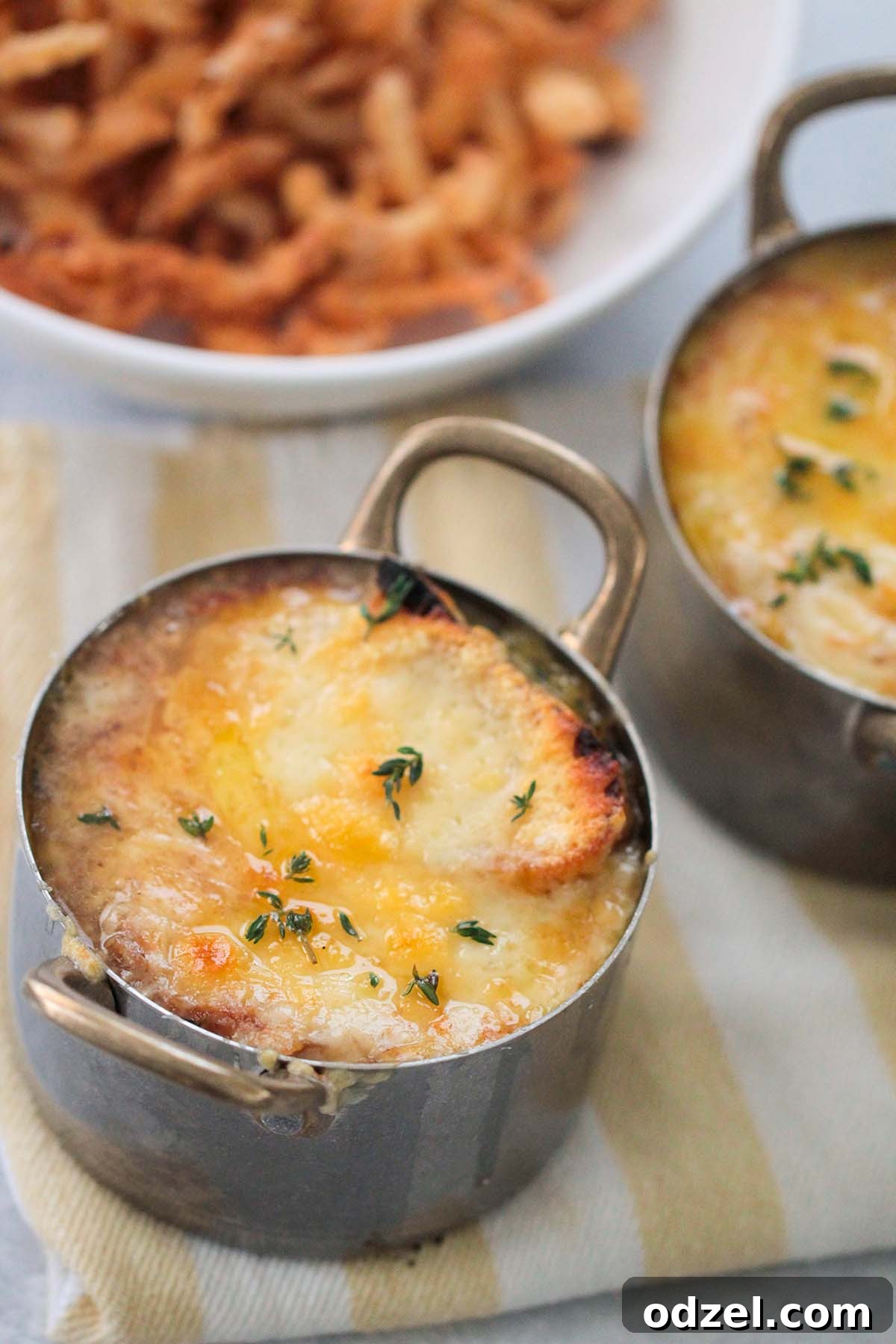
There’s something undeniably magical about a bowl of classic French Onion Soup. It’s more than just a dish; it’s an experience – a warm, comforting embrace on a chilly day, a sophisticated starter for a dinner party, or a satisfying meal on its own. This timeless French onion soup recipe elevates humble ingredients into a culinary masterpiece, featuring perfectly caramelized onions simmered in a rich, savory wine-beef broth. Each bowl is then generously topped with a crusty toasted baguette and a lavish layer of bubbly, melted cheese, creating that iconic gratinéed finish everyone adores.
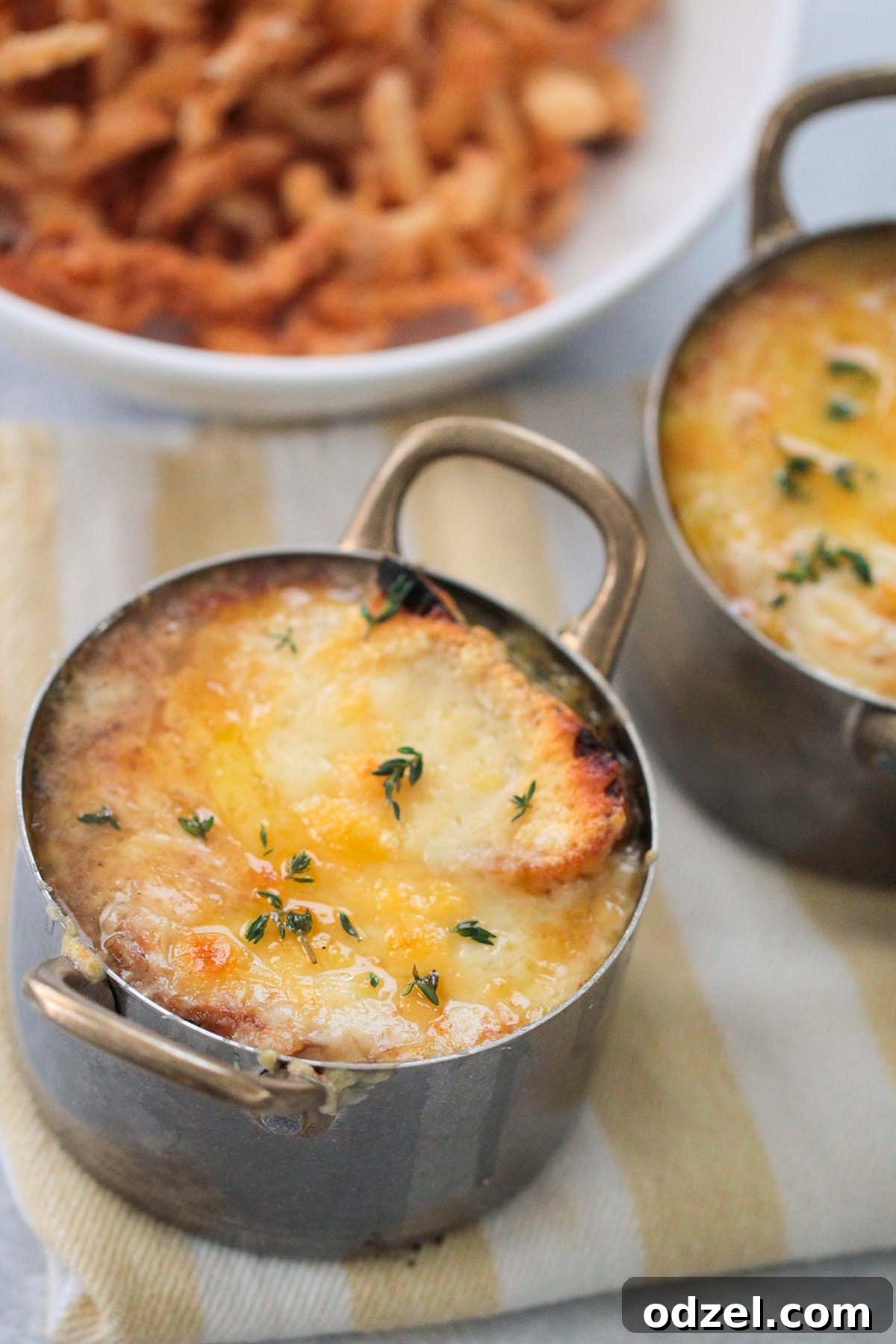
While I cherish many cozy soup recipes like creamy tomato basil and zesty lemon chicken orzo, French onion soup holds a special place as my absolute favorite. Its exquisite balance of rich flavors, from the deeply sweet and savory caramelized onions to the robust broth, complemented by an abundance of super cheesy goodness, creates an unparalleled depth. For an extra layer of texture and an irresistible crunch that takes this soup to the next level, I often serve it with a sprinkle of crispy French fried onions on top!
What Is French Onion Soup? A Timeless Classic Explained
French Onion Soup, known in French as Soupe à l’oignon gratinée, is a traditional French soup that, at its heart, is a harmonious blend of slowly caramelized onions and a rich beef broth. Its origins can be traced back to 18th-century Paris, France, where it was initially considered a peasant’s dish due to the inexpensive and readily available nature of onions. Over time, it evolved into the beloved culinary staple we know today, celebrated for its profound depth of flavor and comforting qualities. The hallmark of an authentic French onion soup lies in the careful preparation of its core components: the patient caramelization of onions, which transforms their sharpness into a complex sweetness, and a deeply savory broth that forms the perfect foundation. To complete this iconic dish, it’s traditionally served piping hot in individual oven-safe crocks, topped with toasted bread (often a baguette) and a generous layer of melted, bubbly cheese, creating a delightful contrast of textures and flavors.
Why This French Onion Soup Recipe Shines
This recipe isn’t just another French onion soup; it’s a guide to achieving culinary excellence with every spoonful. We focus on techniques that extract the maximum flavor from each ingredient, ensuring a truly authentic and deeply satisfying experience. From the careful caramelization process to the perfect cheese-to-broth ratio, every step is designed to bring out the best in this classic. You’ll discover how to create a rich, sweet, and savory broth that perfectly balances the robust flavors, all crowned with a golden, cheesy crust that promises pure comfort. It’s an approachable recipe that delivers restaurant-quality results, making it ideal for both seasoned cooks and aspiring home chefs looking to master a quintessential French dish.
Essential Ingredient Notes for Your Perfect French Onion Soup
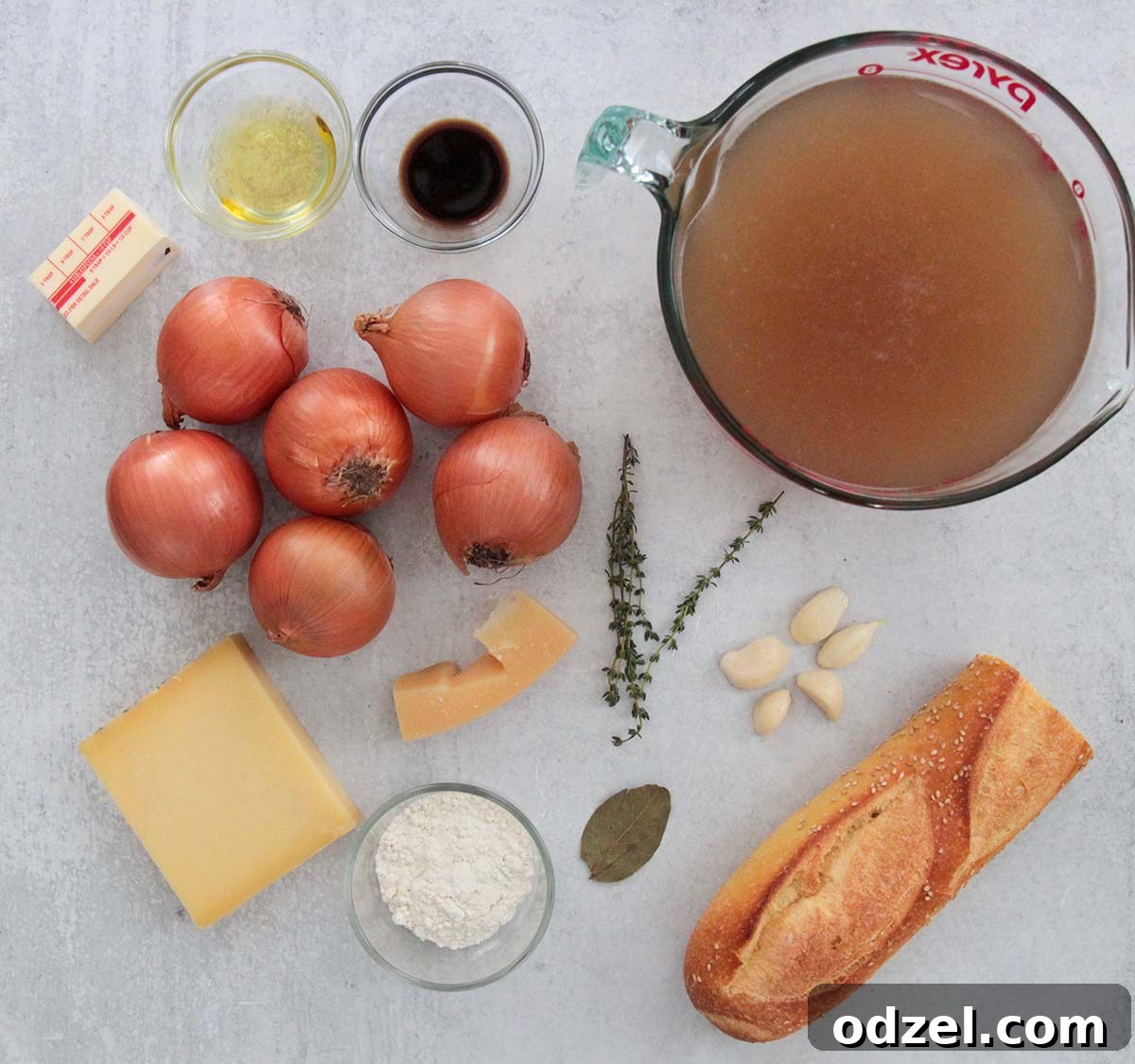
Crafting the best French Onion Soup begins with selecting the right ingredients. Each component plays a vital role in building the layers of flavor that make this soup so beloved. Here’s a detailed look at what you’ll need and why:
-
Onions: The Soul of the Soup
I highly recommend using **yellow onions** for this recipe. Their naturally high sugar content makes them ideal for caramelization, transforming into a wonderfully sweet, deeply flavored base that is crucial for authentic French onion soup. While yellow onions are superior for their sweetness and texture when caramelized, you can certainly use white or red onions if that’s what you have on hand. White onions offer a sharper flavor, while red onions provide a slightly sweeter, almost purple hue to the final dish. For best results, slice them thinly and uniformly to ensure even cooking and caramelization. You’ll be surprised how much six onions reduce down, so don’t be shy! -
Broth: The Foundation of Flavor
Authentic French onion soup traditionally calls for **beef broth**. Its robust, savory characteristics provide a deep, complex backdrop that perfectly complements the caramelized onions. Whether you opt for a high-quality store-bought beef broth or prefer to use homemade beef stock for an even richer flavor, consistency and quality are key. If beef broth isn’t available, or if you prefer a lighter flavor profile, good quality chicken stock can also work as an alternative, though it will slightly alter the traditional taste. For a vegetarian option, robust vegetable stock can be substituted. -
Wine: A Touch of French Elegance
A good quality **dry red wine** is traditionally used to deglaze the pot, adding an essential layer of acidity and complexity that brightens the entire soup. It helps to scrape up all the flavorful browned bits (fond) from the bottom of the pot, integrating them into the broth. Choose a wine you enjoy drinking; a Cabernet Sauvignon, Merlot, or Pinot Noir works beautifully without being too overpowering. The alcohol cooks off, leaving behind only its delicious essence. If you prefer to omit wine, simply use extra beef broth or a non-alcoholic red wine substitute for deglazing. -
Cheese: The Golden Crown
The iconic cheesy topping is a highlight of French onion soup. I love using a combination of **Gruyère cheese** and fresh **Parmesan cheese**. Gruyère, a semi-hard Swiss cheese, melts beautifully, creating a nutty, earthy, and delightfully gooey layer that holds up well under the broiler. Freshly grated Parmesan adds a sharp, salty counterpoint. For the best melting and flavor, make sure to grate your own cheese from a block – pre-shredded cheeses often contain anti-caking agents that hinder smooth melting. Other excellent melting cheeses like Emmental or Swiss cheese are also fantastic choices if Gruyère is hard to find. -
Bread: The Perfect Vehicle
**Day-old baguette** is truly key for the crouton topping. Its slightly stale texture allows it to absorb the rich broth without becoming immediately soggy, providing a wonderful textural contrast to the soup. Slice the baguette into 1/2-inch thick pieces, drizzle with a little olive oil, and toast them until golden and crisp. If a baguette isn’t available, sturdy country bread or even quality croutons can be used in a pinch, though the baguette offers the most authentic experience. -
Worcestershire Sauce: The Secret Umami Boost
Just a teaspoon of **Worcestershire sauce** might seem like a small addition, but it adds an incredible depth of umami flavor that subtly enhances the richness of the beef broth and caramelized onions. It’s a secret weapon for boosting savory notes without overpowering the other ingredients. -
Butter & Olive Oil: For Flavor and Sautéing
A combination of **butter** and **olive oil** is used to sauté the onions. Butter provides a rich, creamy flavor, while olive oil helps prevent the butter from burning at higher temperatures and contributes to the golden caramelization. -
All-Purpose Flour: The Slight Thickener
A small amount of **all-purpose flour** is added after caramelizing the onions, creating a light roux that helps to slightly thicken the broth and give it a velvety texture. This ensures the soup has a comforting body without being too heavy. -
Garlic, Bay Leaf, and Fresh Thyme: Aromatic Essentials
These aromatic ingredients infuse the soup with a delicate yet distinct flavor profile. **Fresh garlic**, minced finely, adds a pungent warmth. A **bay leaf** provides a subtle herbal note, while **fresh thyme sprigs** contribute an earthy, slightly floral aroma that is classic in French cuisine. -
Salt and Pepper: Seasoning to Perfection
Generous seasoning with **salt and freshly ground black pepper** is vital. Remember that different broths and cheeses will vary in sodium content, so taste and adjust as you go, especially before adding the salty cheese topping.
How To Make the Best Classic French Onion Soup: A Step-by-Step Guide
Follow these detailed steps to create a truly unforgettable French Onion Soup:
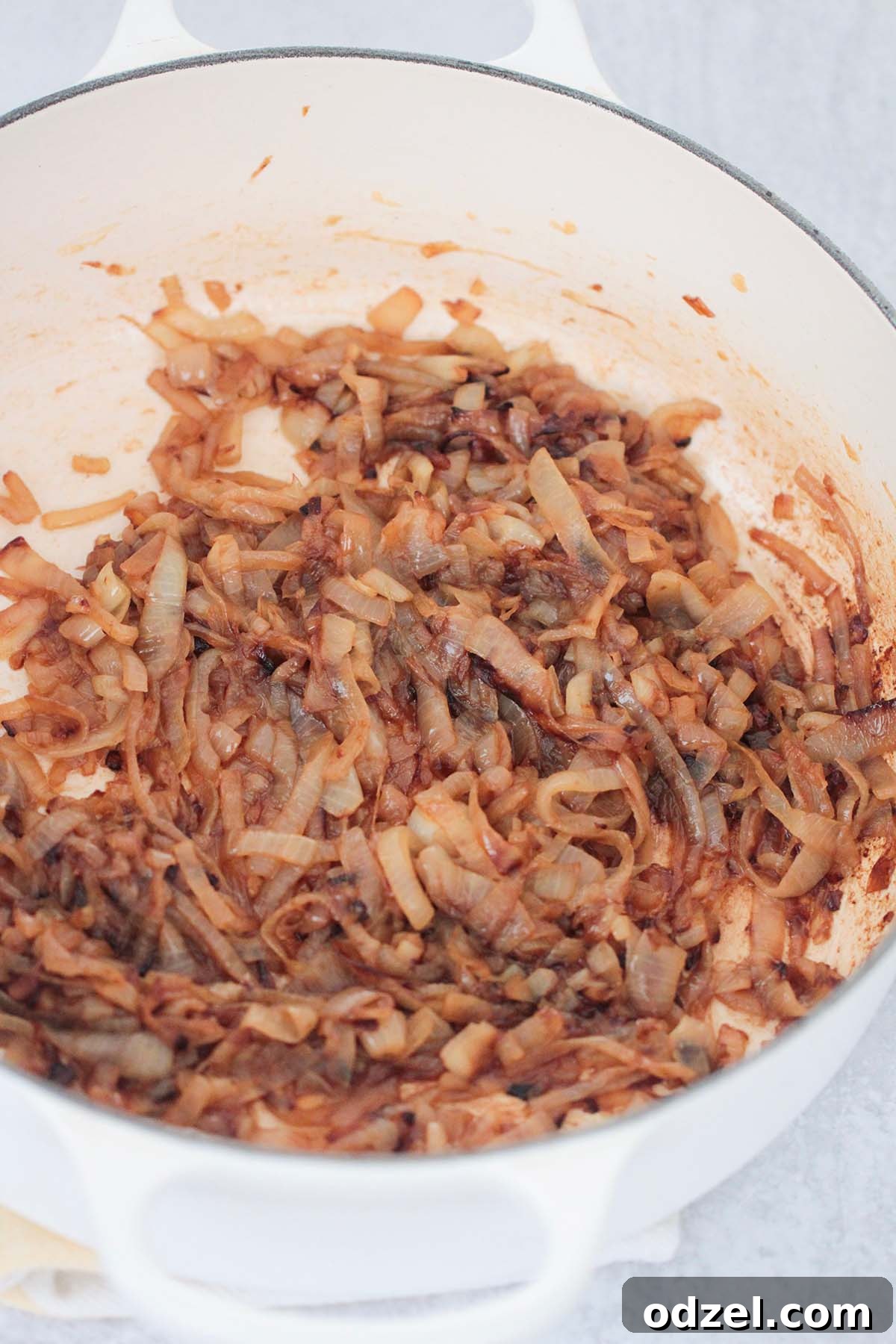
- Start the Caramelization: In a large, heavy-bottomed soup pot or Dutch oven, add the olive oil and butter. Heat over medium-low heat until the butter is melted and shimmering. Add the thinly sliced yellow onions. This is the most crucial step for flavor development, so patience is key. Cook the onions for 30-40 minutes, stirring frequently (every 5-7 minutes initially, then more often as they soften and begin to brown). The goal is a deep, even golden-brown color, not burnt. The onions will soften, release their moisture, and then slowly caramelize, developing incredible sweetness. Don’t rush this process; slow and steady heat is essential for rich flavor.
- Build Aromatic Layers: Once the onions are beautifully caramelized and a rich, golden brown, stir in the finely minced garlic, bay leaf, and fresh thyme sprigs. Cook for just 30 seconds until fragrant, being careful not to burn the garlic. Next, sprinkle in the all-purpose flour over the onions and stir well to coat. Cook for 2-3 minutes, stirring constantly, to cook out the raw flour taste and create a light roux. This will slightly thicken the soup and give it a silky texture.
- Deglaze and Deepen Flavor: Pour in the red wine. Using a wooden spoon, vigorously scrape the bottom of the pot to deglaze, loosening all the flavorful browned bits (the “fond”) that have accumulated during caramelization. This fond is packed with concentrated flavor, so don’t leave it behind! Allow the wine to simmer and reduce by half, which concentrates its flavor and cooks off the alcohol, leaving behind a wonderful depth. Then, add the beef broth and Worcestershire sauce. Stir everything together.
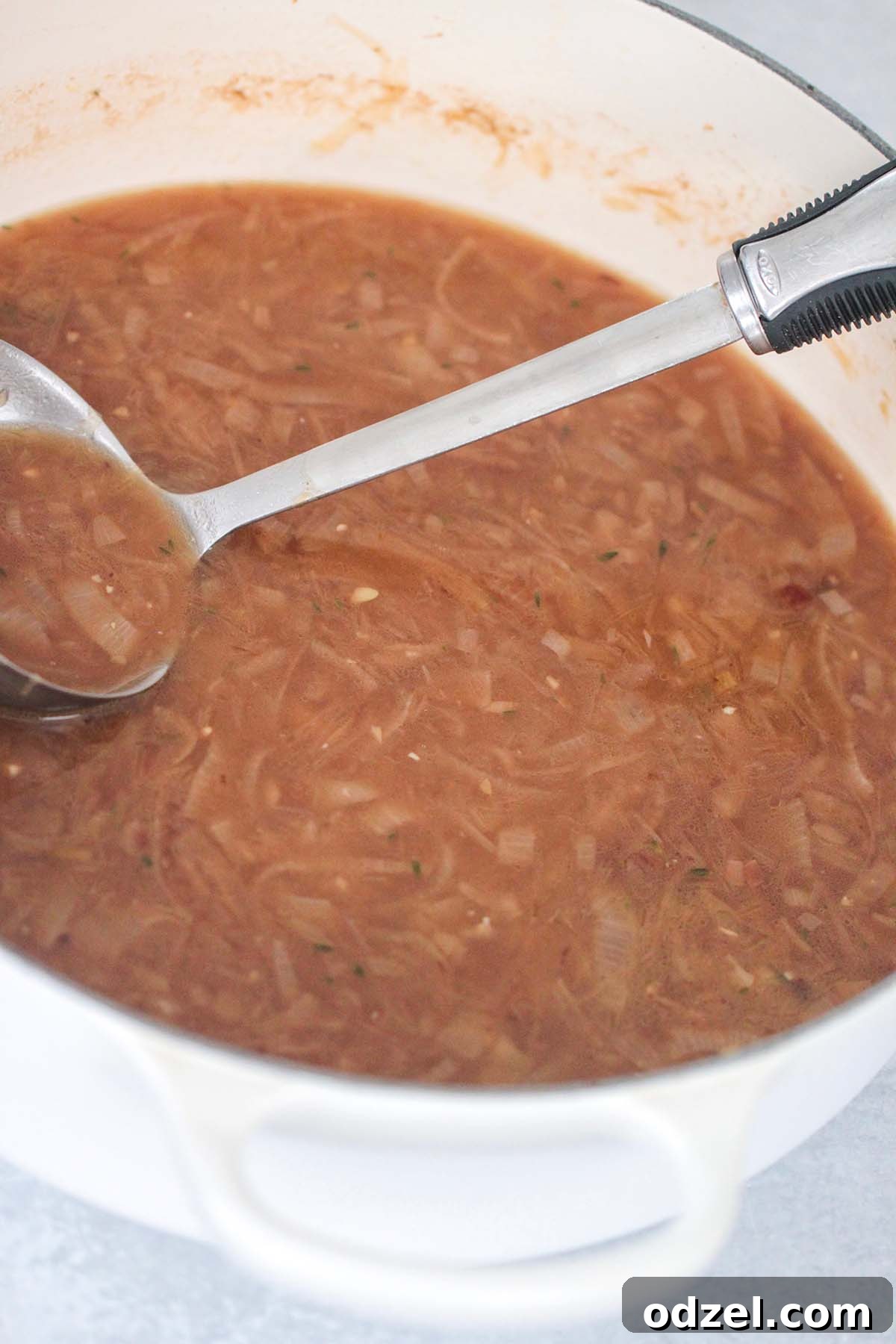
- Simmer and Season: Increase the heat to medium-high and bring the soup to a gentle boil. Once it reaches a boil, reduce the heat to medium-low, cover, and let the soup simmer for at least 15 minutes. This allows the flavors to meld beautifully. Season the soup generously with salt and freshly ground black pepper to taste. Remember to consider that the cheese topping will add saltiness later, so season the broth to a balanced level, not overly salty.
- Prepare the Baguette: While the soup simmers, preheat your oven to 400°F (200°C). Slice your day-old baguette into 1/2-inch thick slices. Arrange them on a baking sheet, drizzle lightly with olive oil, and bake for 5 minutes, or until lightly golden and crisp. This toasts the bread, giving it structure to hold up in the soup.
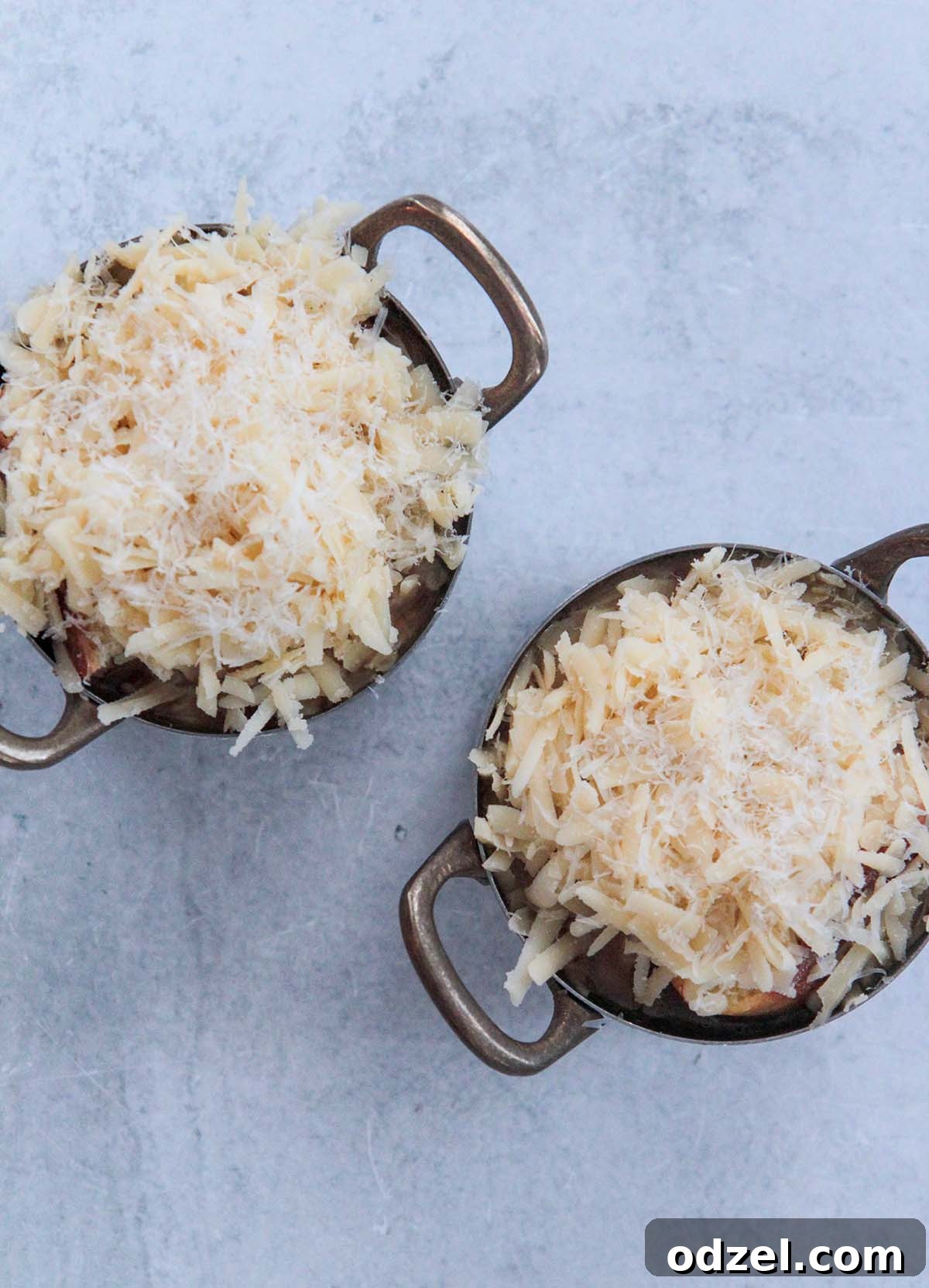
- Assemble and Broil for a Gratinéed Finish: Carefully ladle the hot soup into individual oven-safe crocks or bowls. Place 1 or 2 toasted baguette slices on top of the soup in each bowl. Generously cover the baguette slices with a combination of grated Gruyère and Parmesan cheese. Place the bowls on a baking sheet (to catch any drips) and broil for 1-2 minutes on high, watching carefully, until the cheese is completely melted, bubbly, and beautifully golden brown. Serve immediately, as French onion soup is best enjoyed piping hot!
- Optional Crunchy Topping: If you plan to add crispy French fried onions, sprinkle them over the melted cheese after broiling, just before serving. This ensures they remain delightfully crunchy.
Top Tips For The Best French Onion Soup Ever
Achieving a truly exceptional French Onion Soup involves a few key techniques and considerations. Keep these expert tips in mind for a soup that consistently impresses:
- Patience is Paramount for Caramelization: This cannot be stressed enough. Do not, under any circumstances, take shortcuts to caramelize the onions by adding sugar or cooking them over high heat. True caramelization, which develops the deep, complex sweetness and rich mahogany color, happens slowly over medium-low heat. It can take 30-40 minutes (or even longer for larger batches), with frequent stirring. This extended cooking time allows the natural sugars in the onions to develop fully, creating the foundation of the soup’s incredible flavor. Rushing this step will result in onions that are merely browned, not caramelized, leading to a flatter taste.
- Wine Alternatives: If you’re not a fan of cooking with wine or prefer to omit it for any reason, simply deglaze the pot with extra beef stock or a splash of non-alcoholic red wine instead. The acidity is still beneficial for scraping up the fond, and while the flavor profile will be slightly different, it will still yield a delicious soup. You might consider adding a tiny splash of red wine vinegar or balsamic vinegar (a very small amount) with the stock for a hint of acidity, if desired.
- Make it Vegetarian: To transform this hearty soup into a vegetarian delight, replace the beef broth with a high-quality, rich vegetable stock. Ensure your vegetable stock has a deep, savory flavor to compensate for the absence of beef. Additionally, omit the Worcestershire sauce, as it often contains anchovies; a dash of soy sauce or tamari (for gluten-free) can provide a similar umami depth in a vegetarian version.
- Mindful Seasoning: Season the soup generously with salt and pepper during the simmering stage. However, always remember that the Gruyère and Parmesan cheeses you’ll be adding later are quite salty. Taste the broth before the final broiling stage and adjust the seasoning carefully. It’s easier to add more salt than to fix an over-salted soup.
- Embrace Fresh Ingredients: The beauty of French Onion Soup lies in its simplicity and the quality of its core ingredients. Use the freshest onions, garlic, and herbs you can get your hands on. Freshly grated cheese also makes a significant difference in melt, texture, and flavor compared to pre-shredded varieties.
- Serve Piping Hot: Good French onion soup is always served piping hot, straight from under the broiler. The contrast between the hot, savory broth and the bubbly, melted cheese is what makes it so incredibly satisfying. Warn your guests that the bowls will be very hot!
- Choose the Right Pot: A heavy-bottomed pot or Dutch oven is ideal for making French Onion Soup. It distributes heat evenly, which is crucial for slow caramelization and prevents scorching.
- Individual Oven-Safe Bowls are Best: While you can melt cheese on top of the soup in a larger baking dish, serving in individual oven-safe crocks or bowls allows for that perfect gratinéed cheese crust on each serving and keeps the soup hotter for longer.
- Broiler Vigilance: When broiling the cheese, stay by the oven. Broilers can turn golden cheese into burnt cheese in a matter of seconds. Keep a close eye on it to achieve that perfect bubbly, golden-brown crust.
Make Ahead, Storage, and Reheating Instructions
French Onion Soup is an excellent candidate for making ahead, which can even deepen its flavors. Here’s how to manage it:
- Make Ahead: You can absolutely prepare the soup base (caramelized onions and broth) ahead of time. In fact, many believe the flavors meld and improve overnight. Simply prepare the soup through step 4, allow it to cool completely, and then store it. When ready to serve, gently reheat the soup on the stovetop. The sliced baguette and cheese topping should always be added and broiled fresh right before serving to ensure the bread is perfectly toasted and the cheese is gloriously melted and bubbly.
- Storage: Allow the soup to cool completely before transferring it to an airtight container. Store the soup base separately from any leftover toasted bread or cheese. It can be refrigerated for up to 4 days, making it perfect for meal prepping.
- Freezing: French onion soup freezes beautifully! Pour the cooled soup base into freezer-safe containers or heavy-duty freezer bags, leaving some headspace. It can be frozen for up to 3 months. Thaw overnight in the refrigerator before reheating.
-
Reheating Instructions:
- Stovetop: For refrigerated or thawed soup, gently warm the soup in a saucepan over medium-low heat, stirring occasionally, until it is hot and simmering.
- Microwave: While possible for individual portions, the stovetop provides more even heating.
- Serving after reheating: Once the soup base is hot, proceed with toasting fresh baguette slices, topping with cheese, and broiling as per the recipe instructions for that irresistible gratinéed finish. Do not reheat the soup with the bread and cheese already incorporated, as they will become soggy.
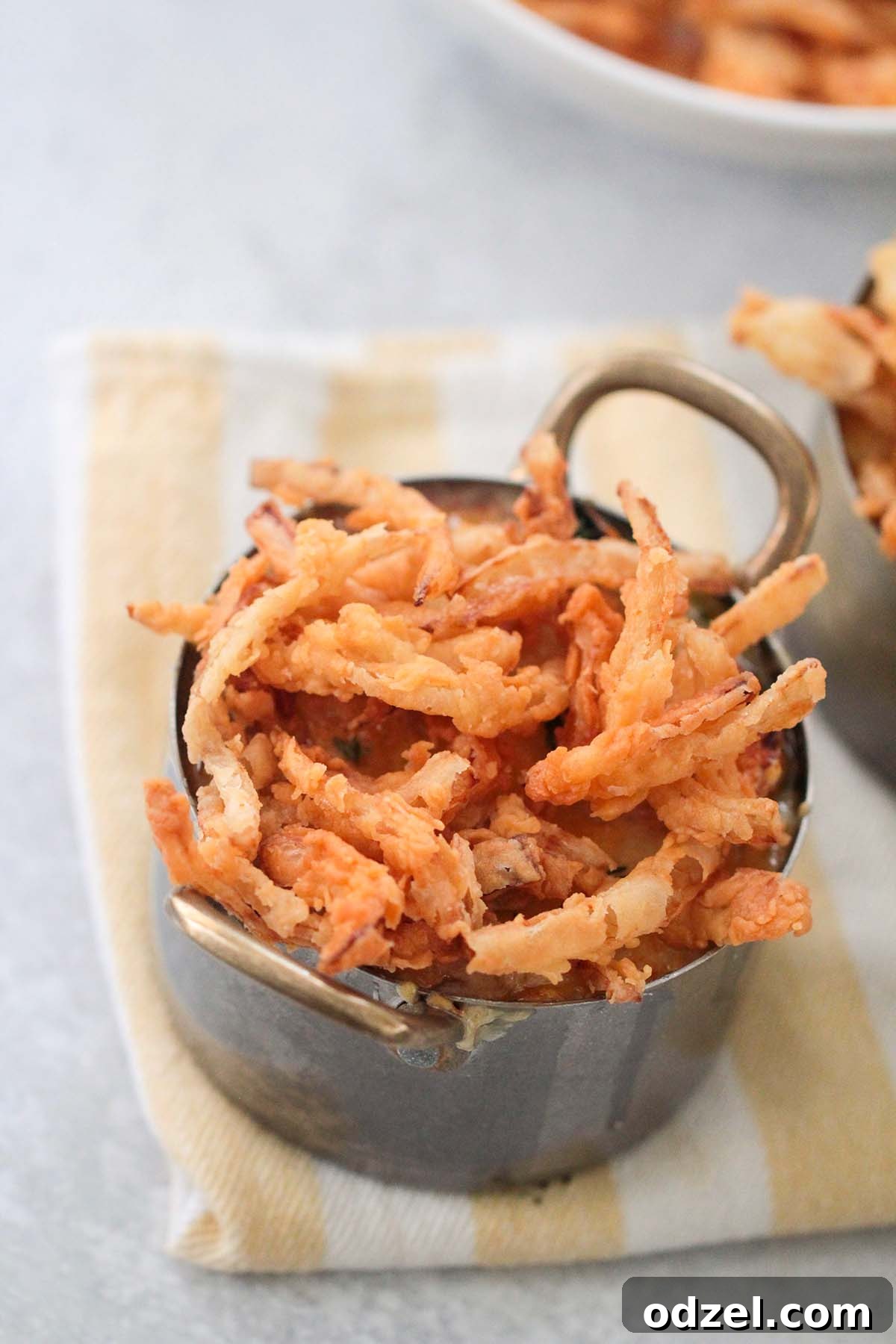
For an extra flourish, consider adding crispy French fried onions on top after the cheese has broiled. While completely optional, they introduce a delightful extra layer of flavor and crunch that I highly recommend for an elevated experience!
Perfect Pairings and Serving Suggestions
French Onion Soup, with its rich and hearty profile, pairs wonderfully with a variety of accompaniments. For a classic French meal, serve it alongside a light, crisp green salad with a vinaigrette dressing to cut through the richness. It also makes an elegant starter for a beef-focused main course, such as a roast beef or French dip sliders. Don’t forget extra crusty bread on the side for dipping into any leftover broth. For a casual yet delightful meal, pair it with a simple sandwich, like a grilled cheese or a light turkey sandwich, allowing the soup to truly shine as the star.
Variations to Explore and Customize Your Soup
While the classic recipe is perfect as is, there are several ways to customize your French Onion Soup to suit your taste:
- Cheese Swaps: Experiment with different melting cheeses like Comté, Provolone, or even a robust white cheddar for a unique flavor twist. A combination often yields the best results.
- Aromatic Boost: A splash of brandy, sherry, or port added during the deglazing step with the wine can introduce even more depth and a slightly boozier undertone.
- Herb Enhancements: While thyme is traditional, a sprig of rosemary or a bay leaf (removed before serving) can add different aromatic dimensions.
- Broth Variations: For an even richer broth, you can make your own beef stock from roasted beef bones. This provides unparalleled depth of flavor.
- Spicier Kick: A tiny pinch of red pepper flakes added with the garlic can introduce a subtle warmth without making the soup overtly spicy.
Frequently Asked Questions (FAQ) About French Onion Soup
Here are answers to some common questions about making French Onion Soup:
-
Can I use different types of onions?
While yellow onions are highly recommended for their sweetness and ideal caramelization properties, you can use other types. White onions are sharper and less sweet, while red onions offer a slightly sweeter profile but can give the soup a reddish hue. A mix can also work, but yellow onions truly yield the most authentic flavor. -
How long does it really take to caramelize onions?
Real caramelization takes time and patience, typically 30-40 minutes on medium-low heat. It’s a slow process where the onions release moisture, soften, and their natural sugars brown, developing complex sweet and savory notes. Rushing this step will prevent the onions from reaching their full flavor potential. -
What if I don’t have oven-safe bowls?
If you don’t have individual oven-safe crocks, you can toast the baguette slices separately, then top them with cheese and broil them on a baking sheet until melted and bubbly. Carefully place these cheesy toasts on top of the soup in regular bowls just before serving. Alternatively, you can layer the soup and cheese-topped baguette in a larger oven-safe casserole dish, broil, and then ladle servings from there. -
Is it necessary to use wine?
Wine (specifically dry red wine) adds a crucial layer of acidity and complexity, and it’s excellent for deglazing the pot to capture all the flavorful fond. While traditional, it’s not strictly necessary. You can omit it and use extra beef broth to deglaze, or a non-alcoholic red wine substitute. The flavor profile will be slightly different but still delicious. -
How can I prevent the bread from getting too soggy?
Using day-old or slightly stale baguette is key as it’s drier and absorbs the broth more slowly. Toasting the baguette slices until crisp before placing them in the soup also helps them maintain their structure longer under the cheese and in the hot broth. Serve the soup immediately after broiling to enjoy the bread at its best.
More Delicious Recipes to Explore
If you loved this cozy French Onion Soup, you might also enjoy these other comforting and flavorful recipes:
- Instant Pot Broccoli Cheddar Soup
- French Dip Sliders
- Cabbage Roll Soup
- French Onion Dip
We hope you enjoy crafting and savoring this magnificent Classic French Onion Soup! Its rich history and comforting flavors make it a truly rewarding dish to prepare. Please leave a star rating and/or a review in the comments section further down the page if you tried this recipe. And consider following me on Facebook, Instagram, or Pinterest for more delicious recipes!

Classic French Onion Soup
Julie Maestre
25
55
6
Rate Recipe
Print Recipe
Ingredients
- 6 yellow onions , thinly sliced
- 5 garlic cloves , finely minced
- 8 cups beef broth
- 1/2 cup dry red wine , optional
- 1 bay leaf
- 2 sprigs fresh thyme
- 1 tsp Worcestershire sauce
- 4 tbsp unsalted butter
- 1 tbsp olive oil
- 2 tbsp all-purpose flour
- Salt and freshly ground black pepper to taste
Topping Ingredients
- Gruyère cheese , freshly grated
- Fresh Parmesan Cheese , freshly grated
- Baguette , day-old, sliced 1/2 inch thick
- Crispy French fried onions, optional, for garnish
Instructions
-
In a large, heavy-bottomed soup pot or Dutch oven, add the olive oil and butter and heat over medium-low heat. Stir in the thinly sliced onions and cook for 30-40 minutes, stirring frequently, until they are deeply caramelized and golden brown.
-
Once the onions are caramelized, stir in the minced garlic, bay leaf, and fresh thyme. Cook for 30 seconds until fragrant. Then, sprinkle in the all-purpose flour and cook for 2-3 minutes, stirring constantly, to create a light roux.
-
Add the red wine to the pot and deglaze by scraping the bottom with a wooden spoon to loosen any browned bits. Allow the wine to reduce by half. Then, add the beef broth and Worcestershire sauce, stirring to combine.
-
Increase the heat to medium-high and bring the soup to a boil. Once boiling, reduce the heat to medium-low, cover, and let it simmer for 15 minutes to allow the flavors to meld. Season generously with salt and pepper to taste, keeping in mind the saltiness of the cheese.
-
Preheat oven to 400°F (200°C). Arrange baguette slices on a baking sheet, drizzle with olive oil, and bake for 5 minutes until lightly toasted and crisp.
-
Ladle the hot soup into individual oven-safe bowls. Place 1 or 2 toasted baguette slices into each bowl, then top generously with grated Gruyère and Parmesan cheese. Place the bowls on a baking sheet and broil for 1-2 minutes, watching carefully, until the cheese is completely melted, bubbly, and golden brown.
-
If using, sprinkle crispy French fried onions on top after broiling the cheese, just before serving.
Notes
- Don’t take any shortcuts to caramelize the onions such as adding sugar or cooking them over high heat. Long and slow is best when caramelizing onions, allowing their natural sugars to develop.
- Not a fan of wine? Simply omit the wine and deglaze the pot with extra beef stock.
- Want to make it vegetarian? Use a rich vegetable stock instead of beef stock and omit the Worcestershire sauce.
- Season the soup generously with salt and pepper, but remember that the cheese is salty, so keep that in mind when seasoning the broth.
- Use the freshest, highest quality ingredients you can get your hands on for the best flavor.
- Good French onion soup is always served piping hot, straight from under the broiler.
Nutrition
Carbohydrates: 13g |
Protein: 5g |
Fat: 11g |
Saturated Fat: 6g |
Polyunsaturated Fat: 1g |
Monounsaturated Fat: 4g |
Trans Fat: 1g |
Cholesterol: 20mg |
Sodium: 1272mg |
Potassium: 358mg |
Fiber: 2g |
Sugar: 5g |
Vitamin A: 253IU |
Vitamin C: 10mg |
Calcium: 54mg |
Iron: 1mg
Nutrition information is automatically calculated, so should only be used as an approximation.
Additional Info
Julie Maestre
25
55
Soup
French
6
168
Classic French Onion Soup, French Onion Soup, How to make French onion soup
Enjoyed this recipe? Please leave a comment and rating below!